
Oriental chestnut gall wasp
Dryocosmus carlesiae
Description
How to identify
The Oriental chestnut gall wasp (Dryocosmus kuriphilus) is a Hymenopteran insect belonging to the Cynipidae family, recognized as one of the most serious pests of chestnut trees worldwide.
Adult wasps are small, measuring approximately 2.5–3 mm in length, with a shiny black body, making them difficult to spot during the flight period.
The species is univoltine, meaning it has one generation per year, with the entire development cycle occurring within the host plant tissues.
The wasp is an invasive species that has spread rapidly across many countries, causing significant economic damage to both forest and agricultural sectors.
Accurate identification is based on the characteristic galls formed on the host plant, as the adult wasps are rarely observed in high numbers.
What it damages
The primary hosts of this pest are species of the Castanea genus, particularly the sweet chestnut (Castanea sativa) and its various commercial hybrids.
Damage is caused by the larvae, which induce the formation of abnormal growths known as galls on leaves, petioles, and young shoots.
These galls act as a sink for nutrients, depriving the rest of the tree of energy, which leads to reduced vegetative growth and stunted development.
Fruit production is severely compromised, with reports of yield losses reaching up to 80% in heavily infested orchards and plantations.
Severe infestations can cause the decline of the tree's health, making it more susceptible to secondary pathogens and leading to branch dieback.
When it appears
Adult wasps typically emerge in late spring, usually from late May through June, coinciding with the timing of chestnut bud burst.
After mating, females lay eggs inside the host buds, where the larvae remain in a state of suspended development throughout the summer and winter months.
Activity resumes in early spring, when the larvae begin feeding and stimulating the tree to produce galls, which then expand rapidly.
The pupation stage takes place inside the mature galls, and the adults cut exit holes to emerge, starting the cycle anew for the next season.
The seasonal synchronization ensures that the wasp's life cycle perfectly matches the physiological stages of the chestnut tree.
Signs of infestation
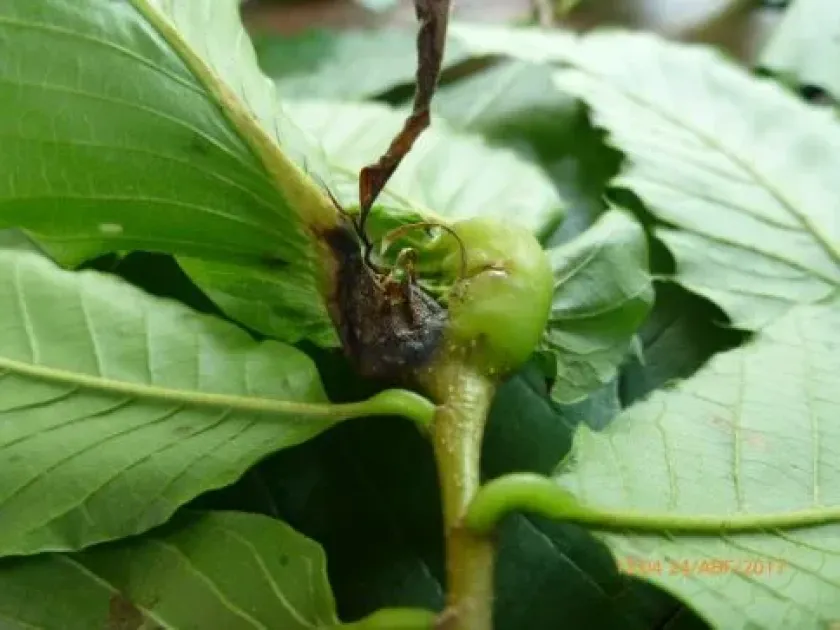
The most distinctive symptom of infestation is the appearance of round, green to reddish galls on the shoots, often clustered together.
These galls can range from 5 to 20 mm in diameter and are highly visible when they develop on the young, tender foliage and growing tips.
As the larvae complete their development, the galls harden, dry out, and turn brown, becoming prominent structures on the branches throughout the winter.
- Twisted and malformed leaves near the site of the gall.
- Reduced vigor of the affected branch or shoot.
- Premature leaf drop and significant decrease in nut production.
Regular visual inspections, especially during spring and early summer, are essential for the early detection of the wasp's presence.
Control measures
The most successful method of control is the biological introduction of the parasitoid wasp Torymus sinensis, which specifically targets the larvae.
In smaller orchard settings, physical removal and subsequent destruction of infested branches before the adults emerge can help manage the population.
Chemical control methods are generally considered ineffective due to the protection provided to the larvae by the gall tissues against insecticides.
Strict phytosanitary regulations regarding the movement of nursery stock are crucial to prevent the accidental introduction of the pest into uninfested areas.
Future management strategies focus on breeding chestnut varieties that exhibit natural resistance or tolerance to gall wasp attack.
Taxonomy
- Latin name
- Dryocosmus carlesiae
- Order
- Hymenoptera
- Family
- Cynipidae
- EPPO code
- DRYCCA
Discussion
No discussions yet — be the first.