
Gall wasp
Dryocosmus
Description
How to identify
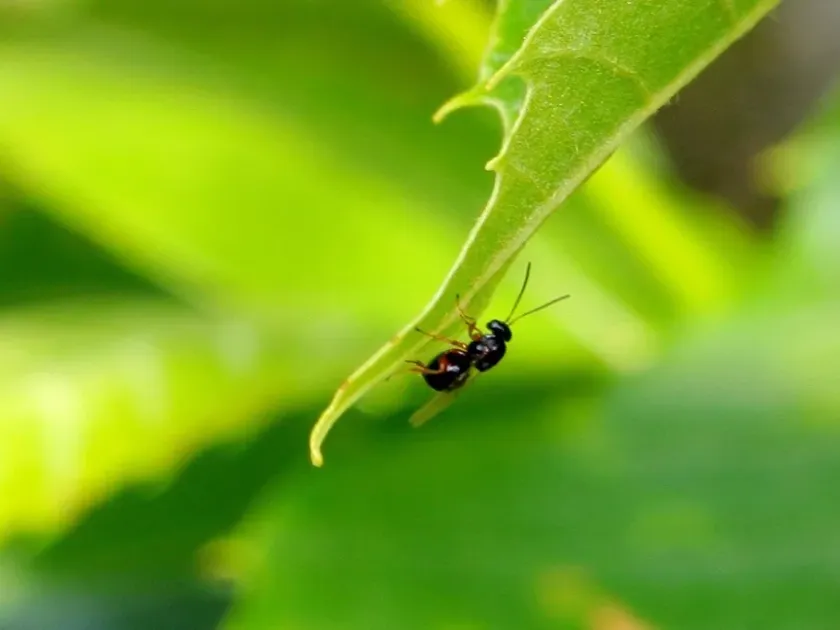
The gall wasp (genus Dryocosmus) belongs to the order Hymenoptera and the family Cynipidae. These are tiny insects, typically measuring no more than 3 millimeters in length, usually possessing a dark coloration that makes them hard to spot.
The life cycle of this pest is intimately linked to the formation of specific plant growths known as galls. These structures, within which larvae develop, serve as the primary indicator of the insect's presence in an area.
Reproduction can occur through both sexual and parthenogenetic pathways, which significantly enhances the species' survival rate. Depending on the climate, the insect may complete one or multiple generations per year.
Adult wasps lead a very secretive lifestyle and rarely attract the gardener's attention. The main damage is caused by the larvae, which feed on plant sap, triggering abnormal tissue growth in the host plant.
Each species of gall wasp is often specialized to a particular plant host, utilizing complex biological mechanisms to manipulate the host's metabolism to create an ideal environment for their offspring.
What it damages
The most notorious and destructive species is the Oriental chestnut gall wasp, which targets various chestnut species, including edible chestnuts. It poses a severe threat to both ornamental landscapes and commercial orchards.
The pest attacks buds, shoots, and leaves. Larvae bore into the bud tissue, which disrupts normal growth processes and leads to a significant decline in the health and vigor of the tree.
Heavy infestations result in massive leaf drop and premature drying of young twigs. This causes a drastic reduction in fruit yield, often rendering trees unproductive for several consecutive years.
In nurseries, the gall wasp is a critical threat, as damage to young saplings frequently leads to their death or the loss of varietal characteristics due to interrupted physiological development.
Beyond direct damage, the galls themselves act as entry points for secondary infections, including fungal and bacterial pathogens that spread rapidly through the weakened host tree.
When it appears
The active life cycle of the gall wasp begins in early spring when adults emerge from their overwintering sites to lay eggs in developing buds, coinciding with the phase of bud break.
The period of gall formation occurs from late spring through early summer. During this time, characteristic swellings become visible on the shoots, gradually increasing in size as the larvae develop inside.
Pupation typically takes place in mid-summer. Throughout this stage, the pest is effectively shielded by the dense structure of the gall, making it highly resistant to contact-based insecticides.
Adult emergence is most commonly observed in late summer or early autumn. During this brief window, adults are preoccupied with mating and searching for suitable buds to host the next generation's eggs.
The gall wasp overwinters inside the infected plant tissues, most often as first-instar larvae within dormant buds, which provides them with high tolerance to freezing winter temperatures.
Signs of infestation
The most obvious sign of infestation is the appearance of galls — spherical or deformed growths on the plant that can vary in color from green to reddish or brown.
When buds are attacked, they become disproportionately enlarged and distorted. Often, these buds fail to open, resulting in stunted shoot growth and a lack of proper foliage development.
On leaves, localized swellings may appear, potentially merging into larger patches that cause the leaf to curl, deform, and eventually wither away before the end of the growing season.
Reduced tree growth is a significant indirect sign. Affected plants appear visually depressed, often exhibiting shortened internodes and sparse foliage compared to healthy specimens.
In cases of heavy infestation, dried and blackened remnants of old galls remain on the branches for years, signaling a persistent, multi-year infection within the plant population.
Control measures
The primary control measure involves the radical pruning and destruction of all infested shoots containing galls before adult emergence, which physically reduces the pest population on the site.
The application of systemic insecticides is effective only during the short windows of adult emergence when the insects are most vulnerable to treatments that penetrate plant tissues.
Biological control strategies involve the introduction or conservation of natural enemies, such as parasitic Hymenoptera, which naturally regulate gall wasp populations in the ecosystem.
- Utilizing resistant cultivars of chestnut and other host plants.
- Regular monitoring of bud health during early spring.
- Timely fertilization to maintain tree immune system and vigor.
- Strict quarantine measures when purchasing new plant material.
Chemical protection must be carefully timed, as larvae are well-protected inside the galls, making proactive prevention and early diagnosis the most reliable approach for garden protection.
Taxonomy
- Latin name
- Dryocosmus
- Order
- Hymenoptera
- Family
- Cynipidae
- EPPO code
- DRYCSP
Discussion
No discussions yet — be the first.