
Black woodpecker
Dryocopus
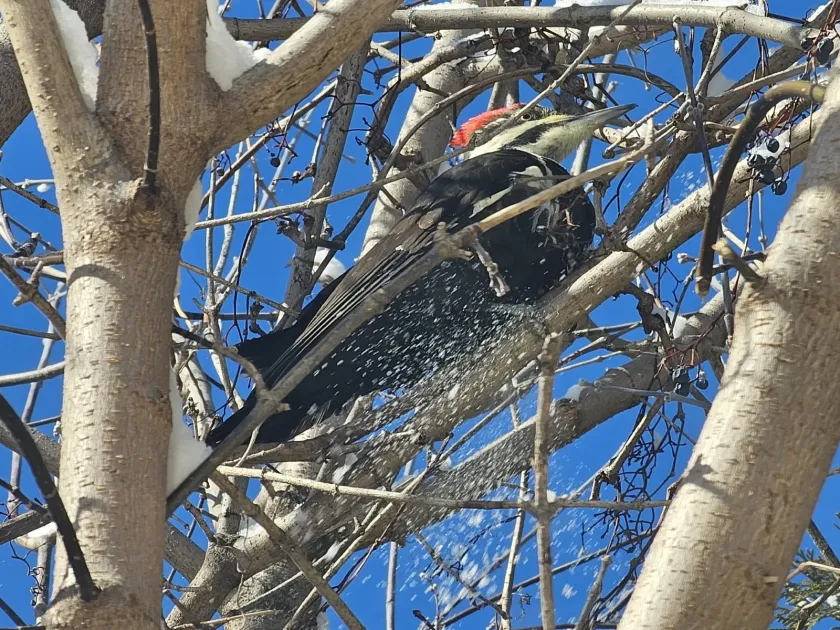
Description
How to identify
The black woodpecker (Dryocopus martius) is the largest woodpecker species in Europe and a member of the Picidae family. It is easily identified by its uniform black plumage and the prominent red crown found on males.
In forestry, the species is recognized for its significant impact on timber quality and tree health. Its powerful beak is specialized for drilling into dense wood to forage for larvae or excavate large nesting cavities.
The species prefers old-growth forests with large-diameter trees. Although they are not considered a "pest" in the agricultural sense, their intensive drilling behavior can have negative economic consequences for timber growers.
The biological cycle of the black woodpecker is deeply linked to the maturity of the forest. They require specific tree conditions for breeding, which often brings them into contact with commercial forest areas.
Identification is aided by their distinct loud drumming and clear, high-pitched calls. These signs, combined with the presence of large rectangular chips, confirm the presence of this species in a forest stand.
What it damages
The black woodpecker primarily damages coniferous and deciduous trees, including spruce, pine, aspen, and birch. They target trees that are often already suffering from wood-boring insect infestations.
The damage occurs when the bird aggressively drills into the trunk to access bark beetles, longhorn beetles, or other wood-boring larvae located deep within the wood.
During the nesting phase, the woodpecker excavates large, deep cavities in the trunk. This heavy mechanical damage can significantly weaken the structural integrity of the tree, making it prone to wind-throw.
The resulting wounds serve as entry points for various fungal pathogens and decay organisms, which can compromise the overall health and longevity of the tree.
While the woodpecker acts as a biological control agent by consuming vast amounts of forest pests, the direct damage to the trunk often leads to timber degradation, impacting its commercial value.
Signs of infestation
The most visible sign of black woodpecker activity is the presence of large, deep, and often rectangular holes in the tree trunks that are significantly larger than those of other woodpecker species.
Significant amounts of large wooden chips scattered around the base of a tree are a clear indicator of recent drilling activity by this large bird.
Heavy resin flow (in conifers) or sap bleeding (in broad-leaved trees) appearing after drilling confirms that the bird has penetrated deep into the cambium layer.
Signs of foraging are often seen in vertical rows or focused patches where the woodpecker has successfully located a colony of larvae.
Nesting cavities are distinct due to their large size and specific shape, providing a clear indication that a tree has been occupied by the species for a prolonged period.
Control measures
Management of black woodpecker impact focuses on silvicultural practices. As a protected species in many regions, direct control measures such as culling are strictly prohibited.
Effective management involves proactive sanitary logging of trees that are heavily infested with wood-boring insects, as these trees are the primary targets for woodpecker foraging.
Maintaining a healthy, resilient forest stand through proper thinning and removal of deadwood reduces the attractiveness of the area to wood-boring insects, thereby reducing woodpecker pressure.
Integrated Pest Management (IPM) techniques, including pheromone traps for bark beetles, can help stabilize the insect population and indirectly prevent woodpecker-related trunk damage.
For high-value timber stands, protective measures such as installing mesh barriers or using ultrasonic deterrents are occasionally tested, though their success is highly variable.
Taxonomy
- Latin name
- Dryocopus
- Family
- Picidae
- EPPO code
- DRYKSP
Discussion
No discussions yet — be the first.