
Drymonia ruficornis
Drymonia ruficornis
Description
How to identify
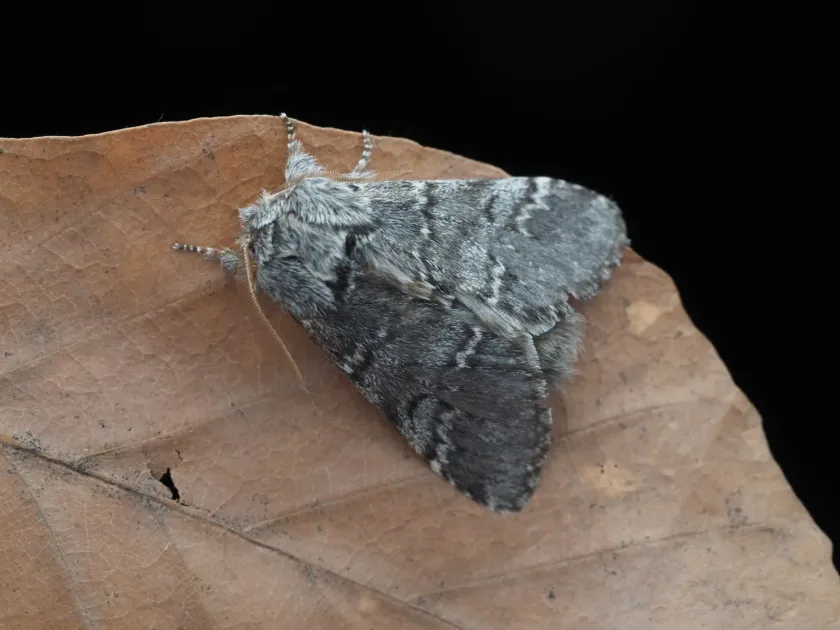
Drymonia ruficornis is a species of moth belonging to the family Notodontidae. The adult moth features a wingspan of approximately 40–50 mm, with cryptic grey and brown markings on the forewings that provide excellent camouflage against the bark of host trees.
The larvae, or caterpillars, reach lengths of 45–50 mm and display a green coloration with longitudinal stripes. This coloration is highly effective at mimicking the appearance of leaves, allowing them to remain hidden while feeding during the day.
The pupae are dark brown, compact, and typically overwinter within the soil or in the leaf litter at the base of the host tree. This defensive position ensures survival during harsh winter temperatures and protection from many predators.
Adults are primarily nocturnal, which is why they are rarely observed in flight. Females lay eggs in clusters or singly on the undersides of leaves, ensuring that the emerging larvae have an immediate and secure source of food.
The life cycle typically consists of one generation per year, although warmer climates may support a second generation. The synchronization of larval emergence with the budding of host trees is crucial for the survival of the species.
What it damages
The primary hosts for Drymonia ruficornis are oak trees, though they are also known to feed on birch, hornbeam, and hazel. Larvae feed on the leaves, often starting from the edges and progressing toward the midrib.
In cases of high population density, these larvae can cause extensive defoliation. Such significant loss of leaf surface reduces the tree's photosynthetic capacity, hindering growth and overall vitality during the growing season.
Repeated defoliation in consecutive years puts significant stress on the host trees, making them more susceptible to secondary attacks by wood-boring insects and various fungal pathogens that thrive on weakened tissues.
In ornamental garden and park settings, the presence of these pests reduces the aesthetic quality of the trees. Severe defoliation may lead to premature dieback of twigs and branches, diminishing the landscape value.
Forest management focuses on these insects as significant defoliators. Tracking population trends is vital for preventing local outbreaks that could degrade forest health and productivity.
When it appears
The flight period for adult moths typically occurs in the spring, spanning from April to May, which aligns with the flushing of buds on deciduous trees. This is the optimal time for mating and oviposition.
Larval activity is most pronounced during the early summer, specifically from June through July. This is the period of rapid growth for the caterpillars, requiring a substantial intake of leaf material.
Pupation occurs in mid-to-late summer after the larvae complete their feeding stage. The pupae then remain in a state of diapause within the soil until the next spring or until conditions permit a second cycle.
Monitoring for this pest involves inspecting tree canopies for signs of feeding or using light traps to track adult moth activity. These methods help predict potential outbreaks for the coming season.
Autumn and winter are periods when the pest is in the soil. During this stage, pupae are relatively inactive, but this represents a window of opportunity for soil-based interventions in small-scale garden environments.
Signs of infestation
Visible feeding damage, such as irregularly eaten leaf margins or skeletonized leaves, serves as the first indication of a Drymonia ruficornis infestation.
The accumulation of larval frass (excrement) on the ground or on foliage underneath the canopy is a clear indicator that feeding activity is currently occurring in the tree crown.
A noticeable thinning of the tree canopy is a sign of high larval density. Heavily infested trees may show a sparse, "see-through" appearance compared to healthy, uninfested trees in the vicinity.
Careful examination of twigs and branches may reveal the presence of caterpillars. Despite their camouflage, their movement patterns and the presence of fresh feeding damage help in identifying their specific locations.
Increased bird activity near the canopy is often a natural sign of a significant caterpillar presence, as many insectivorous bird species will feed on the larvae during their growth phase.
Control measures
Biological control, particularly the use of Bacillus thuringiensis sprays, is the preferred method for managing infestations. These treatments target the larvae while remaining safe for beneficial insects and predators.
In landscape management, systemic insecticides can be applied if defoliation thresholds are exceeded. These treatments should be timed carefully to coincide with the most vulnerable larval stages.
Soil management, such as tilling or raking in the late autumn or early spring, can disrupt the pupae in the soil, potentially reducing the number of adults that successfully emerge in the spring.
Promoting a healthy ecosystem by supporting natural predators, such as parasitic wasps and insectivorous birds, is a long-term strategy for keeping populations of Drymonia ruficornis below levels that cause noticeable harm.
Maintaining tree health through proper watering and soil care makes trees more resilient to defoliation, allowing them to recover more quickly from any damage caused by the larvae.
Taxonomy
- Latin name
- Drymonia ruficornis
- Order
- Lepidoptera (butterflies)
- Family
- Notodontidae
- EPPO code
- DRYMRU
Discussion
No discussions yet — be the first.