
Pacific beetle cockroach
Diploptera punctata
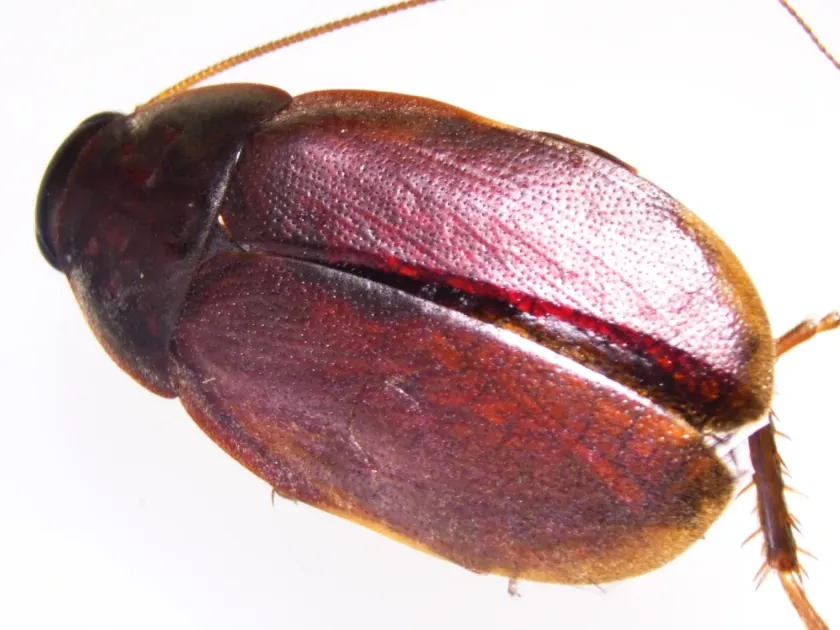
Description
How to identify
The Pacific beetle cockroach, scientifically known as Diploptera punctata, is a fascinating member of the Blaberidae family. It is notably recognized as one of the few viviparous cockroach species in the world.
Adult specimens typically reach a body length of 12 to 15 millimeters. They are characterized by a dark, glossy, and highly chitinized exoskeleton, making them look somewhat like beetles.
The nymphal stages undergo a series of molts, gradually developing adult features. Unlike many other species, they have well-developed wings and are capable of flight, facilitating dispersal.
A unique biological trait is the production of a protein-rich "milk" within the female, which provides essential nutrients for her developing embryos inside the brood sac.
They are primarily found in tropical forest ecosystems, preferring environments with high humidity and abundant organic decay, though they can encroach on cultivated lands.
What it damages
While Diploptera punctata is primarily a scavenger, in agricultural settings, its presence can become problematic. They may turn to feeding on fresh plant tissue when their primary food source is limited.
They can inflict damage on young vegetable sprouts and tender fruits. Such wounds often serve as entry points for bacterial and fungal pathogens, potentially ruining the entire harvest.
In nursery environments, nymphs and adults may gnaw at the roots of delicate seedlings, leading to stunted growth or total plant failure due to water and nutrient uptake disruption.
During storage, large populations can contaminate harvested produce with frass and pheromone secretions, rendering it unfit for market or consumption.
- Damage to young vegetable stalks
- Punctures on soft fruits
- Contamination of stored grains
- Root system injury in greenhouse saplings
When it appears
The life cycle of the Pacific beetle cockroach is heavily dictated by climate. In tropical regions, they are active year-round, as there is no true dormancy period.
In cooler climates or seasonal environments, their population density peaks during warm, humid months when temperature conditions are optimal for rapid reproduction.
The species does not undergo diapause, meaning they can continue to reproduce as long as moisture levels are sufficient and a food source is readily available.
Nocturnal behavior is a key factor in their survival; adults are most active during the night, moving between shelters and feeding sites to minimize exposure to daytime predators.
Rainy seasons often trigger population explosions, as increased humidity and fresh plant debris provide perfect conditions for nymphs to thrive.
Signs of infestation
Small, dark, granular droppings left behind on soil surfaces or around plant stems are often the first visible signs of a localized infestation.
Mechanical damage to leaves, such as irregular holes or nibbled edges, indicates that the insects are feeding on the plants rather than just sheltering among them.
The presence of a peculiar, sweet-musty odor around crops or storage bins is a strong indicator of a high-density cockroach population in the area.
Using a flashlight during the night can reveal adults scurrying away from light, confirming their presence in greenhouses or garden beds.
Wilting of seedlings despite adequate soil moisture may point to subsurface root damage caused by nymphs dwelling in the upper layers of the potting mix.
Control measures
Managing the Pacific beetle cockroach requires an integrated pest management (IPM) approach to ensure both effectiveness and crop safety.
Sanitation is paramount: removing piles of decaying organic matter, leaf litter, and compost heaps near cultivation areas drastically reduces their shelter and food supply.
Targeted application of organic or chemical insecticides, when necessary, should be done with care to avoid killing beneficial insects and to ensure no residues remain on edible portions.
Pheromone traps and bait stations are highly effective for monitoring and suppressing population numbers without spraying large quantities of pesticides.
Encouraging local predators, such as certain bird species and predatory arthropods, can provide a level of natural biological control within the garden or farm ecosystem.
Taxonomy
- Latin name
- Diploptera punctata
- Family
- Blaberidae
- EPPO code
- DIPPPU
Discussion
No discussions yet — be the first.