
Pacific beetle cockroach
Diploptera dytiscoides
Description
How to identify
The Pacific beetle cockroach (Diploptera dytiscoides) belongs to the order Blattodea and the family Blaberidae. It is a remarkable species, widely known as the only cockroach that exhibits viviparity.
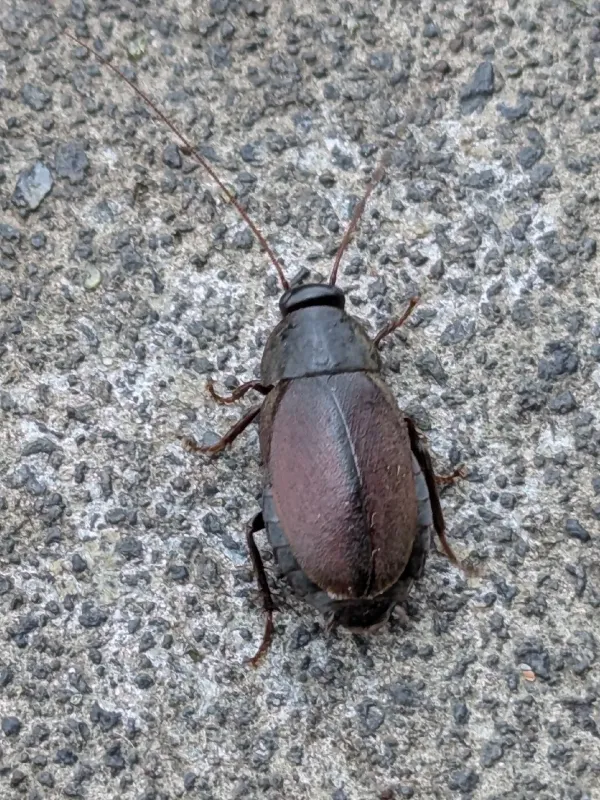
Adult specimens typically reach a length of 20–25 mm. Their robust bodies are dark brown to black in color, providing effective camouflage in leaf litter and tree crevices.
Females produce nymphs that receive nourishment through a placenta-like structure within the mother, ensuring a high survival rate in humid tropical environments.
This species is predominantly secretive, preferring damp and warm habitats, which frequently leads them to colonize orchard environments and ornamental garden beds.
They are highly social insects, demonstrating complex behaviors that allow for rapid colonization of new habitats when suitable organic material is present.
What it damages
This species primarily impacts tropical woody plants and shrubs, acting as a minor but persistent pest in diverse agricultural settings.
While they primarily scavenge on decaying organic matter, high populations can result in the consumption of living plant tissues, including bark and tender young shoots.
The damage often compromises the plant's structural integrity and health, making it more susceptible to secondary infections and environmental stress.
Severe infestations can lead to the widespread destruction of nursery seedlings, as the nymphs and adults target soft stem tissues for feeding.
Furthermore, these cockroaches can act as vectors for various plant pathogens, potentially spreading fungi and bacteria across healthy vegetation.
Signs of infestation
The presence of this pest is often signaled by small, dark, granular fecal pellets deposited in cracks of bark or around the base of the plant.
Visible feeding damage typically manifests as irregular scraping or small, shallow holes in the bark, where the insects have gnawed on the plant surface.
Active specimens can be observed during night hours, moving swiftly along the trunks or branches of host trees when inspected with a light source.
A distinct, somewhat unpleasant odor associated with the pheromones and secretions of these insects often indicates a large colony nearby.
Sudden wilting or chlorosis of specific branches may indicate deeper damage to the vascular tissues, caused by the localized feeding of these beetles.
Control measures
Effective management requires rigorous sanitation practices, including the removal of dead wood, rotting stumps, and thick leaf litter that harbor colonies.
Chemical control can be achieved through the targeted application of insecticides, particularly focusing on the cracks and crevices where these insects aggregate.
Maintaining optimal soil drainage and preventing waterlogging around tree bases is crucial for reducing the attractiveness of the site to cockroaches.
Pheromone traps and bait stations can be utilized to monitor and reduce populations, especially in greenhouse or nursery environments.
Integrated pest management strategies should emphasize preventing habitat suitability, thereby reducing the need for intensive chemical interventions over time.
Taxonomy
- Latin name
- Diploptera dytiscoides
- Family
- Blaberidae
- EPPO code
- DIPPDY
Discussion
No discussions yet — be the first.