
Mossy Rose Gall Wasp
Diplolepis erinacei
Description
How to identify
The Mossy Rose Gall Wasp (Diplolepis erinacei) is a small hymenopteran insect belonging to the Cynipidae family. Adult wasps typically measure 3-4 mm in length and exhibit a dark brown to black coloration.
Their life cycle is unique because they induce the plant to form complex structures known as galls. These galls provide both nourishment and protection for the developing larvae during their most vulnerable life stages.
Reproduction is largely parthenogenetic, meaning female wasps can produce offspring without fertilization, leading to rapid population growth under favorable environmental conditions.
Due to their small size and cryptic habits, adult wasps are rarely observed in the garden environment, making direct identification of the insect challenging for gardeners.
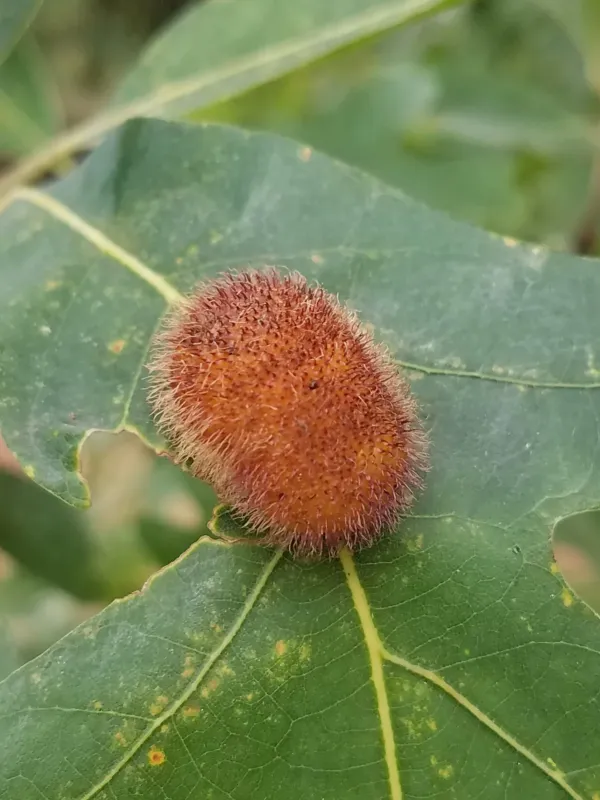
Identification is primarily based on the presence of characteristic galls, which are often described as mossy, spiky, or hedgehog-like growths on the leaves or stems of rose plants.
What it damages
These wasps primarily infest plants within the Rosaceae family, specifically wild rose species and various ornamental garden roses.
Larvae develop within the plant tissues, stimulating abnormal cell growth which disrupts the host plant's normal metabolic processes and nutrient transportation.
Damage is typically restricted to the leaves where the galls form. While these structures are a fascinating biological adaptation, they draw significant energy away from the plant's growth.
Though an infestation rarely results in the death of the entire rose bush, it significantly reduces the plant's aesthetic value and can weaken it over successive seasons.
Heavy infestations may cause leaf deformation, premature leaf drop, and overall stress, making the rose bush more susceptible to environmental extremes and other pathogens.
When it appears
Adult wasps typically emerge in the spring, which is the period when females begin laying eggs into the tender, developing tissues of leaf buds or young leaves.
Gall development is initiated almost immediately upon larval hatching, as the larvae secrete chemicals that trigger the plant to build the protective gall structure.
Larvae remain inside the gall throughout the summer months, safely encased and hidden from most predators and environmental fluctuations.
Pupation generally occurs within the gall towards the end of the season, after which the new generation of adults will emerge to restart the cycle.
The insect typically overwinters in the larval or prepupal stage inside the galls, which often remain attached to fallen leaves or dead stems throughout the winter months.
Signs of infestation
The most prominent sign of an infestation is the appearance of distinct, moss-like or prickly growths on the foliage that look like small, dense clusters.
These galls are initially light green or yellowish, but as the larvae mature, they often darken to shades of brown or red, becoming quite woody and hard.
- Circular or irregular galls present on leaf surfaces.
- Curling or twisting of leaves surrounding the gall site.
- Localized chlorosis (yellowing) of the leaf tissue.
- Distinctive fuzzy or spine-covered exterior texture.
- Reduced vigor of individual rose canes showing high numbers of galls.
If you cut open a fresh gall, you can observe small, cream-colored larvae residing in separate chambers within the dense gall tissue.
Left unmanaged, the number of galls can increase year over year, leading to a significant decrease in the overall health and visual appeal of the rose planting.
Control measures
The most practical and effective management strategy is the manual removal and destruction of infested leaves and stems before the adult wasps emerge.
Sanitary practices are crucial; gardeners should rake up and burn or dispose of all fallen leaves in the autumn to eliminate the overwintering population.
Chemical control using systemic insecticides is generally not recommended as the larvae are well-protected inside the hard gall tissue, making contact sprays ineffective.
Biological control may occur naturally through parasitoid wasps that prey on the gall-maker larvae, which is why minimal use of broad-spectrum pesticides is advised.
Maintaining healthy, vigorous rose bushes through proper pruning, balanced fertilization, and adequate watering will help plants withstand and recover from light infestations.
Taxonomy
- Latin name
- Diplolepis erinacei
- Order
- Hymenoptera
- Family
- Cynipidae
- EPPO code
- DIPLER
Discussion
No discussions yet — be the first.