
Dicerca pugionata
Dicerca pugionata
Description
How to identify
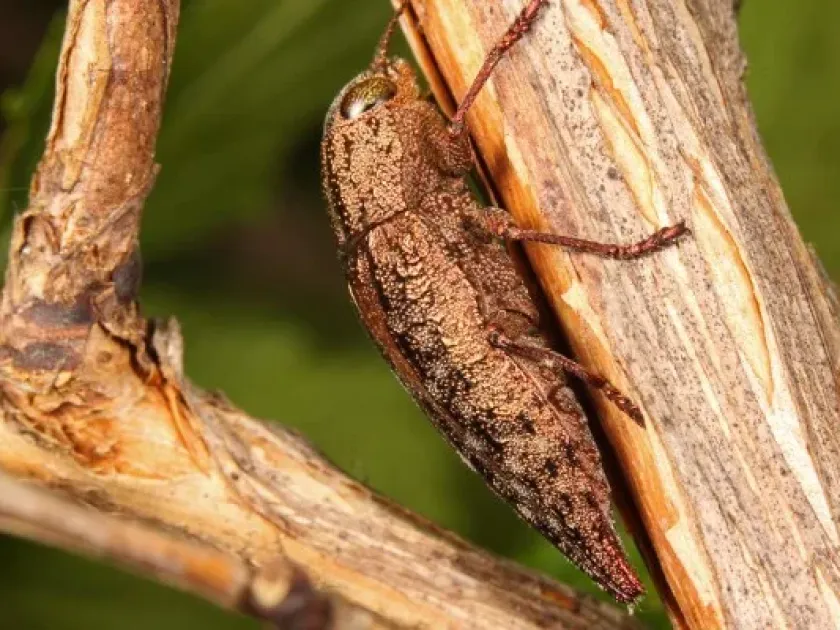
Dicerca pugionata is a species of metallic wood-boring beetle belonging to the Buprestidae family. Adults typically measure between 12 and 18 mm in length, showcasing a bronze or coppery-brown coloration with a metallic sheen.
The common name and scientific specific epithet reflect the unique shape of the elytra, which end in sharp, dagger-like projections. This structural feature makes them quite distinct from other buprestid species.
The larvae are typical of the family: legless, creamy-white, and equipped with a flattened, enlarged prothorax housing powerful mandibles. They spend their entire development cycle feeding deep within the wood.
Adult beetles are diurnal and highly active during sunny weather. They are frequently observed resting on the trunks and thick branches of host trees, ready to take flight when threatened.
The life cycle of this beetle usually spans several years. Environmental factors, such as ambient temperature and the health status of the host tree, significantly influence the rate of development.
What it damages
This beetle is a serious pest of various deciduous trees, with a particular affinity for alder and birch. It primarily targets weakened, stressed, or diseased trees, although healthy specimens can also be infested under high population pressure.
Larvae feed by boring long, winding galleries through the phloem and cambium layers. This activity disrupts the tree's nutrient transport system, often resulting in branch dieback or total crown decline.
Young trees are especially vulnerable to girdling by larval feeding, which can prove fatal within one or two seasons. In older trees, the damage manifests as decreased vigor and increased susceptibility to other pathogens.
The structural damage caused by the larvae acts as an entry point for various wood-decay fungi and opportunistic bacteria. This often leads to secondary infections that worsen the overall health of the tree.
In forest stands or urban landscapes, widespread infestation by Dicerca pugionata can significantly reduce the commercial or aesthetic value of the trees, eventually leading to their removal.
Signs of infestation
The most reliable sign of an infestation is the presence of characteristic D-shaped or oval exit holes on the bark. These are created by adult beetles as they emerge to start a new generation.
Fresh wood dust, often called "frass," accumulates in bark crevices or at the base of the tree. This sawdust-like material is a clear indicator that larvae are actively excavating galleries inside.
Visible stress symptoms in the tree canopy, such as yellowing foliage, premature leaf drop, and the death of top branches, are common indicators that the internal damage is severe.
Bark may show signs of cracking or necrotizing, sometimes accompanied by sap flow from the affected areas. When the bark is peeled back, the typical meandering larval galleries are easily visible.
During the peak flight season, adult beetles can be spotted sunning themselves on the trunk. They are quick to fly away, so careful observation is required to identify them on the bark surface.
Control measures
The primary control strategy is strict sanitation. Infested trees should be identified and removed promptly to prevent the spread of the next beetle generation, and wood must be destroyed.
Maintaining tree health is essential, as vigorous trees have better natural defenses against borer attacks. Proper irrigation and nutrient management help trees overcome minor infestations through sap flow.
Chemical control can be implemented in high-value ornamental settings by applying insecticides to the trunks. This treatment is most effective when timed to coincide with the emergence period of the adults.
Avoid leaving deadwood or wood piles near healthy trees. These materials provide ideal breeding sites for the beetles, which can subsequently move to nearby healthy vegetation.
Promoting a balanced ecosystem by encouraging natural predators, such as woodpeckers and parasitic wasps, can help keep population levels in check naturally without the need for intensive chemical use.
Taxonomy
- Latin name
- Dicerca pugionata
- Order
- Coleoptera (beetles)
- Family
- Buprestidae
- EPPO code
- DICCPU
Discussion
No discussions yet — be the first.