
Dicerca aino
Dicerca aino
Description
How to identify
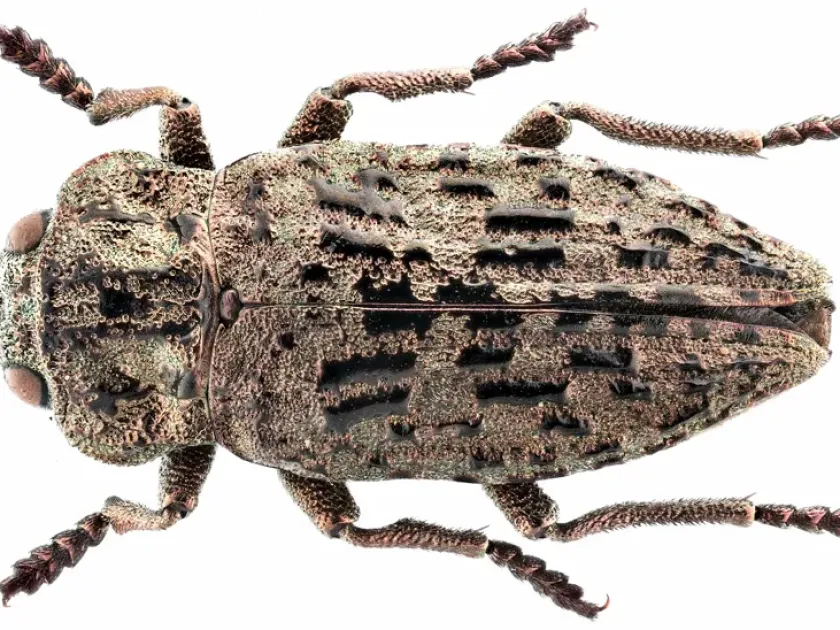
Dicerca aino is a member of the Buprestidae family, commonly known as metallic wood-boring beetles. The adult beetle is characterized by a robust, elongated body, usually reaching lengths of 20 to 25 millimeters, and possesses a distinct metallic copper or bronze sheen.
The elytra, or wing covers, are textured with small punctures and longitudinal ridges, which serve as excellent camouflage against the bark of host trees. This physical appearance makes it quite difficult to spot the insect in its natural environment.
The larval stage consists of a legless, creamy-white grub with a significantly enlarged thoracic segment. This morphology is specialized for tunneling and thriving deep within the woody tissues of the host plant.
The developmental cycle of this beetle is prolonged, often spanning multiple years. The duration of the cycle is heavily dependent on regional climate conditions and the specific physiological state of the host tree.
Pupation occurs within carefully constructed chambers inside the wood, from which the adult beetle emerges by boring a characteristic exit hole to the surface once it has completed its metamorphosis.
What it damages
The primary hosts for Dicerca aino are various deciduous fruit trees, including apple, pear, and stone fruits. Weakened or mechanically injured trees are the most susceptible to infestation by this beetle.
Wild-growing trees near orchards frequently serve as primary breeding sites. If these trees are not managed, they can become a persistent source of re-infestation for commercial horticultural operations.
Larvae cause damage by tunneling beneath the bark and through the cambium layer. This activity disrupts the transport of nutrients and water throughout the tree, leading to severe vascular damage.
Extensive tunneling results in branch dieback, reduced fruit yield, and, in severe cases, the complete death of the tree. Furthermore, the damage provides entry points for various secondary fungal and bacterial pathogens.
As the tree's health declines due to the larval feeding, it becomes increasingly unable to defend itself, creating a vicious cycle of infestation that eventually leads to the tree's total failure.
Signs of infestation
The most reliable indicator of an infestation is the presence of elliptical exit holes on the bark of the trunk or larger branches, left behind by emerging adult beetles.
Visible signs of stress, such as yellowing foliage, sparse canopy, or the sudden wilting of individual branches, are common. The bark in infested areas may also show signs of cracking or abnormal swelling.
In many cases, the affected area exhibits sap exudation, commonly referred to as gummosis. The bark may feel soft or hollow when tapped, indicating extensive tunneling and tissue destruction beneath the surface.
Upon removing the outer layer of dead bark, one can observe the flat, meandering galleries filled with frass, which are the telltale signatures of the larval feeding activity.
Trees heavily infested often demonstrate a stunted growth pattern and generally appear unthrifty, with rough, necrotic patches of bark visible throughout the main stem and structural limbs.
Control measures
Integrated pest management begins with rigorous orchard sanitation, including the prompt removal and destruction of dead, dying, or infested branches to reduce the overall beetle population in the area.
Maintaining optimal tree vigor through balanced fertilization and appropriate irrigation is critical. Healthy trees are significantly more resilient and can better compartmentalize damage caused by wood-borers.
Chemical control should be targeted during the adult flight period. Systemic insecticides applied to the bark or foliage can help minimize the success of mating and subsequent egg-laying activities.
Preventive measures include the maintenance of smooth, healthy bark on trunks and the application of white latex paint or lime wash to the lower trunk, which acts as a deterrent for ovipositing females.
- Regular inspection of orchard trees for early signs of galleries.
- Prompt removal and burning of infested wood material.
- Monitoring beetle presence using pheromone or sticky traps.
Taxonomy
- Latin name
- Dicerca aino
- Order
- Coleoptera (beetles)
- Family
- Buprestidae
- EPPO code
- DICCAI
Discussion
No discussions yet — be the first.