
Dicerca aenea
Dicerca aenea
Description
How to identify
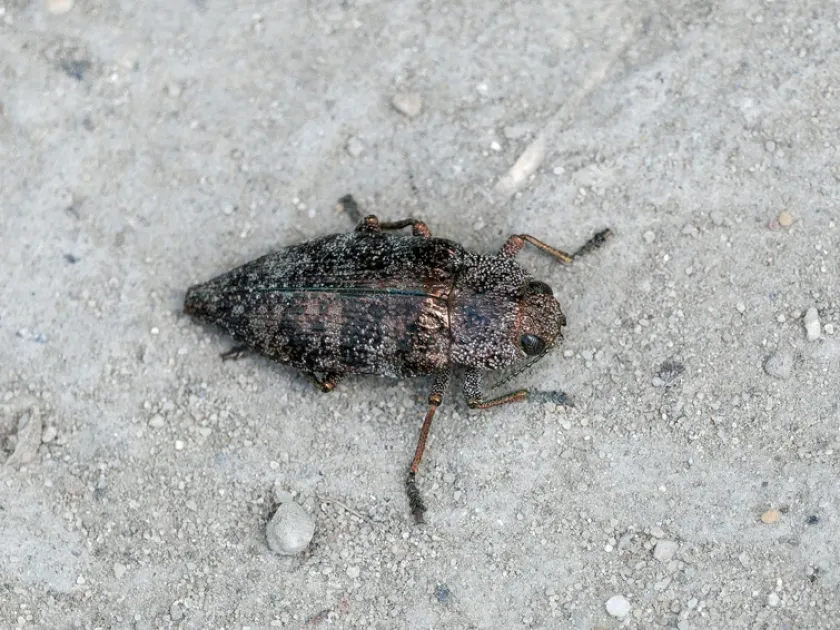
Dicerca aenea is a species of metallic wood-boring beetle belonging to the family Buprestidae, known for its distinct bronze-copper metallic appearance.
Adult beetles typically measure between 12 and 20 mm in length, with an elongated body that is heavily sclerotized and possesses a wrinkled surface on the elytra.
The larvae are cream-colored, legless, and have a flattened, shield-like prothorax, which is a specialized adaptation for burrowing through wood tissue.
Adults are active during the day, particularly in warm sunlight, making them occasionally visible on the trunks or branches of their host trees.
Due to their cryptic behavior and resemblance to bark, these beetles are often overlooked until significant damage to the host tree has already occurred.
What it damages
This beetle primarily targets deciduous trees, showing a strong preference for stressed or weakened stone fruit species like cherry, plum, and apricot.
Larvae feed within the inner bark and cambium layer, creating erratic and winding galleries that sever the vascular tissue and hinder nutrient transport.
Severely infested trees exhibit reduced vigor, premature yellowing of leaves, and dieback of branches, which can eventually lead to the death of the entire tree.
The larval galleries not only compromise the structural integrity of the wood but also serve as entry points for various secondary fungal and bacterial infections.
In neglected orchards, Dicerca aenea can become a severe problem, especially following harsh winters or periods of extreme drought that weaken the trees.
When it appears
The flight period for adult Dicerca aenea typically begins in late spring and continues throughout the warmer months of summer, peaking in June and July.
After mating, females seek out crevices in the bark or existing mechanical injuries on the tree to deposit their eggs in suitable microhabitats.
Upon hatching, the larvae immediately bore into the bark, where they spend the majority of their development cycle feeding and maturing.
The larval stage may last for one to two years, depending on the host's physiological status and local climatic conditions that influence developmental rates.
Pupation takes place within the tree, often occurring in the spring, after which the adult beetle emerges through a characteristic oval-shaped exit hole.
Signs of infestation
The most reliable sign of an infestation is the presence of small, oval-shaped exit holes on the surface of the trunk or thicker branches of the tree.
Bark surfaces over the larval galleries may appear depressed, cracked, or darkened, signaling internal feeding activity beneath the outer layer.
The canopy of an affected tree may show signs of thinning, and branches may die back progressively as the vascular system becomes increasingly obstructed.
Early fruit drop and stunted leaf development are common symptoms of stress caused by the disruption of sap flow throughout the tree's vascular network.
- Oval emergence holes on tree trunks
- Progressive dieback of canopy branches
- Bark cracking and depression over galleries
- Accumulation of fine wood dust in bark crevices
Control measures
Effective management starts with good orchard hygiene, which includes the prompt removal and burning of infested wood to eliminate potential breeding sites.
Maintaining tree health through proper fertilization, irrigation, and pruning is the best defense, as healthy trees are less attractive to egg-laying females.
Applying contact or systemic insecticides during the peak flight season can help control adult populations before they have the chance to lay eggs.
Wounds caused by pruning or environmental damage should be immediately sealed to prevent attracting beetles and to allow the tree to heal properly.
Encouraging natural predators such as woodpeckers and insectivorous birds can play a vital role in keeping the population of wood-boring beetles under control.
Taxonomy
- Latin name
- Dicerca aenea
- Order
- Coleoptera (beetles)
- Family
- Buprestidae
- EPPO code
- DICCAE
Discussion
No discussions yet — be the first.