
Blackberry gall wasp
Diastrophus turgidus
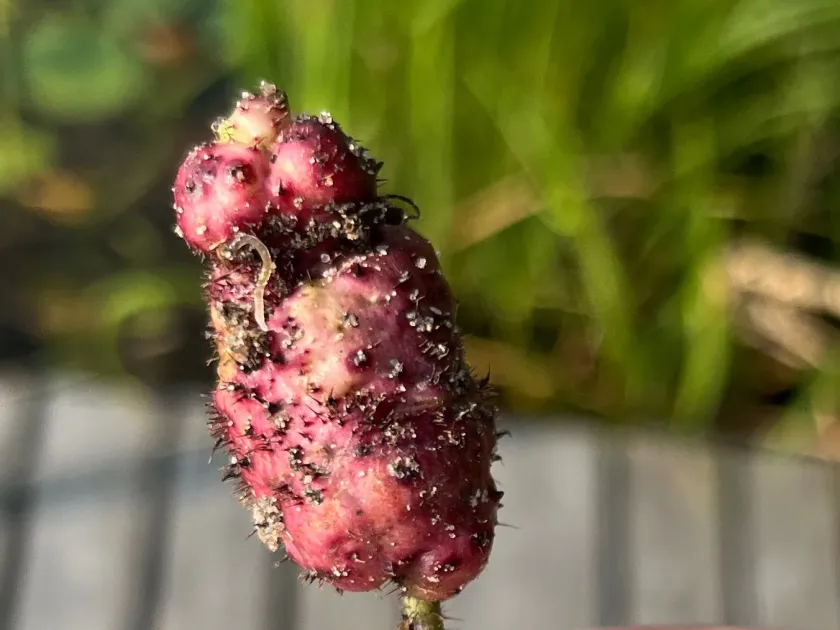
Description
How to identify
The blackberry gall wasp (Diastrophus turgidus) is a small insect belonging to the order Hymenoptera and the family Cynipidae. Adults are typically about 3 mm long and have a dark, inconspicuous appearance.
The primary method to identify this pest is by locating characteristic galls on the stems. These are abnormal growths that form as a result of the insect's activity inside the plant tissues.
The life cycle of the wasp is synchronized with the phenology of the blackberry plant. After overwintering inside the gall, the adults emerge to mate and lay eggs within young stems.
The larvae develop endophytically inside the stem. Being legless and white, they are rarely seen unless the gall is cut open, revealing the small chambers where they reside.
Visual identification is possible by analyzing the shape of the galls, which for this species are often swollen, irregularly shaped, and may feature small spines or ridges.
What it damages
This pest is specialized and attacks plants in the Rubus genus. Both wild blackberries and cultivated garden varieties are susceptible to infestation.
The larvae interfere with the vascular system of the stem, effectively obstructing the transport of water and nutrients from the roots to the upper parts of the plant.
Infected stems often show stunted or distorted growth. The galls create structural weaknesses, making the stems prone to snapping under their own weight or during heavy winds.
The infestation significantly decreases the plant's winter hardiness. Weakened stems are less capable of surviving cold winters, leading to further dieback of the bush in the spring.
The total yield and fruit quality are severely compromised. Berries on infested canes tend to be smaller, misshapen, and less sweet, rendering them unfit for high-quality production.
Signs of infestation
The most visible symptom is the presence of large, noticeable swellings or galls on the canes during the growing season. These can occur on both first-year and second-year canes.
- Small exit holes on the surface of the gall indicate that the adult wasp has already emerged.
- Bent, twisted, or abnormally thickened stems in the vicinity of the gall.
- Yellowing or premature senescence of leaves directly above the site of the gall.
- Brittleness of the cane at the site of the gall, often leading to easy breakage.
Inspections should be conducted in late spring and early summer when the galls have grown large enough to be easily spotted among the foliage.
It is important to differentiate these galls from other stem conditions, such as cane blight or other fungal infections that can sometimes manifest as stem swelling.
Control measures
The most effective control strategy is sanitation. Pruning out and burning all infested canes below the gall site is essential to stop the life cycle and destroy the larvae.
Chemical control, if necessary, should target the period of adult emergence. Systemic insecticides are most effective when applied during the active growth phase of the young canes.
Proper agronomic practices, including balanced fertilization and maintaining appropriate plant spacing, help keep the plants vigorous and more resilient to infestations.
Biological control methods focus on encouraging natural predators and parasitoids that prey on the larvae within the galls, keeping the population in check.
Consistent monitoring and early removal of infested wood are the cornerstones of successful management. Ignoring initial infestations leads to rapid population growth across the plot.
Taxonomy
- Latin name
- Diastrophus turgidus
- Order
- Hymenoptera
- Family
- Cynipidae
- EPPO code
- DISRTU
Discussion
No discussions yet — be the first.