
Kincaid's gall wasp
Diastrophus kincaidii
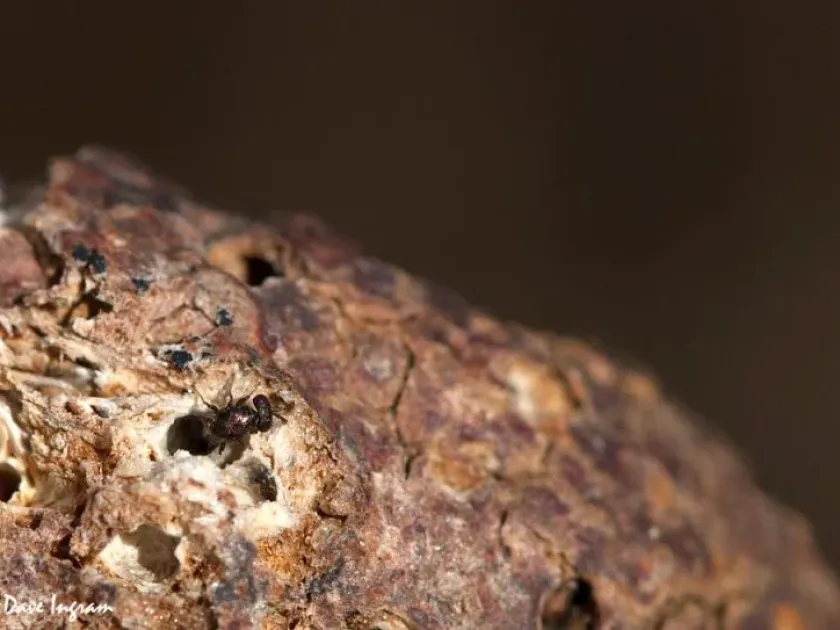
Description
How to identify
Kincaid's gall wasp (Diastrophus kincaidii) is a small insect belonging to the order Hymenoptera and the family Cynipidae. These wasps are known for inducing the growth of galls, which are abnormal tissue outgrowths, on the stems of their host plants.
Adult wasps are tiny and rarely seen due to their size and secretive behavior. They spend most of their existence within the plant tissues where they develop from eggs into larvae, causing the plant to form a protective housing around them.
Taxonomically, they are closely related to other gall-inducing insects. Identifying them is usually done by examining the physical characteristics of the galls they create rather than the adults themselves, which are difficult to capture and observe.
The life cycle involves complete metamorphosis: egg, larva, pupa, and adult. The success of the population is highly dependent on the availability of suitable host plants and the overall physiological state of those plants.
Larvae secrete specific chemicals that manipulate the plant's metabolic processes. This response forces the plant to divert nutrients to build the gall, which serves as both shelter and a food source for the developing wasp larvae throughout the seasons.
What it damages
Kincaid's gall wasp primarily targets species in the genus Rubus, with raspberries being a common host. It is a specialized pest that focuses its reproductive efforts on these specific woody shrubs.
The damage manifests as the formation of woody galls on the canes. These growths disrupt the vascular system of the stem, effectively reducing the plant's ability to transport water and essential nutrients to the developing fruit and foliage.
Apart from the internal disruption of fluids, the energy diversion is a major concern. The plant expends significant resources forming these pathological growths instead of focusing on healthy shoot development, fruit production, or root storage.
Heavy infestations lead to a decrease in overall plant vigor and productivity. Canes that support large or numerous galls often become brittle and are prone to breaking under stress, such as wind or the weight of a heavy harvest.
Yield loss is common in commercial or home raspberry patches where this pest is left unchecked, as the energy drain impacts the size and quality of the berries produced by the plant.
Signs of infestation
The most distinctive symptom of infestation is the appearance of rounded or elongated galls on the raspberry canes. These galls can vary in color from green when young to brown or woody as they mature.
If you inspect the surface of a mature gall, you may occasionally find small exit holes, indicating that the adult wasps have emerged. This is a primary sign that the pest population has reached the reproductive phase for the season.
During the dormant season, when leaves have fallen, these galls are easily identified on the bare canes. They look like knots or swellings that interrupt the smooth surface of the otherwise healthy raspberry stalk.
Plants affected by these wasps often show signs of stunted growth or deformation above the location of the gall. This is a direct consequence of the damaged transport tissues preventing normal growth cycles.
Regular monitoring during late summer and autumn is crucial. Scouting for these irregular swellings on new and old canes is the best way to prevent the establishment of the pest in the following growing year.
Control measures
The primary and most effective method of control is the prompt removal and destruction of affected canes. Pruning the galled sections ensures that the larvae are physically eliminated from the garden environment.
After pruning, the infested plant material must be burned or disposed of far from the growing site. Leaving infested clippings on the ground can allow the wasps to complete their development and emerge to infest other plants.
Timing is critical: pruning should be done while the larvae are still inside the galls, usually throughout the winter months, before the adults have a chance to emerge in the spring.
Cultivating robust plants through proper irrigation and balanced fertilization helps them tolerate low levels of infestation. A well-nourished plant is more resilient and can recover better if minor pest issues arise.
Chemical control is rarely effective for gall-inducing wasps because the larvae are safely shielded within the hard gall tissue. Therefore, sanitation and physical removal remain the gold standard for managing this specific pest species.
Taxonomy
- Latin name
- Diastrophus kincaidii
- Order
- Hymenoptera
- Family
- Cynipidae
- EPPO code
- DISRKI
Discussion
No discussions yet — be the first.