
Strawberry gall wasp
Diastrophus fragariae
Description
How to identify
The strawberry gall wasp (Diastrophus fragariae) is a species of hymenopteran insect belonging to the family Cynipidae. These tiny wasps are typically about 2–3 mm in size and possess a dark, almost black body, making them difficult to spot in the field.
The life cycle of this pest is highly specialized. The female wasp deposits eggs into the green stems, petioles, or leaf veins of the strawberry plant. This action triggers a chemical response in the plant tissue, leading to the formation of galls.
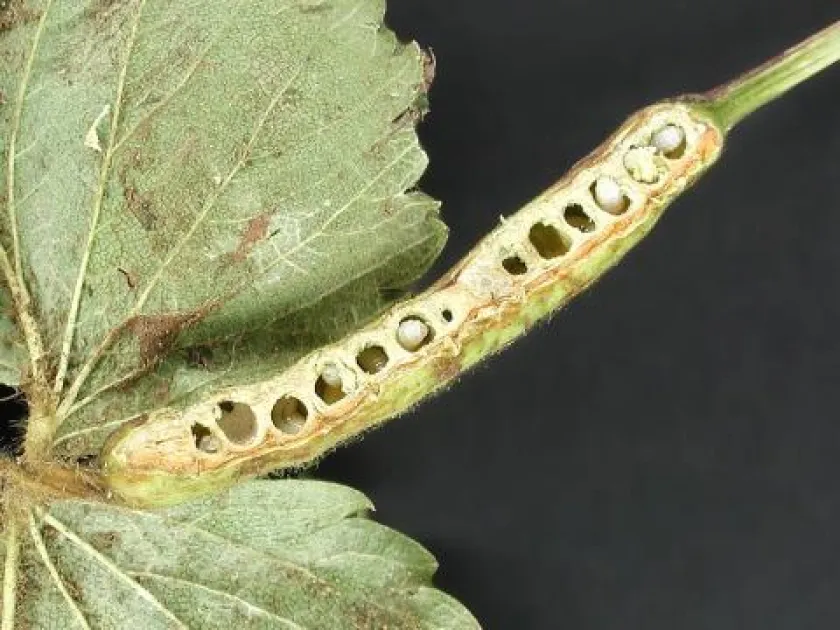
Inside these galls, the larvae develop. The gall provides the larvae with both protection from predators and a continuous supply of nutrients. The larvae remain sequestered within the plant tissue throughout their larval stage.
Adult wasps emerge in the spring to mate and lay eggs for the next generation. Because the insects are hidden within the galls for the majority of their life cycle, they are naturally shielded from many external threats.
To identify the presence of the pest, farmers must look for the distinct pathological growths known as galls. These structures are the only clear diagnostic feature that indicates the presence of Diastrophus fragariae in the plantation.
What it damages
The strawberry gall wasp primarily attacks the garden strawberry (Fragaria × ananassa). The damage is caused by the formation of galls on petioles, stolons, and flower stalks, which physically disrupts the plant's vascular system.
By causing these abnormal growths, the insect diverts the plant's resources away from fruit production. As a result, the strawberry bushes become stunted, and the yield is significantly reduced both in quantity and quality.
If galls develop on flower stalks, the flower development may be severely impaired, leading to malformed or small berries that are not commercially viable. In some cases, the tissue around the gall may necrosis.
The overall vigor of the strawberry plant decreases, making it less capable of surviving the winter or resisting environmental stressors. This chronic weakening is particularly damaging to commercial strawberry fields.
Secondary infections often take advantage of the tissue damage caused by the galls. Fungal pathogens can colonize the weakened plant areas, exacerbating the overall damage caused by the gall wasp infestation.
When it appears
Adult emergence typically begins in the spring, coinciding with the onset of strawberry plant growth and the budding phase. This is the period when the pest is most vulnerable to monitoring and intervention.
The larval development stage occurs throughout the summer. During this time, the galls grow in size as the larvae feed inside. By late summer, the galls harden and become more prominent on the plant stems.
Winter is passed in the larval stage within the galls. These galls often persist on the plant even after the leaves have died back, which acts as a reservoir for the next spring's generation.
Understanding this phenological cycle is crucial for effective control. Treatments applied too late, when the larvae are already safely enclosed in the galls, have very little impact on the population.
Signs of infestation
The most evident sign of an infestation is the presence of swelling or knots on the petioles and flower stalks. These galls appear as small, spherical or elongated growths, starting as green and turning brown with age.
Leaves may show signs of stress or curling due to the presence of galls on their supporting structures. In cases of high infestation, the plant will appear generally sickly, with slow growth and poor development of new foliage.
When inspecting the field, farmers should be alert to any irregular tissue development on the stems. A physical examination by cutting open a suspected gall will reveal the creamy-white larvae inside.
Reduced fruit output and poor development of new runners are strong indicators that the plant is under stress, and a check for galls should be conducted to confirm the presence of the pest.
After the harvest, inspecting old strawberry foliage for persistent galls is an effective way to assess the level of infestation and plan the necessary sanitary actions for the upcoming season.
Control measures
Sanitation is the most effective management strategy for the strawberry gall wasp. All infested parts of the plant, especially those containing galls, should be pruned and removed from the field promptly.
Destroying the removed material, ideally by burning or deep burial, is essential to kill the larvae inside the galls and prevent the emergence of adults the following spring.
Using certified, disease-free nursery stock is the first line of defense. Ensuring that the planting material is inspected for galls before it is introduced to the farm prevents the establishment of new infestations.
Chemical control can be used during the peak emergence of adults in the spring. Contact or systemic insecticides applied when the first flower buds appear can help manage the population before egg-laying occurs.
- Conduct regular field inspections during spring.
- Prune and destroy all galls found on the plants.
- Ensure new runners are free from gall wasp damage.
- Maintain good soil fertility to promote plant resilience.
- Use systemic insecticides only when necessary and according to label rates.
Taxonomy
- Latin name
- Diastrophus fragariae
- Order
- Hymenoptera
- Family
- Cynipidae
- EPPO code
- DISRFR
Discussion
No discussions yet — be the first.