
Blackberry gall wasp
Diastrophus cuscutaeformis
Description
How to identify
The blackberry gall wasp (Diastrophus cuscutaeformis) is a small hymenopteran insect belonging to the Cynipidae family. Adult wasps are tiny, typically measuring only 2–3 millimeters in length.
They are generally dark in color and possess delicate, transparent wings. Due to their small size and cryptic behavior, adults are rarely observed in the field by casual gardeners.
The life cycle involves complete metamorphosis, consisting of the egg, larva, pupa, and adult stages. The larvae develop inside specialized plant growths, which provide both nutrition and physical protection.
The insects overwinter as larvae within the woody galls they have induced on the blackberry canes. This strategy ensures the survival of the species during cold winter months.
Emergence of the adult wasps occurs during the spring, marking the start of a new generation. During this time, mated females search for young, vigorous blackberry shoots to lay their eggs.
What it damages
The primary hosts for Diastrophus cuscutaeformis are blackberry plants. The wasp injects enzymes during egg-laying that force the plant to create abnormal growth, known as a gall.
These galls are complex structures that divert the plant's resources away from fruit production and healthy stem development, causing stunted growth in the infested canes.
Structural integrity of the blackberry cane is compromised by the gall, making it prone to snapping under the pressure of wind or the weight of maturing berries.
In cases of heavy infestation, the vascular system of the cane is disrupted, which may lead to partial or total dieback of the shoot during the peak of the growing season.
The reduction in the overall vigor of the plant limits its ability to produce high-quality yields, making pest control essential for commercial and home growers alike.
Signs of infestation
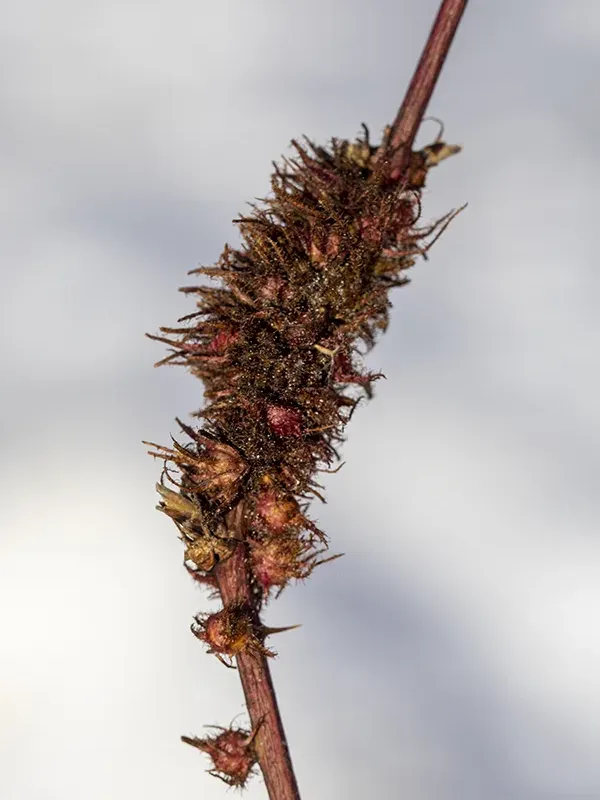
The most prominent sign of infestation is the presence of multi-chambered galls on the stems of blackberry plants. These often look like small, bristly bundles or nodules.
Early-season galls are green and relatively soft, but they harden and turn brown as the season progresses. These woody structures remain visible on the stems long after the leaves have fallen.
Stems exhibiting heavy galling often show signs of twisting or distortion. Chlorosis or premature leaf senescence may also be observed on the affected parts of the plant.
Small exit holes found on the surface of the galls indicate that the adult wasps have completed their development and successfully emerged to find new host plants.
During winter pruning, look for these distinctive woody lumps on canes. If identified, they should be marked for removal to prevent the cycle from continuing in the following season.
Control measures
Sanitation is the most effective management strategy. Pruning and destroying infested canes during the winter months is crucial to eliminate the overwintering larval population.
Chemical control is rarely effective because the larvae are safely sequestered inside the gall, protected from contact pesticides and systemic chemicals for most of their development.
If chemical interventions are necessary, they must be timed precisely with the adult emergence phase; however, this window is short and often unpredictable, making it difficult to execute.
Maintaining healthy, vigorous plants through proper irrigation and fertilization can help the blackberry bushes withstand minor infestations and recover more effectively.
Always dispose of pruned material by burning or burying it deep; leaving infested debris near the patch will allow the wasps to complete their life cycle undisturbed.
Taxonomy
- Latin name
- Diastrophus cuscutaeformis
- Order
- Hymenoptera
- Family
- Cynipidae
- EPPO code
- DISRCU
Discussion
No discussions yet — be the first.