
Pasture spittlebug
Deois flavopicta
Description
How to identify
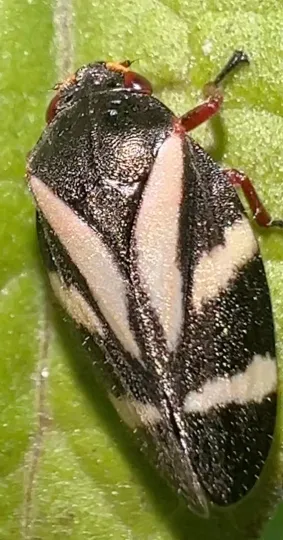
The pasture spittlebug (Deois flavopicta) belongs to the order Hemiptera, family Cercopidae. These insects are characterized by a distinctive color pattern of dark and yellow markings on their wings, making them easily identifiable in grassland environments.
Adult insects are equipped with powerful jumping hind legs. The nymphs create distinctive "spittle nests" made from excrement and glandular secretions at the base of plants, which provide protection from predators and dehydration.
This species is one of the most destructive pests of forage grasses in tropical and subtropical regions. Unlike many other cicadas, Deois flavopicta exhibits high adaptability to various soil types and environmental moisture levels.
Females lay their eggs primarily in the soil or at the base of grass sod. The embryos possess a diapause mechanism, allowing the species to survive prolonged dry seasons until the onset of the rainy season.
The life cycle consists of the egg stage, five nymphal instars, and the adult stage. The incomplete metamorphosis is typical for the Cercopidae family, ensuring stable population growth within agrosystems.
What it damages
The primary food sources for the pasture spittlebug are perennial forage grasses, particularly species belonging to the genera Brachiaria and Panicum.
Both adults and nymphs feed by piercing the plant tissue with their specialized mouthparts to suck sap. This feeding process disrupts the plant's vascular system and causes severe physiological stress.
Large-scale outbreaks of this pest can lead to the yellowing and subsequent drying of vast pasture areas, significantly reducing the nutritional value and biomass of forage available for grazing livestock.
Damaged plants become highly susceptible to secondary infections and fungal diseases. Furthermore, the toxins injected by the insect during feeding often cause localized necrosis in plant tissues.
Economic damage includes reduced pasture yields and the need for early relocation of livestock, which increases the overall cost of meat and dairy production due to the necessity of pasture rehabilitation.
When it appears
The activity of the pasture spittlebug is strictly linked to rainfall patterns. Nymph emergence peaks at the start of the rainy season when soil moisture becomes sufficient for development.
Multiple generations can occur throughout the year if weather conditions remain favorable. Temperatures ranging between 20-30 degrees Celsius are considered optimal for accelerating the pest's metabolism.
During dry seasons, the insects survive as dormant eggs hidden in the soil. This dormancy makes monitoring and detection extremely difficult for agronomists during the dry months.
The peak of adult population density typically occurs in the middle of the rainy season when forage grasses show maximum growth rates. At this stage, the insects are most visible due to high population density.
As the rainy season wanes, reproductive activity declines, and the insects transition into the diapause phase. Tracking population dynamics during the vigorous grass growth phase is crucial for effective management.
Signs of infestation
The most reliable sign of pest presence is the appearance of white, bubbly foam masses at the base of the grass stems. These spittle nests are easily observed upon inspection of the lower canopy.
A second key indicator is leaf chlorosis, characterized by yellow or brown streaks that gradually expand over the entire leaf blade, resulting from the insect's salivary toxins.
Thinning of the grass cover and the emergence of bare patches in the pasture indicate critical damage levels. Affected plants appear stunted and lose their turgor pressure.
Adult presence can be detected by mowing or rapidly disturbing the grass, causing the insects to jump. Their flight is short but noticeable due to their sudden movement.
- White spittle masses in the root zone.
- Yellowing and curling of leaf tips.
- General thinning of the forage layer.
- Specific necrosis on leaves.
- Visible jumping of insects when walking through the field.
Control measures
Effective management of the pasture spittlebug requires an integrated approach including both agrotechnical and chemical measures. Pasture rotation is essential to prevent pest buildup in a single area.
The use of biological agents, such as fungi of the genus Metarhizium, has proven highly effective in controlling nymphs while remaining safe for the ecosystem and livestock.
Chemical applications using systemic insecticides are justified only when the economic injury threshold is exceeded. Strict adherence to pre-grazing safety intervals is mandatory after any chemical treatment.
Mechanical mowing during peak nymph activity helps significantly reduce the population by destroying the spittle nests, which leads to nymphal mortality due to dehydration.
The development and utilization of grass cultivars resistant to Deois flavopicta damage represent the most sustainable and promising long-term strategy for controlling this dangerous pest.
Taxonomy
- Latin name
- Deois flavopicta
- Order
- Hemiptera (bugs, aphids, leafhoppers)
- Family
- Cercopidae
- EPPO code
- TOMAFL
Discussion
No discussions yet — be the first.