
Syrian woodpecker
Dendrocopos syriacus
Description
How to identify
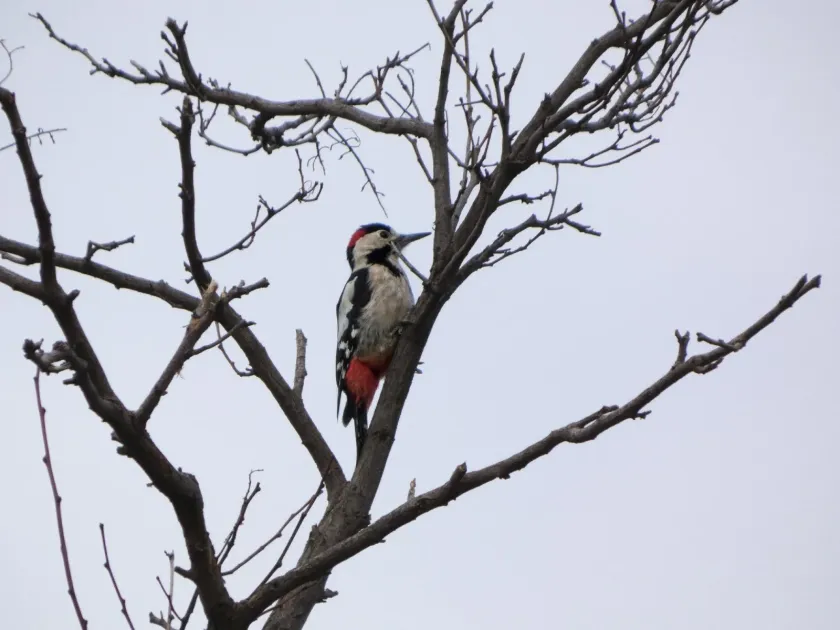
The Syrian woodpecker (Dendrocopos syriacus) is a bird of the family Picidae, closely resembling the Great spotted woodpecker. The main diagnostic feature is the lack of a black band connecting the nape to the bill, along with cleaner white cheeks.
It is a medium-sized bird with a bold black-and-white pattern and distinctive red undertail coverts. Males exhibit a small red patch on the nape, while females and juveniles lack this marking. Their bill is robust and chisel-shaped, evolved for excavating wood.
This species is highly adaptable and thrives in orchards, parks, and suburban areas. Unlike many other woodpecker species, it is strongly associated with human-modified landscapes, frequently utilizing fruit trees as a primary source of sustenance.
The biological cycle involves insect consumption during the spring, transitioning to a more fruit-heavy diet in late summer. This dietary shift makes them a significant challenge for fruit growers during the harvest season.
They nest in cavities excavated in soft or decaying wood. Pairs are territorial and often return to the same foraging grounds year after year, which necessitates consistent monitoring of the orchard area for nesting activity.
What it damages
The Syrian woodpecker causes substantial economic loss in orchards by feeding on stone and pome fruits. They target the most mature and succulent produce, often ruining entire crops by pecking holes in the skin of the fruit.
Beyond crop loss, the species causes physical damage to the trees. They create "anvils" or "forges" in the bark—specific crevices used to hold nuts or pits while cracking them—which often penetrate into the tree's cambium layer.
These bark wounds create pathways for secondary infections, including fungal and bacterial pathogens. Such injuries can lead to localized necrosis, branch dieback, or the spread of systemic tree diseases throughout the orchard.
Damage intensity peaks during the fruit ripening stage, typically from July through September. Damaged fruits that remain on the branch are prone to rotting, which attracts further pests and contributes to the spread of moniliosis.
In high-density orchards, woodpecker damage can lead to a significant percentage of cull fruits, rendering the harvest unsuitable for commercial sale or long-term storage.
Control measures
To protect orchards from Syrian woodpeckers, physical exclusion is the most reliable method. Installing bird-proof netting over tree canopies during the ripening phase prevents the birds from accessing the fruit.
Visual deterrents such as holographic tapes, reflective surfaces, or predator models provide short-term relief. However, these must be rotated frequently to prevent the birds from becoming habituated to the perceived threat.
Bioacoustic deterrents, which broadcast distress calls, have shown high efficacy in intensive agriculture. Systems that use randomized sound patterns are significantly more successful in preventing habituation compared to static devices.
Cultural control includes rigorous orchard hygiene. Removing dead or rotting branches where birds establish their "forges" and ensuring the immediate collection of fallen fruit minimizes the attractiveness of the site to woodpeckers.
Integrated pest management strategies often focus on a combination of deterrents and habitat modification. Encouraging natural predators, such as birds of prey, may assist in keeping the local woodpecker population within manageable limits.
Taxonomy
- Latin name
- Dendrocopos syriacus
- Family
- Picidae
- EPPO code
- DENPSY
Discussion
No discussions yet — be the first.