
Delphax graminicola
Delphax graminicola
Description
How to identify
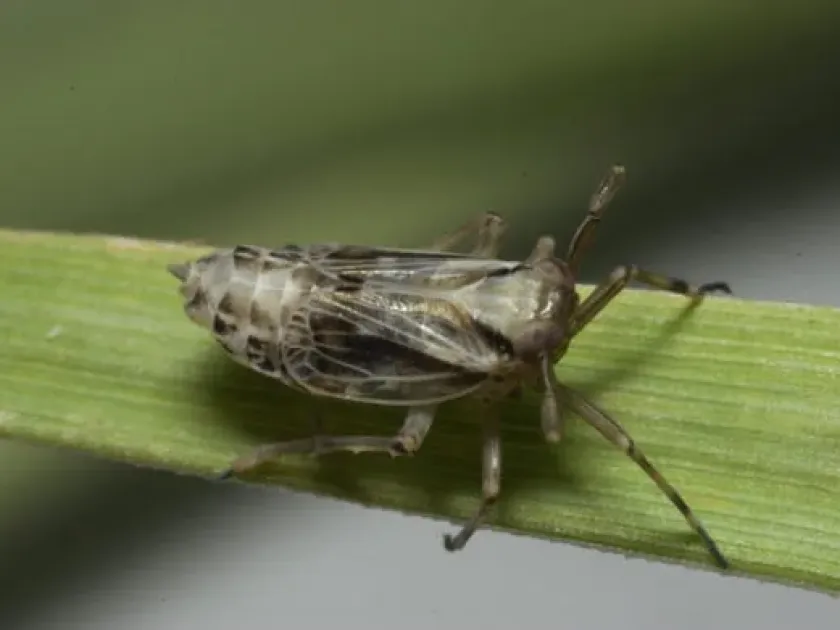
Delphax graminicola is a species of the family Delphacidae (order Hemiptera). Adults are generally 3-5 mm long, characterized by prominent spurs on their hind tibiae, which is a key identification feature for the family.
The coloration ranges from pale yellow to brownish, providing effective camouflage against the stems of grasses. While brachypterous (short-winged) forms occur, many individuals possess fully developed transparent wings with distinct venation.
Nymphs resemble smaller, wingless versions of adults. They are highly active and demonstrate a strong escape response, rapidly moving deep into the plant canopy when disturbed.
The life cycle consists of the egg stage, five nymphal instars, and the adult stage. In most temperate regions, the species completes one or two generations per year, overwintering primarily as nymphs in soil or crop residues.
Detecting these insects is challenging as they occupy hidden microhabitats, such as the axils of leaves or the lower parts of stems, making visual inspection difficult without specific effort.
What it damages
This species primarily infests cereal crops including wheat, barley, oats, and rye. Additionally, various wild grasses serve as reservoir hosts, maintaining populations in the landscape surrounding cultivated fields.
Damage is caused by both adults and nymphs feeding on plant sap. During feeding, they pierce the epidermis and inject salivary enzymes, which severely disrupt the plant's metabolic processes and nutrient transport.
Beyond the physical injury from sap extraction, Delphax graminicola is a significant vector for various plant viruses and phytoplasmas. Virus transmission can cause more profound economic loss than the direct sap-sucking activity.
Economic damage is most severe during drought periods when crops are stressed and the pest population density increases rapidly due to favorable breeding conditions provided by dense crop stands.
Severe infestations lead to reduced ear development, lower grain weight, and significant yield losses. In extreme cases, local outbreaks can result in widespread stunting and total loss of productivity in affected field sections.
Signs of infestation
The first visible signs of infestation include chlorotic spots or thin yellow streaks on the leaves. These spots gradually expand, eventually leading to leaf senescence and the drying of plant tissues.
Affected plants often show retarded growth and structural deformities such as stem twisting. The overall crop uniformity is disrupted, with patches of stunted plants appearing throughout the field.
Closer examination at the base of the plant or within leaf axils reveals the presence of nymphs or adults. When disturbed by shaking the foliage, the insects typically jump, making them more noticeable.
Viral symptoms associated with this pest include plant dwarfism, mosaic patterns on leaves, excessive tillering (often called witches' broom), and premature necrosis of shoots.
The accumulation of honeydew secreted by the insects promotes the growth of sooty mold, which creates a dark, unsightly layer on the foliage and inhibits photosynthesis by blocking light access.
Control measures
Cultural practices are the first line of defense, including crop rotation and rigorous soil cultivation to destroy weeds that serve as off-season hosts for the pest.
Post-harvest management is crucial; prompt removal or burial of crop residues destroys overwintering sites, significantly reducing the potential population pressure for the subsequent growing season.
If economic injury levels are exceeded, the application of systemic insecticides is recommended. Compounds from the neonicotinoid or pyrethroid classes are generally effective in reducing both nymph and adult populations.
Integrated pest management emphasizes the conservation of natural enemies, such as predatory bugs, spiders, and parasitoid wasps, which play a vital role in maintaining the pest population below damaging levels.
Monitoring the field using yellow sticky traps and sweep nets is highly effective for early detection. Timely intervention based on monitoring data minimizes the need for blanket chemical applications.
Taxonomy
- Latin name
- Delphax graminicola
- Order
- Hemiptera (bugs, aphids, leafhoppers)
- Family
- Delphacidae
- EPPO code
- DLPXGR
Discussion
No discussions yet — be the first.