
Ascold hawk moth
Deilephila ascoldensis
Description
How to identify
The Ascold hawk moth (Deilephila ascoldensis) is a member of the Sphingidae family, known for its robust, streamlined body and powerful flying capabilities.
Adult moths feature elongated forewings with brownish or olive hues, which provide excellent camouflage against tree bark and natural vegetation.
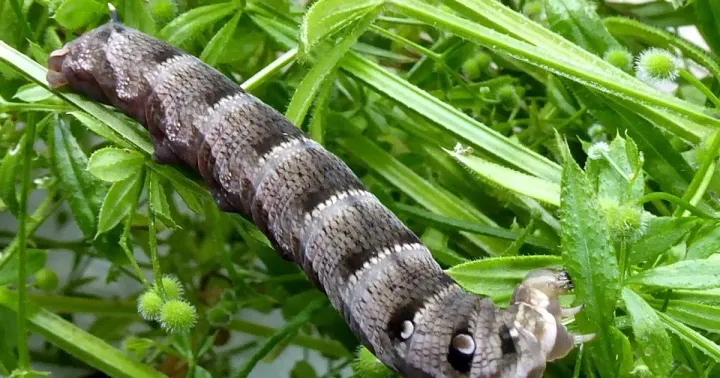
The larvae are large, cylindrical caterpillars easily recognized by the presence of a characteristic caudal horn located on the posterior end of their body.
These caterpillars often display vibrant colors and eye-spot patterns designed to deter predators by mimicking the appearance of larger animals.
As they grow, larvae undergo several molts, rapidly increasing in size and significantly increasing their food consumption rate during the final stages.
What it damages
Ascold hawk moth caterpillars primarily feed on plants within the Vitaceae family, showing a clear preference for both wild and cultivated grapevines.
They damage crops by consuming leaf tissue, often working from the leaf margins inwards, which results in severe skeletonization of the foliage.
Heavy infestations can lead to significant defoliation, which hampers the plant's ability to photosynthesize and store energy for the subsequent growth cycle.
Furthermore, the larvae may feed on tender young shoots, causing stunted growth and reducing the overall structural integrity of the vine.
While damage is usually localized, a high density of larvae in a single vineyard can lead to substantial economic losses if left unmonitored.
When it appears
Adult moths are primarily nocturnal and crepuscular, showing maximum activity levels during dusk and the early hours of the night.
The breeding season typically coincides with the peak vegetative growth phase of host plants, ensuring an abundant food supply for the emerging larvae.
The lifecycle from egg to pupa is relatively rapid, usually taking between four to six weeks, depending on the ambient temperatures of the environment.
The species survives the winter stage as a pupa, typically encased in a protective cocoon buried within the soil or deep inside leaf litter.
The emergence of adults in spring signals the start of the next generation, with the number of generations per year varying by regional climate.
Signs of infestation
The most reliable sign of an infestation is the accumulation of frass (caterpillar droppings) on the ground or on lower leaves directly below feeding areas.
Leaves showing irregular, jagged edges or large holes are typical indicators that hawk moth caterpillars have been active in the canopy.
Finding the larvae can be challenging due to their cryptic coloration; however, they can often be spotted by inspecting the vine stems during late evening hours.
Heavily damaged foliage leaves behind only the primary veins, creating a "skeletal" look that is characteristic of severe pest activity.
Small, spherical eggs are often laid individually on the underside of leaves, and regular inspection of these spots is necessary for early detection.
Control measures
For home gardens and small vineyards, manual hand-picking of caterpillars during the evening or early morning is a highly effective, non-toxic solution.
Cultivating and hoeing the soil under grapevines during late autumn helps expose and destroy pupae, significantly reducing the next season's population.
Biological control agents, such as formulations containing Bacillus thuringiensis, are highly effective against young larvae without harming beneficial species.
Light traps can be utilized to monitor and capture adult moths, though they should be used strategically to avoid attracting other non-target beneficial insects.
In commercial vineyards with severe pressure, targeted application of selective insecticides may be required, strictly adhering to pre-harvest safety intervals.
Taxonomy
- Latin name
- Deilephila ascoldensis
- Order
- Lepidoptera (butterflies)
- Family
- Sphingidae
- EPPO code
- DEILAS
Discussion
No discussions yet — be the first.