
Hydrangea Sphinx
Darapsa versicolor
Description
How to identify
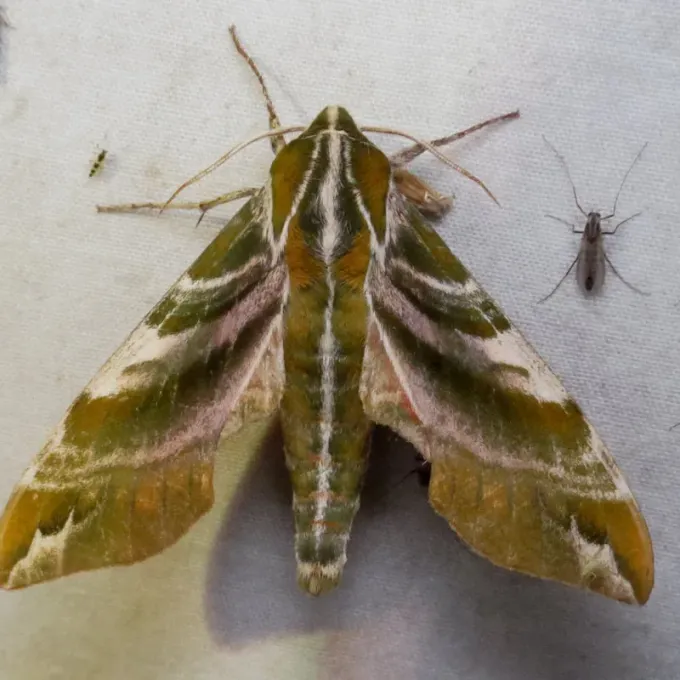
The Hydrangea Sphinx (Darapsa versicolor) is a moth species belonging to the Sphingidae family. Adult moths are known for their intricate green and brown patterning, which provides excellent camouflage.
Larvae, commonly known as caterpillars, are large and easily recognizable by the distinct horn located at the posterior end of their body.
The lifecycle follows a complete metamorphosis pattern: egg, larva, pupa, and adult. Pupation typically occurs within the soil or debris near the base of the host plant.
These moths are primarily nocturnal, making them difficult to spot during the day, although the larvae can sometimes be found resting on the undersides of leaves.
Understanding their seasonal activity is crucial for monitoring, as the appearance of adults usually coincides with the start of the growing season.
What it damages
The primary host plants for Darapsa versicolor are species within the Hydrangeaceae family, specifically various types of Hydrangeas.
The caterpillars feed on the foliage of these shrubs, causing significant damage by consuming large portions of the leaf tissue.
In ornamental settings, heavy infestation can lead to severe defoliation, which negatively impacts the plant's health and aesthetic appeal.
Young, succulent leaves are preferred by early-stage larvae, while older caterpillars are capable of devouring entire leaves quickly.
Cumulative feeding pressure can stunt the growth of young shrubs and prevent them from developing properly during the flowering stage.
Signs of infestation
Obvious signs of infestation include jagged edges on leaves and large, irregular holes appearing throughout the foliage of the host plant.
The accumulation of frass (caterpillar excrement) on the ground beneath the plant is a major indicator that larvae are feeding in the canopy above.
Inspecting the undersides of leaves during the early morning or evening hours often reveals the presence of resting caterpillars.
The presence of the characteristic horn on the rear of the larvae distinguishes them from many other common garden caterpillar pests.
- Ragged leaf margins.
- Accumulation of dark pellets (frass) under shrubs.
- Visual presence of large, green-brown caterpillars.
Control measures
Hand-picking the caterpillars is the most practical and environmentally friendly solution for small gardens or limited infestations.
For larger outbreaks, biological control agents such as Bacillus thuringiensis (Bt) are highly effective and target the larvae specifically.
When chemical intervention is necessary, opt for selective insecticides that minimize harm to beneficial pollinators visiting the hydrangea flowers.
Maintaining a clean garden bed by removing leaf litter in late autumn helps reduce the number of pupae that successfully overwinter.
Encouraging natural predators such as birds and parasitic wasps can significantly help in managing populations of the Hydrangea Sphinx naturally.
Taxonomy
- Latin name
- Darapsa versicolor
- Order
- Lepidoptera (butterflies)
- Family
- Sphingidae
- EPPO code
- DARAVE
Discussion
No discussions yet — be the first.