
Virginia creeper sphinx
Darapsa myron
Description
How to identify
The Virginia creeper sphinx (Darapsa myron) is a moth belonging to the family Sphingidae (hawk moths). Adult moths are characterized by their olive-brown coloration and a wingspan typically ranging from 45 to 60 mm, which provides excellent camouflage.
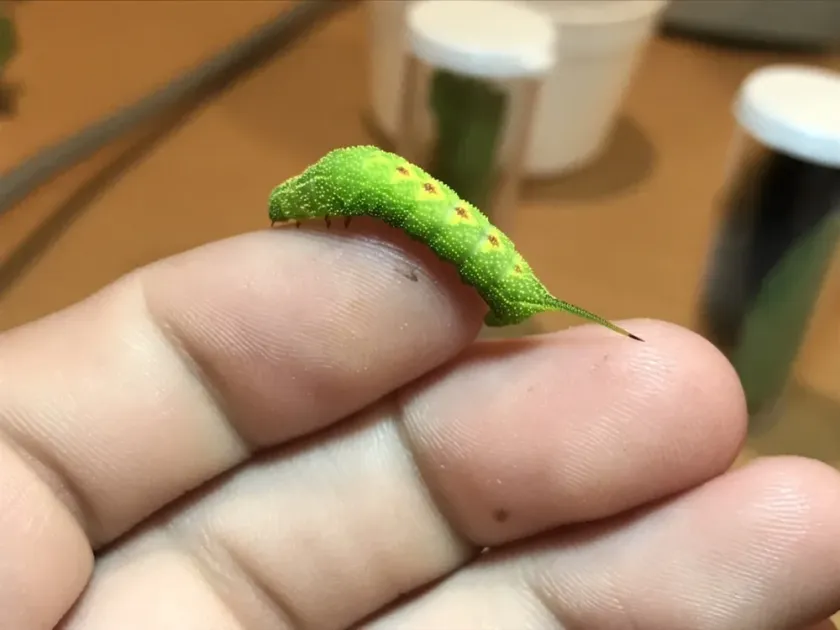
The larvae, or caterpillars, are known for their distinct appearance: they are generally green or brown with a series of pale, oblique stripes on their sides. They also possess a prominent horn on the posterior end of the abdomen.
The lifecycle of this moth typically includes two to three generations per year, depending on the climate. The species overwinters as a pupa, enclosed within a loose silk cocoon found in leaf litter or shallow soil.
Adult moths are nocturnal fliers and nectar feeders. They are rarely seen during the day, as they remain stationary on branches, appearing similar to dried leaves or bark.
Metamorphosis occurs rapidly during the warmer summer months, allowing the population to build up significantly if not monitored correctly by vineyard managers.
What it damages
The primary hosts for Darapsa myron are members of the Vitaceae family, particularly cultivated grapevines (Vitis vinifera) and various species of wild grapes.
These caterpillars also frequently feed on Virginia creeper (Parthenocissus quinquefolia), hence the common name. While often seen on wild plants, they can migrate to commercial vineyards.
Larval feeding causes defoliation of the grapevines. While a few caterpillars may not pose a severe threat, large infestations can significantly reduce the vine's photosynthetic capacity.
Reduced leaf surface area can hinder the sugar accumulation in berries, potentially impacting the quality of the grape harvest and the vigor of the vines.
Young nursery stock is especially vulnerable, as significant leaf loss at this stage can stunt growth and weaken the plant before it enters the dormancy period.
Signs of infestation
The most reliable sign of a Virginia creeper sphinx infestation is the presence of partially or completely consumed leaves, often with irregular edges or skeletonized sections.
Frass, which consists of cylindrical, dark-colored droppings found beneath the leaves or on the soil surface, is a clear indicator that caterpillars are actively feeding above.
Because the caterpillars often rest on the undersides of leaves or along the vine stems, they can be overlooked. A thorough inspection of the canopy is required to locate the larvae.
During the day, the caterpillars remain relatively immobile, blending in with the green foliage. In severe cases, the midribs of the leaves are all that remains, creating a stark visual contrast.
Monitoring should be intensified during mid-summer, which coincides with the peak feeding activity of the late-instar larvae before they move to the ground to pupate.
Control measures
Hand-picking the caterpillars is a highly effective and environmentally friendly control method for small-scale grape growers or home gardens.
Cultural control practices, such as clearing leaf litter from beneath vines and maintaining clean vineyard floors, are essential to disrupt the pupation cycle of the moth.
Biological control agents, such as Bacillus thuringiensis (Bt), are highly effective against the larval stages and can be applied without disrupting beneficial insect populations.
In cases of high population pressure, targeted applications of approved contact insecticides may be necessary, provided that harvest safety intervals are strictly followed.
Encouraging natural predators, such as birds and parasitic wasps, can help manage populations naturally and reduce the necessity for chemical intervention in the vineyard.
Taxonomy
- Latin name
- Darapsa myron
- Order
- Lepidoptera (butterflies)
- Family
- Sphingidae
- EPPO code
- AMPLMY
Discussion
No discussions yet — be the first.