
Darapsa choerilus
Darapsa choerilus
Description
How to identify
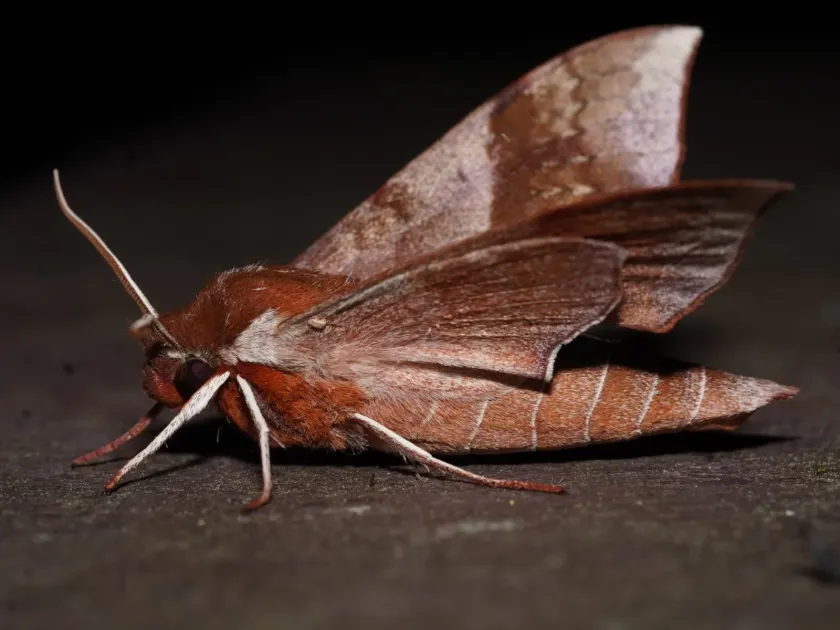
Darapsa choerilus, commonly known as the Azalea sphinx or hydrangea sphinx, is a member of the Sphingidae family within the order Lepidoptera.
Adult moths are characterized by a wingspan of approximately 7 to 8 centimeters, with forewings displaying a rich brownish or tan color with darker patterns.
The larvae are typically stout caterpillars featuring a characteristic horn-like structure on the posterior end of the abdomen, common in many hawk moths.
Throughout their development, the caterpillars may change color, transitioning from light green to shades of brown, which provides excellent camouflage.
The pupal stage occurs underground or within protected leaf litter, where the insect remains dormant during the winter months.
What it damages
The primary host plants for the larvae include members of the Vitaceae family, such as cultivated and wild grapes, which are particularly susceptible.
The larvae also frequently feed on species of the genus Viburnum, making them a concern for ornamental landscaping and private gardens.
Heavy feeding by the caterpillars can lead to significant defoliation, which stresses the plant and negatively impacts overall growth and vigor.
In high populations, the larvae can consume substantial portions of the foliage, leaving behind only the veins of the leaves in severe cases.
Commercial vineyards may suffer from reduced photosynthetic capacity if the infestation is not managed during the early stages of larval development.
When it appears
Adult moths are primarily active during late spring and early summer, typically emerging from their overwintering pupae as temperatures rise.
The life cycle often consists of one or two generations per year, depending largely on the local climate and length of the growing season.
Females lay eggs individually or in small clusters, primarily on the underside of host plant leaves to ensure protection from environmental stressors.
Larval activity reaches its peak during the mid-summer months when host plants are in their most vigorous stage of foliage production.
By late summer, mature larvae burrow into the soil to pupate, initiating their transition into the overwintering state.
Signs of infestation
Initial signs of infestation often include ragged edges on leaves, which occur as the caterpillars feed along the margins of the foliage.
The presence of large, pellet-like frass (excrement) scattered on the leaves or the ground beneath the host plant is a strong indicator of feeding activity.
Partial or total skeletonization of leaves, where only the vascular structure remains, is a hallmark of more mature, highly active caterpillar populations.
Due to their cryptic coloration, the larvae are often difficult to spot, requiring careful inspection of the lower leaf surfaces and stems.
- Ragged leaf margins or missing leaf tissue.
- Accumulation of large fecal pellets beneath the plant canopy.
- Observation of large, horn-tailed caterpillars on branches.
Control measures
Manual removal of caterpillars is highly effective for home gardens and small landscapes, providing an immediate solution without chemical usage.
Biological insecticides, specifically those containing Bacillus thuringiensis, are effective and safe for targeting young larvae while preserving beneficial insects.
Chemical control involving systemic or contact insecticides may be necessary in commercial settings if the population threshold exceeds acceptable limits.
Cultivation of the soil around the base of host plants in the autumn can destroy pupae and significantly reduce the emergence of the next year's generation.
Regular monitoring of the foliage throughout the growing season is essential for the early detection and management of this specific sphinx moth species.
Taxonomy
- Latin name
- Darapsa choerilus
- Order
- Lepidoptera (butterflies)
- Family
- Sphingidae
- EPPO code
- AMPACH
Discussion
No discussions yet — be the first.