
Oleander hawk-moth
Daphnis
Description
How to identify
The Oleander hawk-moth (Daphnis nerii) is a large moth belonging to the family Sphingidae. With a wingspan ranging from 100 to 130 mm, it is one of the most recognizable and visually striking species within its order.
The forewings feature a complex, beautiful camouflage pattern of olive-green, pink, and white markings. This intricate coloration mimics the foliage and bark of its host plants, providing excellent protection against predators.
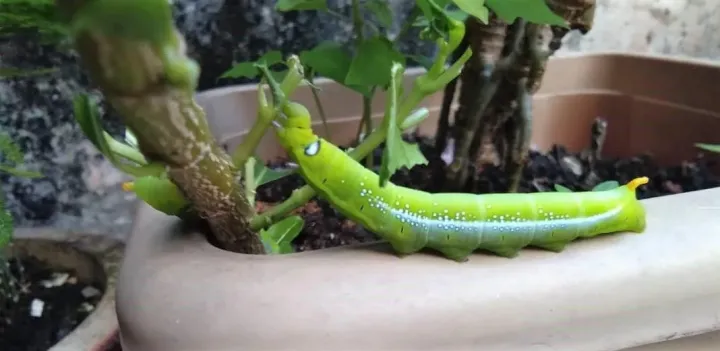
The larvae are equally distinctive, reaching up to 10 cm in length. They are typically bright green with large, blue eye-like spots on their anterior segments and a characteristic, slightly curved horn on their posterior end.
Pupation occurs in the soil, where the moth forms a brown, robust pupa. The species is migratory, with populations frequently traveling long distances between tropical and temperate regions.
Being a moth, its adult stage is nocturnal. They are attracted to strong scents and are important pollinators of various night-blooming flowers in their natural habitat.
What it damages
The primary host plant is the common oleander (Nerium oleander). These caterpillars have evolved to sequester the cardiac glycosides found in the plant, rendering them toxic to most potential predators.
Aside from oleander, the species is known to feed on other members of the Apocynaceae family, such as periwinkle (Vinca), and occasionally on grapevine or citrus plants in southern regions.
The damage is almost exclusively caused by the larval stage. A single large caterpillar can consume a significant amount of leaf tissue in a very short time, leading to rapid defoliation.
In cases of heavy infestation, entire branches or even young shrubs can be stripped of their foliage. This severe defoliation weakens the plant's physiological processes, specifically photosynthesis.
Reduced vigor makes the plants more susceptible to secondary stressors, including diseases and environmental fluctuations, which is particularly problematic for ornamental plantings in parks.
When it appears
In its native tropical range, the moth can be active throughout the year. However, in temperate regions where it migrates, its activity is strictly seasonal, peaking during the summer months.
Adult moths typically emerge in early summer, often arriving in temperate zones between June and July. They are highly active at night and are frequently seen near outdoor light sources.
Caterpillar development usually peaks in mid-to-late summer, around July and August. During this window, the larvae grow rapidly and cause the most significant visual damage to host plants.
Pupation typically occurs as autumn approaches. While the pupae are resilient, they generally cannot survive the harsh frost of colder winters in regions outside their native tropical distribution.
The timing of generations is heavily dependent on temperature. A hot, prolonged summer may allow for more rapid development cycles, leading to an increased number of larvae per season.
Signs of infestation
The most immediate sign of an infestation is the presence of large, noticeable fecal pellets under the host plants. These are easy to spot and indicate that large larvae are feeding nearby.
Another indicator is the state of the foliage. Caterpillars often graze along the leaf margins, eventually reducing the leaves to a skeleton of veins or consuming them entirely.
Despite their size, the caterpillars can be hard to spot because of their green, camouflaged bodies. They often hide on the undersides of leaves or along the woody stems during the day.
The presence of adults can be confirmed by sightings near artificial lights at night. They have a characteristic rapid flight pattern and a large, bulky body shape.
In damaged shrubs, look for missing leaf sections or entire branches that have been stripped bare, leaving the stems exposed, which is a clear sign of significant herbivory.
Control measures
Hand-picking remains the most practical and eco-friendly method for managing this pest in gardens. Because the larvae are quite large, they are easily removed manually during routine inspections.
Biological control using Bacillus thuringiensis (Bt) is highly effective against younger caterpillars. This method targets the larvae specifically while sparing beneficial insects and pollinators.
If an outbreak occurs, systemic insecticides may be used as a last resort. Always ensure that the chosen treatment is appropriate for ornamental plants and adheres to safety regulations.
Cultural practices, such as tilling the soil beneath the bushes during the autumn, can help disrupt the life cycle by exposing and destroying pupae that are attempting to overwinter.
Regular monitoring of oleander bushes starting in June is essential. Early detection of eggs or small larvae allows for swift intervention before significant damage to the plant's canopy occurs.
Taxonomy
- Latin name
- Daphnis
- Order
- Lepidoptera (butterflies)
- Family
- Sphingidae
- EPPO code
- DPHSSP
Discussion
No discussions yet — be the first.