
Oak gall wasp
Cynips tinctoria
Description
How to identify
The oak gall wasp (Cynips tinctoria) is a small hymenopteran insect belonging to the family Cynipidae. Measuring only a few millimeters, it is rarely seen in its adult stage due to its elusive behavior.
This insect is primarily known for inducing the growth of galls, which are abnormal plant growths that serve as both a protective habitat and a nutrient source for the developing larvae.
The species exhibits a complex biological cycle, often involving an alternation of generations where the morphology and reproductive strategies differ significantly between seasons.
Larvae are legless, white, and dwell entirely within the central chamber of the gall, feeding on the specialized plant tissue that develops under the influence of the wasp's secretions.
Upon maturity, the adult wasp emerges by chewing an exit hole through the woody wall of the gall, effectively dispersing into the surrounding environment to continue the lifecycle.
##damage##The primary hosts for the oak gall wasp are various species within the Quercus genus, particularly those commonly known for their high tannin content in galls.
Damage occurs when the female lays eggs in leaf buds or young shoots, triggering the formation of galls that divert significant nutritional resources away from the tree's normal growth.
Extensive infestations can stunt the growth of young oaks, causing stem deformities that may negatively impact the timber quality and overall vigor of the forest stand.
While mature oaks can typically withstand the stress of gall wasps, ornamental trees in nurseries may suffer from severe aesthetic damage and increased vulnerability to diseases.
The accumulation of galls on branches can lead to tissue death in the affected area, effectively reducing the photosynthetic surface area available to the tree.
##season##The developmental cycle begins in early spring, synchronized with the bud burst phase, when adults emerge to lay eggs in fresh plant tissue.
During the summer months, the galls expand rapidly as the larvae feed and grow within the protective structure, often reaching full size by late summer.
The emergence of the next generation of adults usually occurs in late autumn, marking a transition point where the cycle prepares for the wintering stage.
Overwintering often takes place within the hardened galls or within the leaf litter, providing a robust defense mechanism against cold temperatures and environmental stress.
The timing of wasp emergence is closely tied to the tree's phenology, making the pest predictable for forestry professionals monitoring the health of oak stands.
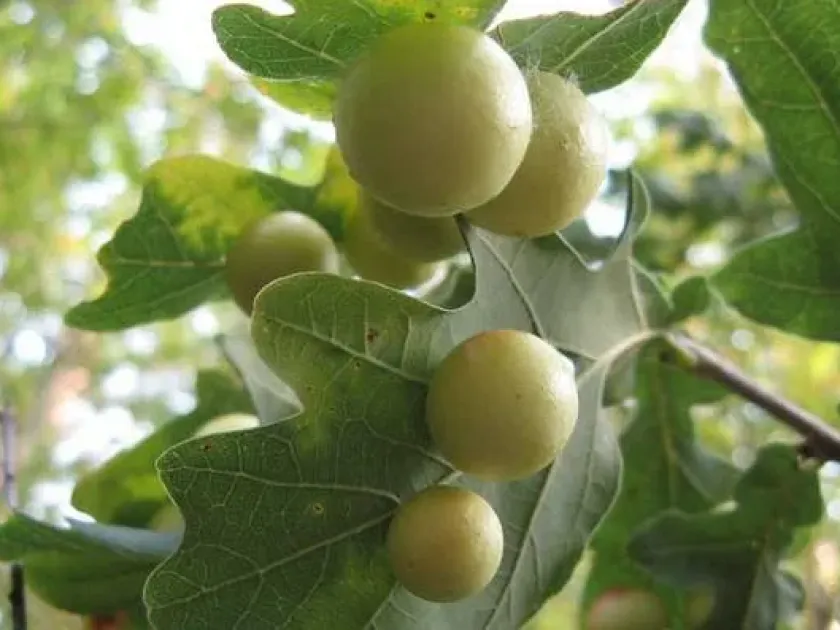
##signs##The most visible sign of infestation is the presence of spherical, woody growths on leaves or stems, which may change in color from vibrant green to deep brown as they age.
Clusters of these galls are clear indicators of high pest activity, often appearing as distinct, abnormal bumps on the tender parts of the tree's canopy.
Exit holes are a critical diagnostic feature, confirming that a larva has successfully completed its development and the adult wasp has vacated the chamber.
In cases of severe infestation, one might observe premature yellowing or localized wilting of the leaves attached to the shoots where the galls are concentrated.
Probing the galls during the growth phase reveals the presence of a central cavity containing a developing larva, which confirms the active status of the infestation.
##control##In nurseries and private gardens, manual removal and destruction of galls before the adult wasps emerge is the most reliable method for controlling the local population.
Chemical control can be implemented using systemic insecticides, although this is usually reserved for high-value trees or severe outbreaks where other methods fail.
Promoting a healthy ecosystem that includes natural predators and parasitoid wasps is essential for long-term integrated pest management in forests.
Maintaining proper tree health through irrigation and balanced fertilization helps trees better compensate for the nutrient drain caused by the gall wasp.
Regular inspection and monitoring are vital for early detection, as treating an infestation early in the spring is significantly more effective than addressing it in autumn.
Taxonomy
- Latin name
- Cynips tinctoria
- Order
- Hymenoptera
- Family
- Cynipidae
- EPPO code
- CYNITI
Discussion
No discussions yet — be the first.