
Oak apple gall wasp
Cynips quercusfolii
Description
How to identify
The oak apple gall wasp (Cynips quercusfolii) is a member of the Hymenoptera order, specifically the Cynipidae family.
The adult insect is a small wasp, approximately 3-4 mm long, with a dark body and a characteristic abdomen structure.
Identification is primarily based on the distinctive galls they produce on oak leaves rather than the elusive adult insects themselves.
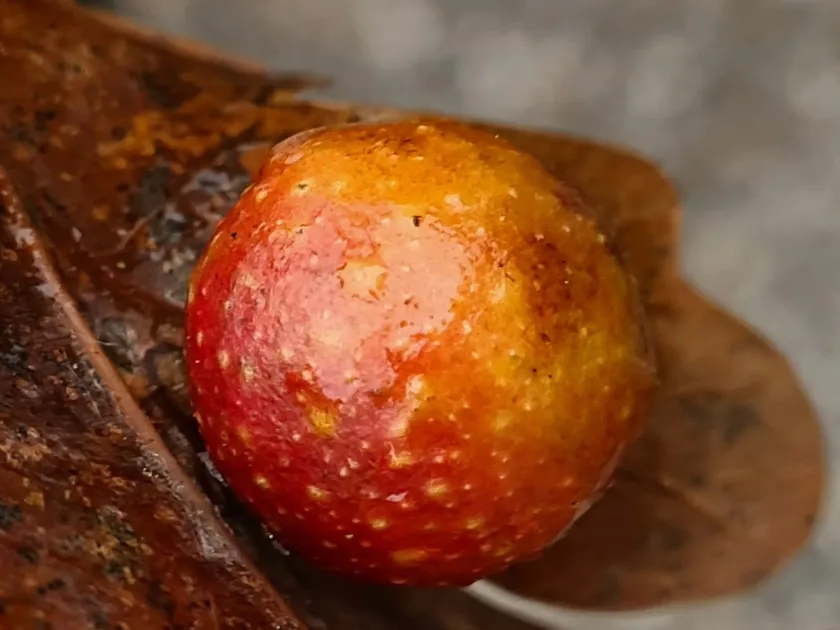
These galls are spherical, resembling small apples or nuts, with a smooth skin that turns from green to reddish or brown as they mature.
Inside each gall, a larva develops, feeding on the plant tissue and inducing abnormal growth via biochemical secretions.
What it damages
The primary host for this pest is the pedunculate oak (Quercus robur), though other oak species can also be affected.
The insect follows a specific lifecycle, forcing the plant to produce galls exclusively on the underside of the leaves.
In forestry and ornamental parks, heavy infestations can negatively impact the overall health of young oak trees.
While an individual gall does not kill the tree, a massive number of galls diverts nutrients from the leaf, weakening the overall plant.
Severe infestations lead to premature leaf drop, which can stunt the annual growth rate of the tree.
When it appears
The species exhibits a heterogonic lifecycle, involving an alternation between parthenogenetic and sexual generations.
In spring, females emerge from overwintered galls and lay eggs in oak buds, initiating a new developmental cycle.
During mid-summer, when larvae are actively developing within the leaf tissue, there is a peak in the formation of summer galls.
In autumn, adults emerge from these galls, mate, and deposit eggs into dormant buds for the winter period.
Winter galls, resulting from these autumn clutches, are smaller and significantly less conspicuous than their summer counterparts.
Signs of infestation
The first visual sign of infestation is the emergence of spherical swellings up to 2 cm in diameter on the leaf undersides.
In the summer, these galls appear succulent, often exhibiting a pink or reddish "blush" on the side exposed to sunlight.
Over time, as the larva matures inside, the surface of the gall hardens and darkens to a woody brown color.
A key indicator that the wasp has successfully completed its development is the appearance of small, clean exit holes on the gall surface.
Fallen leaves containing galls in autumn serve as a clear sign of the pest's presence in the local ecosystem.
Control measures
Chemical treatments are rarely effective against gall wasps because the pest is well-protected within the dense gall tissue.
The most effective cultural management practice is the collection and destruction of fallen leaves, which house the overwintering generation.
In nurseries, it is recommended to maintain vigorous tree health through proper fertilization and thinning to reduce stress.
Sanitary pruning of heavily infested branches can be an effective way to control population density in young oak plantations.
- Gathering and composting fallen autumn leaves
- Sanitary pruning of infested twigs
- Encouraging natural predators and parasitoids
- Promoting overall tree vigor to enhance resistance
Taxonomy
- Latin name
- Cynips quercusfolii
- Order
- Hymenoptera
- Family
- Cynipidae
- EPPO code
- CYNIQU
Discussion
No discussions yet — be the first.