
Oak apple gall wasp
Cynips divisa
Description
How to identify
Cynips divisa, commonly known as a type of oak gall wasp, belongs to the family Cynipidae. These insects are small, typically measuring only a few millimeters in length.
The species exhibits a complex life cycle involving alternation of generations, which is typical for many gall-forming wasps within the Cynipidae family.
Adult females are responsible for inducing galls on the host plant by depositing eggs into the leaf tissues during the early growing season.
The development of the insect occurs entirely within these galls, which provide both nutrition and protection from predators for the larvae.
Due to their tiny size and secretive behavior, the adult wasps themselves are rarely observed in the field, making gall identification the primary diagnostic method.
What it damages
The primary host for Cynips divisa is the oak tree (Quercus genus), particularly common oaks. It specifically targets the leaves for gall formation.
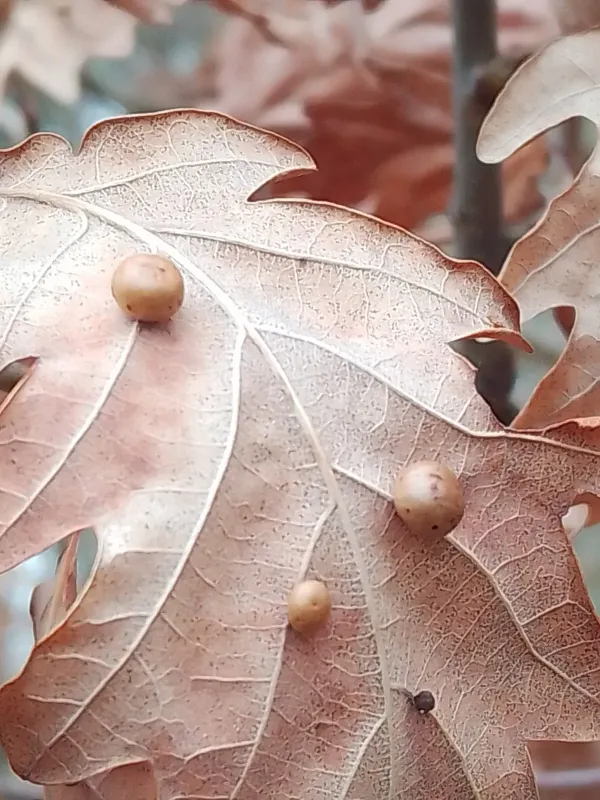
The larvae induce the formation of small, circular galls on the underside of the leaves. These galls are distinct, often appearing as small, hard, pea-like structures.
While a single gall causes minimal damage, severe infestations can affect a large portion of the foliage, reducing the tree's overall photosynthetic capacity.
Heavy gall formation can lead to premature leaf drop, which weakens the tree's health and reduces its ability to store energy for the next growing season.
Prolonged stress from repeated annual infestations may make oak trees more susceptible to secondary pests, pathogens, and drought conditions.
When it appears
Adult wasps emerge in spring to lay eggs as soon as the oak buds begin to open, ensuring the larvae have fresh plant tissue to develop.
The galls grow throughout the summer months, reaching their mature form and characteristic coloration by late summer or early autumn.
The insect spends the winter in the larval or pupal stage inside the galls, which remain attached to the fallen leaves on the forest floor.
Environmental factors, such as spring temperatures and humidity, significantly influence the timing of emergence and the success rate of gall initiation.
The complete biological cycle is synchronized with the phenology of the oak tree, making the pest highly effective in exploiting the host's resources.
Signs of infestation
The most prominent sign of infestation is the presence of numerous small, spherical galls on the underside of the oak leaves.
These galls often display a transition in color from green to yellow or red, making them highly visible as they reach maturity in late summer.
In addition to the galls, the leaves may show signs of yellowing or necrotic spotting, especially if the infestation density is high.
- Circular gall structures on the leaf underside.
- Premature yellowing of leaves in late summer.
- Deformed leaf surfaces caused by heavy gall accumulation.
Inspecting the underside of fallen leaves in autumn is the most reliable way to confirm the presence of this specific gall wasp.
Control measures
The most practical management strategy involves removing and destroying leaf litter in autumn, as this prevents the emergence of the next generation.
In nursery settings or high-value landscapes, systemic insecticides may be applied during the period of adult emergence to mitigate population levels.
Maintaining vigorous tree growth through proper fertilization and irrigation helps trees better withstand the stress caused by gall wasp activity.
Natural biological control, including parasitoid wasps that prey on Cynips larvae, is crucial for maintaining a balance in natural forest ecosystems.
Regular monitoring of oak foliage in early summer allows for the assessment of infestation severity and helps in timing potential management interventions.
Taxonomy
- Latin name
- Cynips divisa
- Order
- Hymenoptera
- Family
- Cynipidae
- EPPO code
- DIPLDI
Discussion
No discussions yet — be the first.