
Lesser cuckoo
Cuculus poliocephalus
Description
How to identify
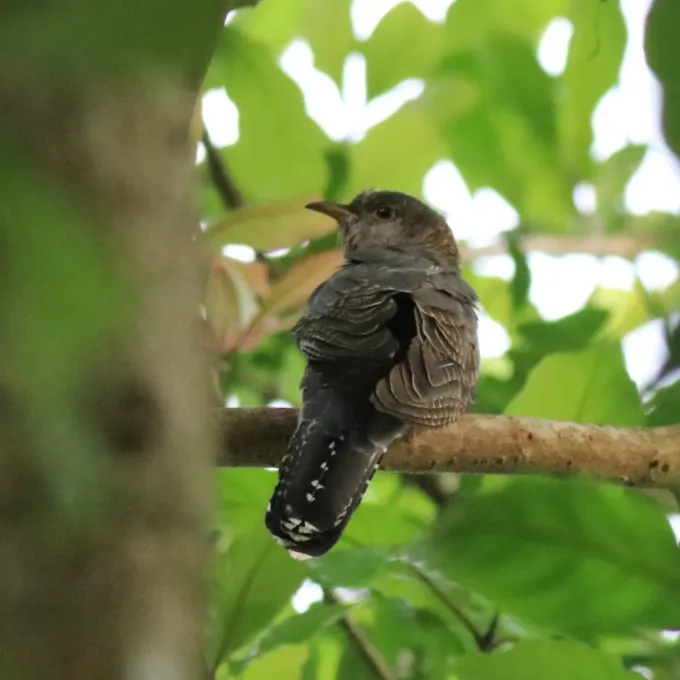
The Lesser Cuckoo (Cuculus poliocephalus) belongs to the order Cuculiformes and the family Cuculidae. It is a smaller relative of the common cuckoo, possessing distinctive morphological features.
The plumage is predominantly greyish with dark, prominent barring on the underparts. These markings provide effective camouflage when the bird is perched in the foliage of trees.
The wings are elongated and pointed, facilitating rapid flight. The tail is long and graduated, allowing for precise aerial maneuvering within dense forest environments.
The vocalization is a series of sharp, rhythmic notes, significantly different from the familiar call of the common cuckoo, serving as the primary diagnostic tool for field identification.
As a migratory species, it inhabits forest edges and shrublands near agricultural zones during the breeding season, moving to tropical areas during the winter months.
What it damages
The Lesser Cuckoo is not a direct pest of agricultural crops, as it does not feed on vegetative or reproductive plant tissues, roots, or seeds.
The primary agricultural concern is its role as an obligate brood parasite. It lays eggs in the nests of small insectivorous birds that are essential for natural pest control in orchards.
Upon hatching, the cuckoo chick typically ejects the host’s eggs or nestlings, effectively removing the biological control agents from the immediate area.
The loss of insectivorous bird populations leads to a temporary decrease in the natural suppression of leaf-eating insects, potentially causing localized damage to horticultural crops.
While the impact is ecological rather than physical destruction of crops, the loss of natural predators of pests is a significant factor in integrated pest management strategies.
When it appears
Lesser Cuckoos arrive in their breeding grounds in mid-spring, with the timing coinciding with the peak nesting activity of their host species in and around farmland.
The parasitic period persists throughout the late spring and summer months, as these birds synchronize their egg-laying with the nesting cycles of smaller passerines.
During the peak of the season, their presence can be detected via increased acoustic activity, which serves as a signal for the start of the nesting period.
Migratory patterns are strictly seasonal; by the end of the summer, the birds begin their return journey to tropical wintering grounds, ceasing their influence on local avian populations.
Agricultural monitoring should account for this seasonal cycle to understand shifts in the effectiveness of natural insect control provided by endemic bird populations.
Signs of infestation
The most reliable sign of the Lesser Cuckoo's presence is its unique, repetitive call, which is most audible during the early morning hours and late afternoons.
Behavioral changes in local songbirds, such as aggressive mobbing or frantic alarm calls, often indicate the presence of a cuckoo attempting to approach or monitor a nesting site.
A decline in the density of successful insectivorous bird broods in a specific orchard sector may be an indirect indicator of high parasitic pressure in that area.
In scientific field observations, the discovery of a non-host egg within a nest or the presence of a disproportionately large cuckoo chick is a definitive sign of parasitism.
Ornithological surveys often use specialized playback recordings of their calls to verify the occupancy of the species in specific agricultural landscapes.
Control measures
Direct intervention or control measures against the Lesser Cuckoo are typically neither recommended nor practiced, as the species is part of the native biodiversity and protected by law.
Effective management focuses on habitat preservation, ensuring the availability of diverse nesting sites that allow host bird populations to remain stable and productive.
Implementing biological control programs, such as the use of soft biopesticides, helps mitigate the risks posed by insect pests when the natural regulating agents are temporarily displaced.
Providing artificial nesting boxes for useful songbirds can improve their chances of successful breeding, thereby offsetting the losses caused by the cuckoo's parasitism.
Agricultural strategy should prioritize Integrated Pest Management (IPM), recognizing that while brood parasites have an impact, they remain a natural component of a healthy ecosystem.
Taxonomy
- Latin name
- Cuculus poliocephalus
- Family
- Cuculidae
- EPPO code
- CCLSPO
Discussion
No discussions yet — be the first.