
Timber rattlesnake
Crotalus horridus
Description
How to identify
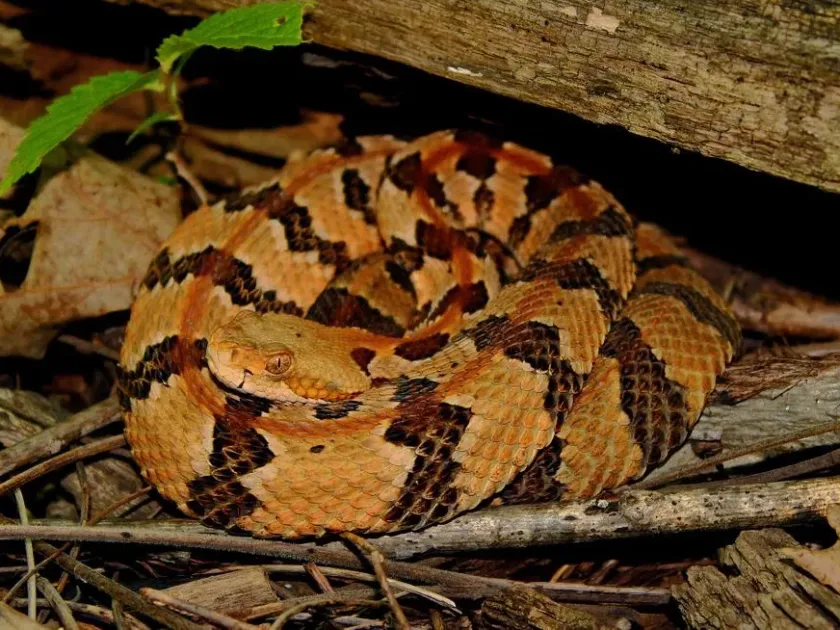
The timber rattlesnake (Crotalus horridus) is a venomous pit viper native to North America, characterized by a heavy body and a distinct rattle at the end of the tail.
Adult specimens typically range from 90 to 150 cm in length, possessing a pattern of dark brown or black crossbands on a lighter grey or yellowish base color.
The head is distinctly triangular, housing the venom glands, and the pupils are vertically elliptical, typical for the Crotalinae subfamily.
These snakes are primarily forest-dwellers, though they may occasionally venture into edges of agricultural land in search of prey.
As a species, they are generally elusive and shy, preferring to stay camouflaged rather than engage in a confrontation unless they feel threatened.
What it damages
The timber rattlesnake is not classified as an agricultural pest because it does not feed on crops, seeds, or farm infrastructure.
It does not cause any direct yield loss to corn, wheat, fruit, or vegetable farming, making it ecologically distinct from insect or rodent pests.
The impact on agriculture is strictly limited to human safety concerns for laborers operating near their natural range or forest borders.
Farmers do not need to apply chemical controls against the snake, as they play a role in the local ecosystem by predating on small mammals.
Any perceived conflict is usually resolved by site management practices rather than direct eradication, which is often legally restricted.
When it appears
The activity of the timber rattlesnake is highly temperature-dependent, typically beginning in mid-spring as soil temperatures rise.
Peak movement and foraging activity occur during the warm summer months, coinciding with the development of crops and high field activity.
As fall approaches and temperatures drop, snakes begin moving toward communal den sites to prepare for the winter dormancy period.
During the winter, they are inactive in underground hibernacula, completely eliminating the risk of encounters in agricultural fields.
Daily activity cycles are often crepuscular or nocturnal, especially during the hottest summer days when daytime temperatures become too high.
Signs of infestation
The most distinct sign of a timber rattlesnake's presence is the audible buzzing sound of its rattle, which acts as a clear warning signal.
Shed skins found near farm sheds or field edges serve as a primary indicator of snake presence and regular occupancy in the area.
Visual identification of individuals basking on logs, rocks, or open ground near field borders is the most common way to notice them.
Although rare in tilled fields, their presence might be indicated by local fluctuations in small rodent populations near field margins.
Moving through tall grasses or heavy brush without clear visibility increases the likelihood of an unexpected encounter.
Control measures
Control measures are strictly preventative, focusing on human safety and reducing the attractiveness of the farm to potential prey species.
Keeping the area around farm buildings clear of debris and tall weeds reduces the number of suitable shelters for snakes.
Rodent control is the best way to keep snakes away from the vicinity of farm buildings, as they are drawn to food sources.
Employees should be trained to wear proper protective footwear and remain vigilant when performing manual tasks in wooded areas or field edges.
- Eliminate wood piles and debris near structures.
- Implement rigorous rodent control programs.
- Ensure workers wear high-cut boots in high-risk areas.
- Establish clear protocols for emergency medical response.
Taxonomy
- Latin name
- Crotalus horridus
- Family
- Viperidae
- EPPO code
- KROTHO
Discussion
No discussions yet — be the first.