
Rattlesnake
Crotalus
Description
How to identify
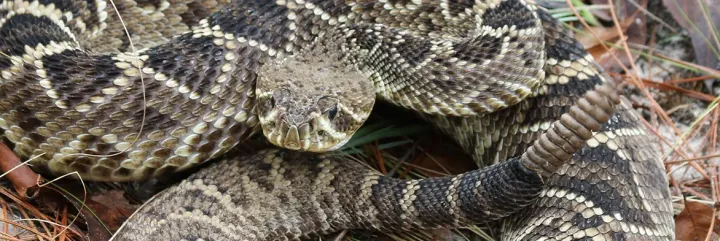
Rattlesnakes (genus Crotalus) are venomous reptiles belonging to the viper family. They are easily identified by the distinct rattle at the end of their tails.
Their bodies are covered in keeled scales, providing a rough texture that helps them blend into diverse terrains, including dry fields and rocky soil.
They possess triangular-shaped heads and specialized heat-sensing pits, allowing them to hunt effectively in low-light conditions by detecting infrared heat.
While they vary in size, most species are well-adapted to camouflage, making them difficult to spot among dense vegetation or debris.
Rattlesnakes are shy by nature and will generally avoid humans unless they feel threatened or cornered, which is crucial for field management.
What it damages
Rattlesnakes are not pests that consume plant tissues, meaning they do not cause direct damage to crops like insects or rodents do.
However, their habit of occupying rodent burrows can lead to the structural degradation of the soil around the root systems of agricultural crops.
The primary concern for farmers is the safety hazard posed to workers, which can disrupt essential tasks like weeding, harvesting, and irrigation maintenance.
Operational delays occur when snake sightings on a field force the suspension of mechanized equipment use, causing setbacks in planting or harvest schedules.
Occasional damage to irrigation equipment, such as hoses and drip lines, occurs when snakes seek refuge in pipes or plastic housings to thermoregulate.
When it appears
Rattlesnake activity begins as the soil warms up during the spring, causing them to emerge from their winter dens to hunt for food.
Summer months represent the peak of their activity, as they move across fields and foraging areas in search of prey and mates.
As temperatures drop during autumn, snakes begin to move toward communal hibernation sites, often located near structural foundations or deep burrows.
During the winter, they enter a period of brumation, though they may emerge briefly during exceptionally warm and sunny spells.
Weather patterns heavily influence their behavior, with snakes often becoming more active during the twilight hours or following heavy rainfalls.
Signs of infestation
The most common sign of a rattlesnake's presence is the characteristic serpentine track left in soft soil or dust throughout the field.
Shed skins left near crop borders or storage areas are reliable indicators that the area is being used as a habitat or travel corridor.
The unique, buzzing rattle sound is a clear warning that an individual is nearby and feels threatened by human proximity.
Abandoned rodent holes that appear polished or smoothed at the entrance suggest they have been repurposed by snakes as temporary dens.
Finding remains of small mammals or birds killed by predation can also signify the presence of these reptiles in the immediate vicinity.
Control measures
Effective management begins with landscape maintenance, specifically keeping vegetation mowed short around fields to remove hiding spots.
Controlling rodent populations is the most sustainable way to make a field less attractive to snakes, as rodents are their primary food source.
Physical barriers, such as specialized snake-proof fencing, can be installed around vital infrastructure like storage sheds or pump stations.
Personal safety protocols, including wearing high leather boots and using tools rather than hands when clearing debris, are mandatory for farm staff.
Eliminating piles of wood, rock, or agricultural debris removes the essential shelter and thermal insulation that snakes require to survive on the farm.
Taxonomy
- Latin name
- Crotalus
- Family
- Viperidae
- EPPO code
- KROTSP
Discussion
No discussions yet — be the first.