
Cricula moth
Cricula trifenestrata
Description
How to identify
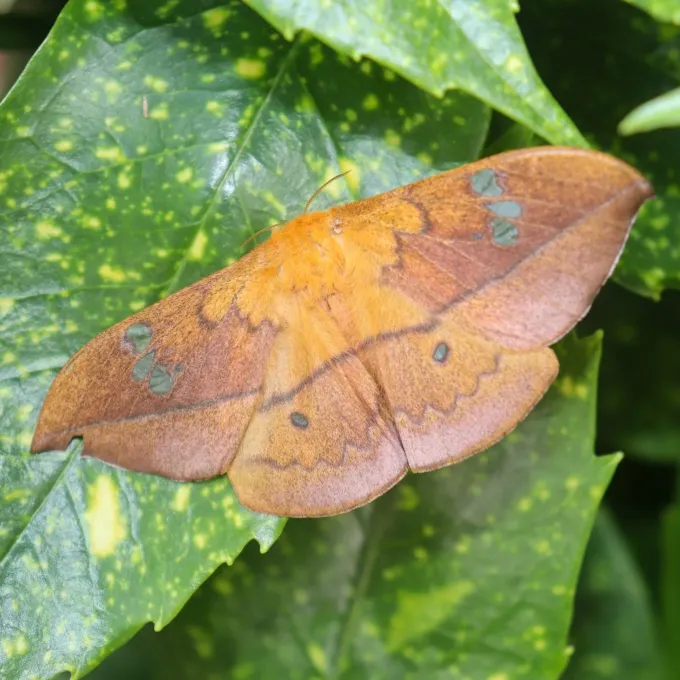
The Cricula moth (Cricula trifenestrata) belongs to the family Saturniidae. The adult is a large, golden-brown moth with a wingspan of 7-9 cm, characterized by distinct transparent "windows" on its wings, which serve as a primary identification feature for the species.
The larvae, or caterpillars, are known for their voracious appetite and often possess a brightly colored body covered in setae (hairs) that can be irritating to human skin upon contact. The life cycle consists of egg, larva, pupa within a cocoon, and adult stages.
The cocoons are particularly notable for their golden or brownish silk and net-like structure. They are often found securely attached to the host plant, providing a protective environment for the pupa during its transformation phase.
The life cycle is heavily influenced by regional climate conditions, allowing for multiple generations per year in tropical environments. This rapid reproductive rate can lead to significant population spikes if left unchecked by natural predators.
Females typically deposit their eggs in clusters on the underside of leaves. This grouping behavior ensures that neonate caterpillars have immediate access to food, facilitating a quick colonization of the host plant foliage.
What it damages
This pest affects a wide range of fruit and ornamental trees, including mango, cashew, cinnamon, and various tea plants. In several regions, it is considered a significant threat to commercial orchard productivity and forest health.
Larvae feed primarily on the leaf tissue. During the early stages, they consume soft parts of the leaf, but as they grow, they can consume the entire leaf blade, leaving behind only the petiole and primary veins.
Massive infestations cause severe defoliation of trees, which drastically reduces the plant's ability to photosynthesize. This leads to reduced fruit size, premature fruit drop, and, in severe cases, the death of young or stressed trees.
In nurseries and young plantations, the damage is particularly detrimental because young saplings lack the stored energy reserves to recover from total leaf loss, leading to stunted growth or complete mortality.
Evidence of an infestation includes the presence of skeletonized leaves, visible fecal pellets on the ground, and the accumulation of distinctive, tough cocoons on the branches and leaves of the affected trees.
Control measures
Mechanical control, such as hand-picking egg masses and caterpillar clusters, is highly effective for home gardens and small-scale farms. Pruning and destroying infested branches containing cocoons is also a crucial practice.
Biological control methods using Bacillus thuringiensis-based insecticides are effective against younger larval stages while remaining relatively safe for non-target beneficial insects, making them a preferred choice for eco-conscious management.
Chemical control with systemic insecticides may be necessary in commercial settings during severe outbreaks. It is essential to strictly follow label directions regarding dosage and pre-harvest intervals to ensure safety.
Encouraging natural enemies such as parasitic wasps and tachinid flies can help maintain the moth population below the economic threshold. Integrated Pest Management (IPM) strategies are recommended for long-term control.
- Conduct frequent visual inspections of the orchard during the growing season.
- Remove and destroy all leaf litter and debris that may harbor pupae.
- Utilize light traps at night to monitor adult moth presence and density.
- Maintain tree vigor through proper irrigation and balanced fertilization programs.
Taxonomy
- Latin name
- Cricula trifenestrata
- Order
- Lepidoptera (butterflies)
- Family
- Saturniidae
- EPPO code
- CRILTR
Discussion
No discussions yet — be the first.