
Coprophilus striatulus
Coprophilus striatulus
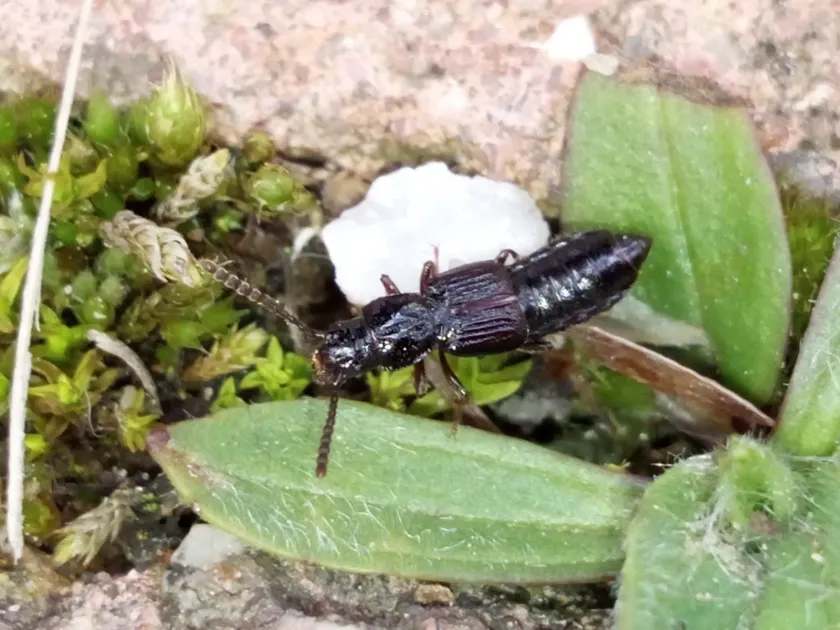
Description
How to identify
Coprophilus striatulus belongs to the family Staphylinidae, order Coleoptera. This beetle is relatively small, measuring approximately 4 to 6 mm in length, and is characterized by a slender, elongated body shape.
The adult beetle typically exhibits a dark brown or black coloration. A key identification feature is the presence of distinct longitudinal grooves or striations on the elytra, which provides the species with its specific scientific name.
Staphylinids are often predatory, but Coprophilus striatulus can behave as a generalist feeder when its primary food source in the soil is scarce, leading it to damage young plant tissues.
The larvae are whitish, soft-bodied, and have a segmented appearance. They reside in the top layer of the soil, often associated with organic matter, decaying plant debris, or root zones.
Identifying this pest requires careful soil examination, as adults and larvae are highly mobile and tend to hide quickly when the soil is disturbed or exposed to light.
What it damages
This pest is primarily harmful to vegetable crops, particularly during the seedling stage. The larvae are the main culprits, as they feed on tender roots and the subterranean portions of stems.
By chewing on the roots and root collars, the larvae disrupt the water and nutrient transport in plants, which leads to stunted growth, yellowing of leaves, and, in severe cases, the death of the plant.
Adult beetles may also contribute to damage by grazing on plant tissues near the soil surface. Such lesions serve as entry points for various soil-borne pathogens, including bacteria and fungi.
Damage is often most severe in greenhouse environments where high humidity and rich organic soil create perfect conditions for population growth. Crop losses can be significant if left unmanaged.
The damage often occurs in patches across the field or greenhouse bed. As larvae move between plants, they can rapidly affect a large number of seedlings, causing localized death or significant thinning of the crop stand.
When it appears
The activity of Coprophilus striatulus is highly dependent on environmental conditions, particularly soil temperature and moisture content. They emerge when soil temperatures consistently rise above 10-12°C.
The life cycle begins with eggs laid in moist, organic-rich soil. Following hatching, the larvae go through several developmental stages within the soil profile, feeding and growing throughout the spring and early summer.
Populations tend to peak during periods of high rainfall or excessive irrigation, which maintains the soil moisture level preferred by the larvae. Multiple generations can occur within a single growing season.
As temperatures begin to drop in late autumn, the beetles and larvae seek shelter deeper in the soil or under debris to overwinter. This protective behavior allows the population to survive cold winters.
Monitoring the soil throughout the early part of the growing season is essential for detecting the presence of this pest before it causes irreversible damage to the developing root systems of crops.
Signs of infestation
One of the earliest signs of infestation is the daytime wilting of young plants that does not recover during cooler evening or morning hours. This is a primary indicator of root system destruction.
Upon closer inspection of the plant base, you may notice chewed-off roots or a damaged root collar. Small, shallow tunnels or burrows may be present in the soil directly around the seedling base.
Secondary infections often manifest as rot at the plant base. If you carefully extract an affected plant, you will likely find the soil around the roots disturbed and may locate the larvae hidden within the soil clods.
General plant appearance becomes ragged and uneven. Plants look weak compared to their counterparts, and they are easily pulled from the ground because their anchorage has been severed by the pest's feeding.
Using bait traps, such as potato or carrot slices placed on the soil surface, can reveal the presence of Coprophilus striatulus, allowing for timely identification before an infestation becomes widespread.
Control measures
Effective control requires an integrated approach that focuses on habitat modification and cultural practices. Proper soil management, including deep tillage before planting, helps to disrupt the life cycle of the beetle.
Sanitation is critical; all plant debris and decaying organic matter should be cleared from the field or greenhouse, as these provide a breeding ground and a food source for the larvae.
Chemical control is an option when populations are high. Soil-applied insecticides can be used at planting time to protect young roots from feeding damage. Always ensure chosen pesticides are authorized for soil use.
Maintaining optimal soil moisture is vital. While the pest thrives in moist soil, avoiding saturated conditions through proper drainage can make the environment less favorable for their survival.
- Use high-quality, well-composted organic fertilizers instead of fresh manure.
- Implement strict crop rotation schedules to break the pest life cycle.
- Monitor soil moisture and drainage to prevent excessive humidity.
- Apply biological control agents like entomopathogenic fungi if appropriate for the crop.
Taxonomy
- Latin name
- Coprophilus striatulus
- Order
- Coleoptera (beetles)
- Family
- Staphylinidae
- EPPO code
- COPPHI
Discussion
No discussions yet — be the first.