
Copaxa multifenestrata
Copaxa multifenestrata
Description
How to identify
Copaxa multifenestrata is a species of moth belonging to the Saturniidae family. These moths are characterized by their large wingspan and complex wing patterns, often featuring translucent "windows" that give them their specific name.
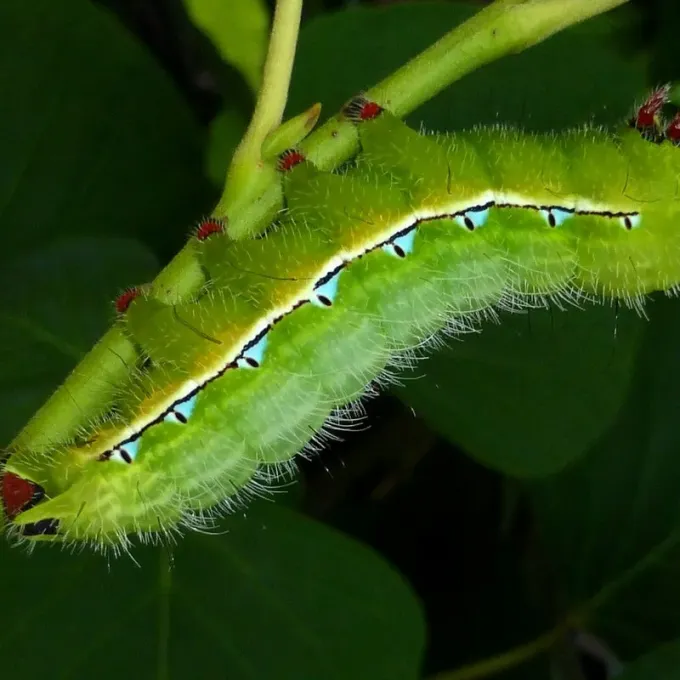
The larvae, or caterpillars, are the primary life stage of concern for agronomists. They undergo several molts as they grow, significantly increasing their food consumption rate with each successive instar.
The life cycle follows a complete metamorphosis: egg, larva, pupa, and adult. The pupal stage is often protected within a dense, silk-like cocoon attached to leaves or branches, providing a safe haven during dormant periods.
Native to American tropical regions, these insects typically thrive in forest ecosystems. However, when local conditions favor them, their populations can expand to include agricultural landscapes.
Field identification is performed by spotting adult moths via light traps at night or by identifying characteristic egg clusters and larvae on the foliage of host trees during daylight inspections.
What it damages
The damage is caused by the caterpillars, which possess strong mandibles designed for continuous feeding. They are capable of stripping entire branches of their foliage within a short period.
They target a variety of broad-leaved trees. In agricultural settings, they can infest orchards or shade trees, causing significant stress to the host plants and reducing overall yield potential.
Defoliation is the most visible impact. The loss of leaves disrupts the plant's ability to perform photosynthesis, which is critical for biomass production, fruit development, and overall structural integrity.
Severe infestations weaken the plant, making it more susceptible to secondary environmental stresses like drought, nutrient deficiency, or opportunistic pathogenic infections.
- Large-scale leaf consumption
- Damage to succulent growing tips
- Reduced photosynthesis capacity
- Increased plant susceptibility to secondary diseases
When it appears
The activity period is highly dependent on regional climate. In tropical zones, breeding cycles may be continuous, but they typically peak during the main growing season of the host plants.
The first generation of larvae usually emerges in spring, coinciding with the flush of new foliage. This timing ensures that young caterpillars have immediate access to highly nutritious food sources.
Warm temperatures accelerate the larval development, leading to potentially multiple generations per year, which is why consistent monitoring is vital throughout the summer months.
As the season cools, the final larval generation prepares to pupate. They create sturdy cocoons that allow them to survive unfavorable conditions until the next favorable season arrives.
Regular field scouting is recommended throughout the vegetation period, particularly after periods of high humidity and heat, which are favorable for the survival of the larvae.
Signs of infestation
Initial signs of infestation often include ragged leaf margins or leaves with large holes, as caterpillars work their way through the foliage starting from the outer edges.
The presence of frass (caterpillar droppings) on the leaves below the feeding sites is a clear indicator of active larvae, even if the caterpillars themselves are well-camouflaged.
Egg clusters, typically laid in small groups on the underside of leaves, serve as an early warning. Spotting these allows for intervention before the caterpillars hatch and begin feeding.
Cocoons firmly attached to branches or tucked into leaf folds indicate that the population has completed a growth cycle and that a new generation may emerge shortly.
Visible changes in plant vigor, such as thinning of the canopy and loss of deep green color, are late-stage signs of a high-density infestation requiring immediate attention.
Control measures
Biological control methods are highly effective, specifically the use of Bacillus thuringiensis (Bt) sprays. This bacterium selectively targets caterpillars while remaining harmless to beneficial insects.
For large-scale infestations, integrated pest management (IPM) practices should be employed, prioritizing selective contact insecticides that do not harm the local pollinator population.
Mechanical control, such as pruning branches infested with cocoons during the dormant season, is a highly effective way to reduce the following year's population without using chemicals.
Encouraging natural predators, such as birds and parasitic wasps, can help maintain the population of Copaxa multifenestrata at a manageable, non-economic threshold level.
Monitoring using pheromone or light traps provides crucial data for timing applications, ensuring that management efforts are most effective against the most vulnerable larval stages.
Taxonomy
- Latin name
- Copaxa multifenestrata
- Order
- Lepidoptera (butterflies)
- Family
- Saturniidae
- EPPO code
- COPXMU
Discussion
No discussions yet — be the first.