
Copaxa
Copaxa
Description
How to identify
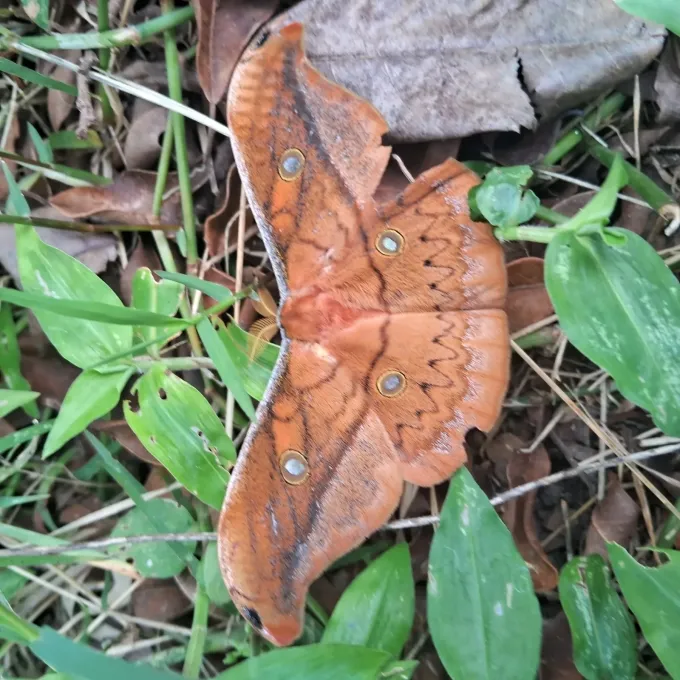
The genus Copaxa belongs to the family Saturniidae, order Lepidoptera. These moths are recognized as large, nocturnal insects, often featuring prominent eyespots on their wings.
The larval stage, commonly known as the caterpillar, is the primary concern for agronomists and gardeners. Copaxa larvae are typically robust, occasionally armed with spines or tubercles, and exhibit camouflage colors like green or brown.
Their life cycle consists of complete metamorphosis: egg, larva, pupa, and adult. The pupal stage occurs inside a dense, silk-like cocoon, often found on host plants or within leaf litter.
Adult moths have vestigial mouthparts, meaning they do not feed and rely solely on the energy reserves gathered during their caterpillar phase to complete their reproductive cycle.
Species identification relies on specific morphological traits of the larvae, such as their specific color patterns and the arrangement of protuberances on their body segments.
What it damages
Copaxa larvae are polyphagous defoliators that feed on the foliage of various trees and shrubs. They can cause significant damage in orchards, forests, and landscape plantings.
The primary damage is caused by intense consumption of the leaf lamina. Large populations of these caterpillars can skeletonize leaves, leaving only veins, which severely disrupts the plant's photosynthesis.
Heavy defoliation weakens the host plant, making it more susceptible to drought, winter injury, and secondary infestations by other pathogens or boring insects.
In young saplings, significant leaf loss can halt growth and reduce the plant's vigor, impacting its future development and structural integrity.
Bud feeding and damage to terminal shoots can further distort the natural growth pattern of the plant, potentially causing long-term damage to the crop.
Signs of infestation
The most immediate sign of Copaxa presence is the accumulation of frass (caterpillar droppings) on the ground or on lower leaves, appearing as granular dark pellets.
Visible feeding damage, characterized by irregular scalloping along the edges of the leaf, provides clear evidence that defoliators are active in the canopy.
Careful inspection of the underside of leaves or twigs often reveals batches of eggs, which are typically laid in groups.
Leaves that are tied together with silk, or small cocoons hidden within folded leaves, are common signs of the larval or pupal stages.
Visible decline in canopy density and premature leaf yellowing in patches are often secondary symptoms of a heavy caterpillar infestation.
Control measures
Manual removal of caterpillars and egg clusters is a practical and environmentally friendly solution for small-scale gardens or early-stage infestations.
Biological insecticides, specifically those containing Bacillus thuringiensis, are highly effective against lepidopteran larvae while sparing most beneficial insects.
Pheromone traps serve as an early-warning system to monitor moth flight and determine the precise timing for intervention before the larval population peaks.
Chemical control should be reserved for severe outbreaks. When choosing a product, prioritize selective insecticides to minimize collateral damage to natural predators and pollinators.
Cultural practices, including the removal and composting of leaf litter and shallow cultivation of soil around the base of trees, disrupt the pupation cycle and reduce overwintering populations.
Taxonomy
- Latin name
- Copaxa
- Order
- Lepidoptera (butterflies)
- Family
- Saturniidae
- EPPO code
- COPXSP
Discussion
No discussions yet — be the first.