
Victoria Cone
Conus victoriae
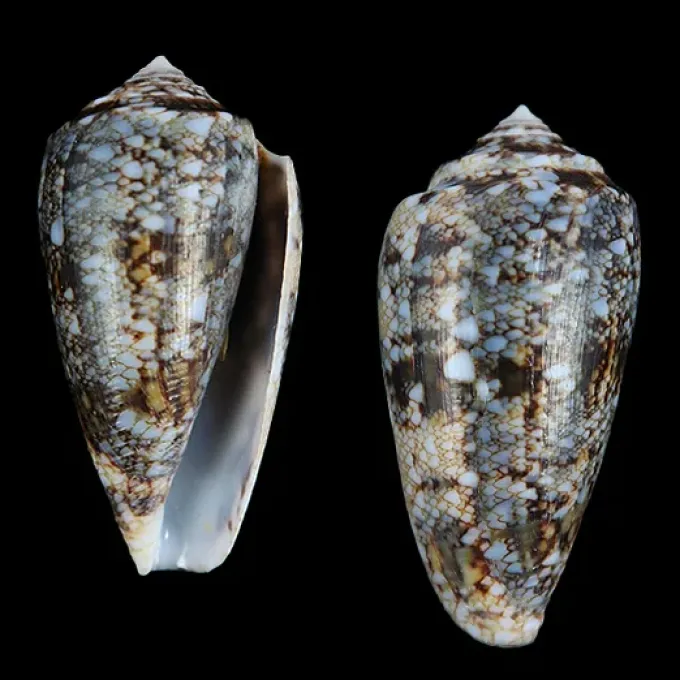
Description
How to identify
The Victoria Cone (lat. Conus victoriae) is a predatory marine gastropod mollusk belonging to the family Conidae within the order Neogastropoda.
The shell typically measures between 4 and 7 centimeters in length, characterized by a distinct conical shape and a delicate reticulated brown or orange pattern.
The mollusk is equipped with a specialized proboscis containing modified radular teeth, which act as venomous harpoons used for subduing prey.
This species is native to the tropical waters of the Indo-Pacific region, often found residing in sandy substrates near coral reefs in shallow waters.
It is important to note that all members of the Conus genus are venomous and can inflict painful, potentially dangerous stings to humans.
What it damages
While not a traditional agricultural pest, Conus victoriae is classified as a pest in the context of aquaculture and coastal resource management.
These mollusks act as predators that feed on small invertebrates and juvenile species that are of significant commercial value in mariculture.
Their presence in managed coastal zones disrupts the local food web, leading to a decline in the productivity of cultivated marine organisms.
In addition to biological impact, the presence of these venomous snails poses a direct occupational hazard to personnel working in underwater farming operations.
The need for containment and monitoring represents an economic burden on facilities operating in areas where this species is prevalent.
When it appears
The biological activity of the Victoria Cone is closely tied to water temperature, with peak levels occurring during the warmer months.
Reproduction is timed with maximum water warming, ensuring favorable conditions for the planktonic veliger larval stage to disperse.
This mollusk is primarily nocturnal; it spends the daylight hours buried in the sand or hidden under coral debris to avoid detection and desiccation.
Activity cycles are relatively consistent year-round in tropical climates, lacking the diapause states seen in terrestrial pests.
Migration to shallower waters often coincides with breeding seasons, increasing the density of the population in active zones.
Signs of infestation
Signs of infestation include the presence of numerous shells or active individuals spotted during low tide or shallow-water surveys.
Shallow furrows and trails in the sand are key indicators of the mollusk moving across the bottom in search of prey during the night.
A sudden decline in the local population of small bottom-dwelling crustaceans or mollusks is a primary ecological indicator of predation.
Shells of prey items recovered from the seafloor often show puncture marks where the cone snail has successfully injected its toxin.
Consistent occupancy of specific crevices under rocks or reef structures provides evidence of established colonies.
Control measures
Primary control strategies include the use of fine-mesh barrier nets designed to prevent predatory snails from entering aquaculture plots.
Manual removal of individuals by trained personnel equipped with puncture-resistant protective gear is a common and effective mitigation method.
Maintaining the site by clearing debris and loose rock helps remove the natural daytime hiding spots of the species, encouraging migration.
Ongoing monitoring of population density allows for early identification of outbreaks, enabling prompt localized response efforts.
Comprehensive safety training for staff is essential to minimize the risk of accidental exposure to the snail’s potent venom.
Taxonomy
- Latin name
- Conus victoriae
- Order
- Molluscs
- Family
- Conidae
- EPPO code
- CONUVI
Discussion
No discussions yet — be the first.