
Conus achatinus
Conus achatinus
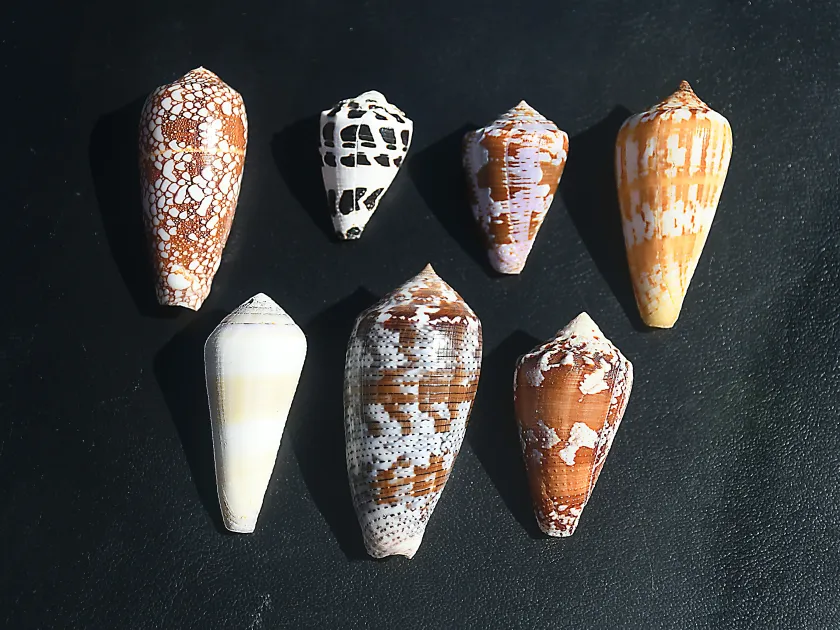
Description
How to identify
Conus achatinus is a marine gastropod mollusk from the Conidae family, occasionally recognized as an invasive risk for coastal agricultural ecosystems.
The mollusk is characterized by its distinctive conical shell with an intricate reticulated pattern, measuring between 40 and 80 millimeters in length.
Taxonomically, it belongs to the phylum Mollusca, class Gastropoda, and order Neogastropoda, showing high adaptability in brackish water environments.
Its sensory organs are specialized for foraging in tidal zones, allowing it to migrate into coastal farmland flooded by water.
The robust shell provides significant protection against mechanical stress and environmental fluctuations, ensuring the organism's survival in harsh habitats.
What it damages
Primary agricultural damage occurs in coastal crops such as paddy rice and mangrove plantations, which thrive in waterlogged conditions.
The mollusk feeds on young shoots, root systems, and succulent stem tissues, frequently causing total loss of seedlings and significant yield reductions.
It acts as both an above-ground and subterranean feeder, damaging seeds and developing root structures within the soil profile.
Mass infestations can decimate an entire plantation within a single growing season if left unmanaged.
Plants weakened by mollusk feeding are highly susceptible to opportunistic bacterial and fungal pathogens, further complicating recovery efforts.
When it appears
The activity of Conus achatinus is closely tied to humidity levels and tidal cycles that dictate soil and water salinity.
The highest damage occurs following heavy rains or coastal flooding, which provide ideal migratory conditions for the mollusk population.
The life cycle involves egg deposition in protected, moist environments, where larvae develop rapidly when food sources are abundant.
Adult individuals are primarily nocturnal, showing peak feeding activity during twilight hours to prevent tissue dehydration.
Optimal temperature conditions for growth and reproduction range from 22 to 28 degrees Celsius.
Signs of infestation
The first signs of infestation are irregular, jagged bite marks on the leaf margins of susceptible plants.
Visible mucous trails left on stems and the surrounding soil surface confirm the movement and presence of the pest population.
Finding empty or crushed shells near the base of plants serves as a reliable indicator of established activity.
Nighttime field inspections are the most effective way to observe active feeding clusters on agricultural crops.
Unexplained wilting and the lodging of crops often indicate severe feeding damage to the root system by these mollusks.
Control measures
The primary control strategy involves agronomic practices, such as deep soil cultivation and maintaining appropriate water salinity levels to deter migration.
Physical barriers, such as copper-based tapes or screens, can be used to prevent mollusks from reaching vulnerable crops.
- Utilizing biological control agents by attracting local predators like crabs and specific bird species.
- Consistent monitoring of coastal zones using specialized traps to detect early infestations.
- Sanitary maintenance of irrigation channels to reduce organic debris accumulation.
Biological controls are preferred to preserve the ecological balance of the coastal farming area.
In cases of severe outbreaks, localized application of approved molluscicides is permitted, provided they adhere to strict safety regulations.
Taxonomy
- Latin name
- Conus achatinus
- Order
- Molluscs
- Family
- Conidae
- EPPO code
- CONUAC
Discussion
No discussions yet — be the first.