
Geography cone
Conus geographus
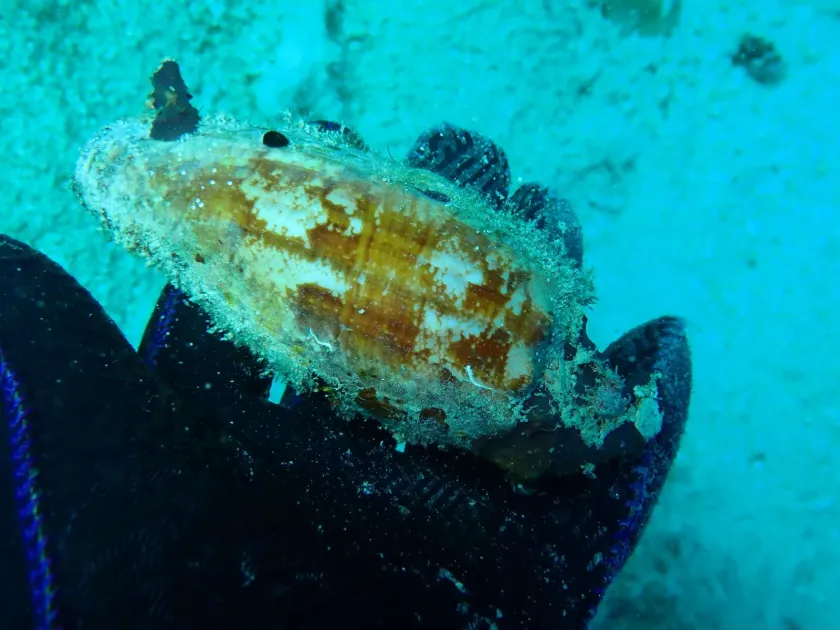
Description
How to identify
The Geography cone (Conus geographus) is a large, predatory sea snail found in the tropical waters of the Indo-Pacific region.
Its shell is characterized by a distinctive mottled pattern and typically reaches between 10 and 15 centimeters in length.
As a member of the Conidae family, it is renowned for possessing a highly complex venom apparatus used for hunting.
The snail uses a specialized, harpoon-like tooth to deliver potent neurotoxins directly into its prey, usually small fish.
It is strictly a marine organism and should never be confused with terrestrial or aquatic agricultural pests.
What it damages
The Geography cone is not an agricultural pest and causes zero damage to any type of plant or crop.
It is a specialized carnivore that feeds exclusively on fish, operating within marine ecosystems such as coral reefs.
There is no economic or agronomic threat posed by this species, as it does not interact with commercial plant production systems.
It does not consume plant tissues, stems, leaves, or roots, making any discussion of pest control measures against it irrelevant to agriculture.
The species is strictly restricted to oceanic environments where it plays a role in the local predator-prey balance.
When it appears
The activity of the Geography cone is governed by marine ecological cycles rather than agricultural growing seasons.
It remains active throughout the year in the warm, stable temperatures of its tropical habitat.
No phenological data related to crops apply to this species, as its biological clock is tied to moon cycles and water conditions.
There are no predictable seasonal outbreaks in the agricultural sense, as their populations remain relatively stable in coral reef environments.
Their behavior is consistent year-round, focusing on nocturnal hunting patterns for prey fish.
Signs of infestation
The identification of this species in the wild is based on its shell morphology and characteristic color patterns.
There are no signs of plant damage, as the species does not forage on crops or ornamental plants.
For humans, the presence of these snails in tide pools or reef areas serves as an immediate warning to maintain distance.
No specific monitoring programs are needed in farming because the species poses no risk to vegetation.
Physical appearance is the only way to recognize the organism; it leaves no environmental traces that could be confused with agricultural pest damage.
Control measures
Control measures for this species are limited to public health and safety protocols rather than pest management.
Direct contact with the snail must be strictly avoided, as it is one of the most venomous marine animals known to humans.
There are no chemical pesticides recommended or developed for this snail, as it is a protected part of marine biodiversity.
Education and awareness are the primary tools for preventing envenomation among people working or recreating in its habitat.
Protective gear, such as thick-soled boots and puncture-resistant gloves, should be used if working near areas known to harbor this species.
Taxonomy
- Latin name
- Conus geographus
- Order
- Molluscs
- Family
- Conidae
- EPPO code
- CONUGE
Discussion
No discussions yet — be the first.