
Cone snail
Conus
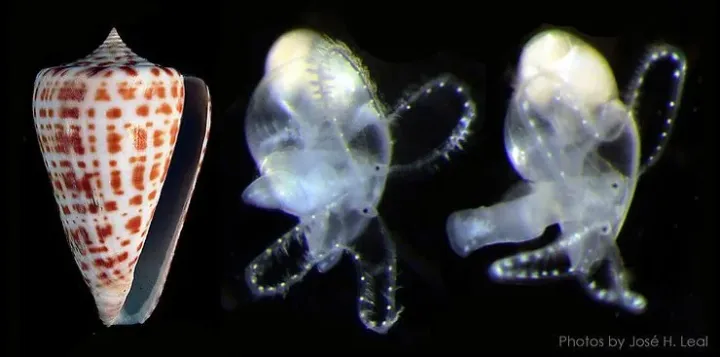
Description
How to identify
The genus Conus refers to a group of predatory marine gastropod mollusks, recognizable by their distinct cone-shaped shells. It is crucial for agricultural professionals to distinguish these marine organisms from terrestrial pests.
These mollusks are equipped with a specialized hunting mechanism consisting of modified radular teeth, which act like harpoons. These structures are used to inject potent neurotoxins into their prey.
Taxonomically, they belong to the order Neogastropoda and the family Conidae. With hundreds of species, they are primarily distributed throughout the tropical and subtropical oceans of the world.
While the shells are prized by collectors for their intricate patterns and colors, the live animals are extremely venomous. Any attempt to handle them in the wild poses a severe risk to human health.
In the context of agronomy, these organisms are not considered agricultural pests. They do not inhabit soil or terrestrial environments utilized for commercial crop production.
What it damages
The Conus genus does not damage agricultural crops, vegetables, or fruits. They are specialized marine predators and have no impact on terrestrial plant physiology or yield.
Their diet consists strictly of marine worms, small fish, and other mollusks. They do not consume plant matter, making them biologically incompatible with the role of a crop pest.
The presence of these animals in coastal waters does not affect the irrigation quality or soil health, as they require high-salinity marine environments to survive.
There is no economic damage associated with this genus in the agricultural sector. They do not pose a threat to plant health, infrastructure, or post-harvest storage.
Therefore, they are not categorized as organisms of concern for phytosanitary control or integrated pest management strategies.
Control measures
As Conus species are not agricultural pests, there are no control measures, pesticides, or biological interventions required for their management on farms or plantations.
The only necessary protocol involves safety education for workers. Staff operating in coastal or aquatic farming environments should be aware of the dangers of handling shells found on the shoreline.
Personnel should utilize appropriate personal protective equipment, such as thick gloves and proper footwear, when working in areas where these mollusks may be present.
In the event of an accidental sting, immediate medical attention is mandatory. Since many species possess fast-acting toxins, rapid emergency intervention is the only viable course of action.
Agronomic scouting and monitoring programs should focus on relevant pests, excluding marine organisms like Conus from all pest-related documentation and management plans.
Taxonomy
- Latin name
- Conus
- Order
- Molluscs
- Family
- Conidae
- EPPO code
- CONUSP
Discussion
No discussions yet — be the first.