
Conus arenatus
Conus arenatus
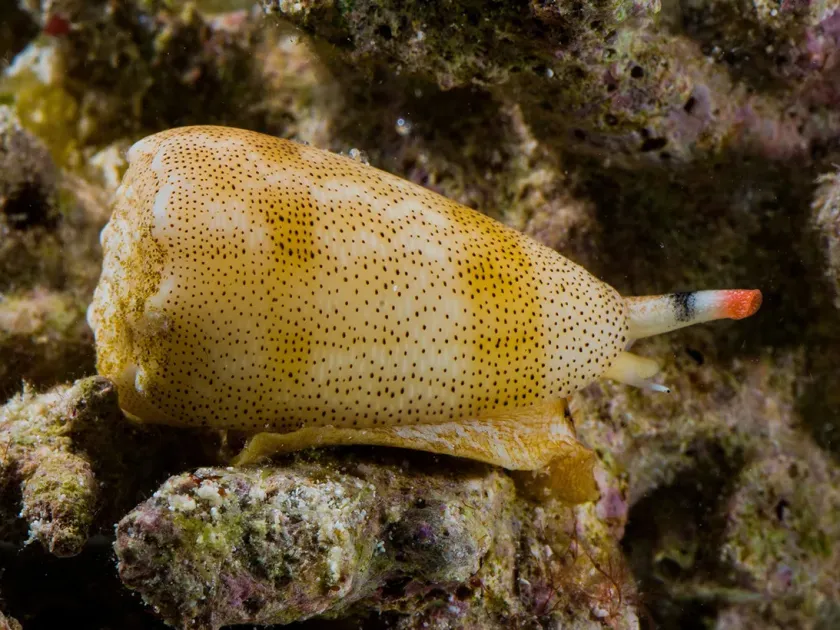
Description
How to identify
Conus arenatus, commonly known as the sand cone, is a predatory marine gastropod mollusk belonging to the family Conidae within the order Neogastropoda.
The shell typically measures between 3 and 8 centimeters in length and is characterized by a conical shape with a distinct spire and a dotted brown pattern on a whitish background.
The mollusk is equipped with a venom gland and a radula modified into hollow, harpoon-like teeth used to inject potent conotoxins into its prey.
Sand cones are nocturnal predators that spend the daylight hours buried in sandy substrates, which serves as a highly effective camouflage mechanism.
Their life cycle includes a planktonic larval stage known as a veliger, which ensures widespread dispersal across various marine environments before settling on the sea floor.
What it damages
While not a pest to traditional agriculture, Conus arenatus poses significant risks to aquaculture operations that cultivate other mollusk or invertebrate species.
These snails act as opportunistic predators, actively hunting smaller marine organisms that are often the target species in local mariculture projects.
The species represents a direct health hazard to workers, as accidental contact during harvest or maintenance can lead to severe stings from their neurotoxic venom.
Predatory activity can disrupt the delicate balance within managed marine ecosystems, reducing the overall biomass of cultivated stock.
Continuous predation on benthic fauna can negatively affect the sustainability and profitability of marine farming sites situated in tropical coastal waters.
Control measures
Manual removal of individuals during routine inspections remains the most effective and eco-friendly method for managing Conus arenatus populations at aquaculture sites.
Physical barriers, such as fine-mesh screening around culture enclosures, are employed to prevent the migration of these predatory snails into protected areas.
Strict safety protocols must be enforced for all personnel working in the water to prevent stings from the snail's venomous harpoon apparatus.
Biological monitoring programs are essential for assessing population densities and identifying potential surges that require intensified removal efforts.
Utilizing protective gear, such as puncture-resistant gloves, is mandatory for staff involved in the handling or maintenance of marine installations.
Taxonomy
- Latin name
- Conus arenatus
- Order
- Molluscs
- Family
- Conidae
- EPPO code
- CONUAR
Discussion
No discussions yet — be the first.