
Coloradia
Coloradia
Description
How to identify
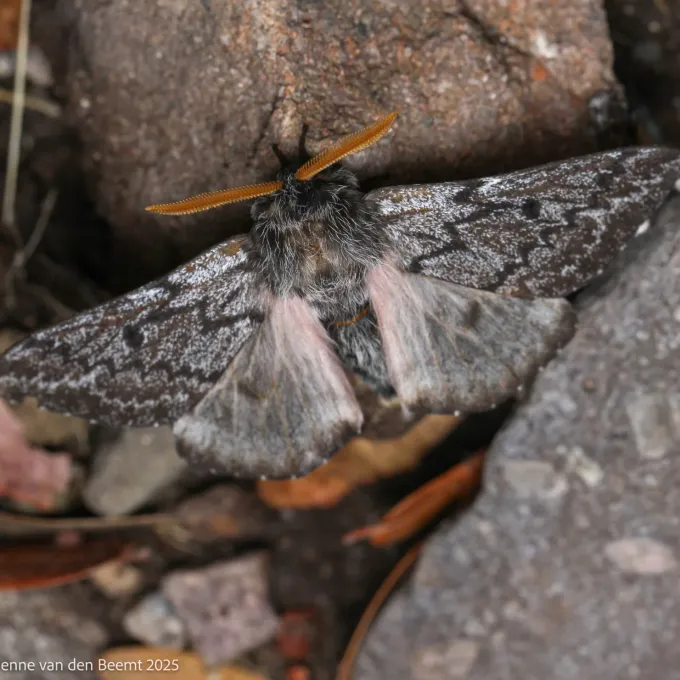
Coloradia is a genus of moths belonging to the family Saturniidae. These insects are characterized by their large size, with wingspans often ranging from 70 to 100 millimeters. As adults, they possess a cryptic coloration that allows them to blend perfectly with pine bark during the day.
The larvae, or caterpillars, are the destructive stage of this pest. Throughout their developmental stages, they exhibit significant growth and vary in color, often matching the pine needles they consume to evade detection by predators.
The life cycle involves complete metamorphosis, including egg, larva, pupa, and adult stages. Adult moths do not feed, focusing solely on reproduction, which is a common trait among species in the Saturniidae family.
Pupation typically occurs in the soil or forest litter beneath the host tree. This subterranean stage provides the pupae with protection from environmental fluctuations and many types of natural enemies during the winter months.
The genus includes several species, with Coloradia pandora being the most recognized for causing large-scale defoliation events in pine forests throughout North America.
What it damages
Coloradia caterpillars are specialized feeders that primarily target pine species, including lodgepole and ponderosa pines. Their primary damage involves intensive feeding on needles, which can lead to rapid and widespread defoliation of the canopy.
Chronic defoliation significantly stresses the trees, making them susceptible to secondary infestations by bark beetles and wood-boring insects. This combination often leads to widespread mortality within infested forest stands.
Beyond tree death, the reduced growth rates caused by needle loss impact the economic value of timber stands. The physiological stress also reduces the tree's ability to cope with environmental stressors like drought.
Young pine stands are particularly sensitive to this pest. A single season of heavy feeding can be catastrophic for saplings and young trees, often resulting in complete stand loss if not managed promptly.
In mature forests, damage is cumulative. Consecutive years of defoliation can cause top-kill or weaken branches, leading to a degraded forest structure that takes decades to recover naturally.
When it appears
Adult moths typically emerge during the summer months, with flight activity occurring at night. This is the period when mating occurs and eggs are laid in clusters directly onto the pine needles.
Caterpillars hatch throughout the summer and spend their time actively feeding. This period of peak feeding is when the most visible damage occurs, and it usually continues until the onset of autumn.
As temperatures drop, the caterpillars migrate from the canopy to the ground. They burrow into the soil or forest duff to enter the pupal stage, where they remain dormant throughout the winter season.
The generation time is generally one year, though it can extend to two years in higher altitudes or colder climates. This extended life cycle must be monitored carefully to predict the severity of upcoming infestations.
Forest managers use light traps and pheromone monitoring to track adult moth emergence, which helps determine the exact timing for necessary suppression activities.
Signs of infestation
The most prominent sign of a Coloradia infestation is the presence of partially consumed needles or entirely stripped branches. This creates a thinning effect in the forest canopy.
- Significant accumulation of frass (caterpillar droppings) on the forest floor beneath infested trees.
- Visibility of caterpillars on branches during active feeding hours in the morning or evening.
- Discoloration or yellowing of the canopy, followed by premature needle drop.
- Presence of pupal casings or exit holes in the soil around the base of the tree.
- High moth activity around night-time light sources in late summer.
Large quantities of frass collecting on the ground are often the first alert for foresters. If you notice a "raining" effect of pellets falling from the canopy, an active infestation is occurring.
When populations reach outbreak levels, the damaged trees show distinct changes in silhouette and crown density, which can be identified through aerial surveys or ground-based forest inspections.
Control measures
Integrated Pest Management (IPM) is the gold standard for Coloradia control. This begins with rigorous monitoring of larval populations to determine if they exceed the economic threshold for intervention.
Biological control agents, such as the application of Bacillus thuringiensis (Bt), are highly effective against young larvae while minimizing negative impacts on non-target insect species and the ecosystem.
Chemical insecticides are used sparingly and are usually restricted to extreme outbreak scenarios where timber value or forest health is at severe risk. These applications are strictly timed to larval development stages.
Silvicultural practices, including maintaining stand vigor through thinning and ensuring a diversity of tree species, can help create environments that are naturally more resistant to caterpillar outbreaks.
Encouraging natural predators, including insectivorous birds and parasitic wasps, plays a vital role in keeping populations at baseline levels and preventing them from reaching outbreak status.
Taxonomy
- Latin name
- Coloradia
- Order
- Lepidoptera (butterflies)
- Family
- Saturniidae
- EPPO code
- COLRSP
Discussion
No discussions yet — be the first.