
Clostera anastomosis
Clostera anastomosis
Description
How to identify
Clostera anastomosis is a moth belonging to the Notodontidae family. It is a significant defoliator, widely distributed throughout Europe and Asia, known for its impact on various deciduous tree species.
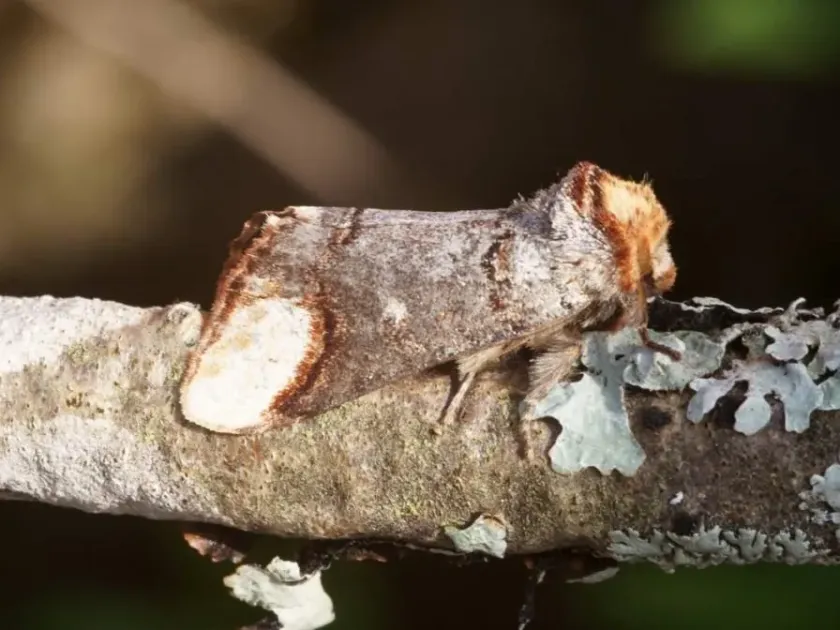
Adult moths are characterized by a brownish to greyish coloration with distinct transverse lines across the forewings, having a wingspan typically ranging from 35 mm to 45 mm.
The larvae are prominent, growing up to 50 mm long. They are generally brownish with specific longitudinal stripes and vibrant, eye-catching spots that assist in camouflage against the bark of host trees.
Pupation occurs within a firm cocoon composed of silk and tree debris, often found in bark crevices or the upper soil layer, where the insect remains dormant during the winter months.
The species follows a complete metamorphosis life cycle. Depending on climatic conditions, it commonly produces two distinct generations annually, leading to significant populations during the summer.
What it damages
The primary hosts for Clostera anastomosis are species within the Salicaceae family, specifically poplars (Populus) and willows (Salix), which are essential for both forestry and landscaping.
Larvae cause severe damage to the foliage. Early stages of the caterpillars feed on the soft leaf tissue, eventually skeletonizing the leaf, while later stages consume the entire leaf lamina.
Repeated defoliation by these caterpillars significantly weakens the trees, leading to stunted annual growth and increasing susceptibility to secondary diseases and environmental stressors like drought.
In nurseries and young plantations, heavy infestations can lead to total loss of photosynthetic tissue, potentially causing the death of younger saplings and reducing the yield of timber plantations.
Beyond the damage to the trees, the accumulation of frass (caterpillar excrement) on ground surfaces creates aesthetic and sanitation issues in recreational urban areas and parks.
When it appears
The flight period for the adult moths of the first generation generally begins in late spring, around May, coinciding with the development of fresh foliage on host trees.
The second generation typically emerges in mid-summer, around July or August, continuing the cycle and often resulting in higher population density than the first generation.
The winter is passed in the pupal stage. These pupae are well-adapted to survive freezing temperatures by remaining hidden in bark crevices or protected soil environments near the tree base.
Active feeding periods for larvae occur during June for the first generation and August for the second, marking the crucial time for monitoring and implementing control measures.
Temperature fluctuations directly influence the speed of development; warmer-than-average summers often facilitate a shorter life cycle, contributing to population outbreaks.
Signs of infestation
The most noticeable sign of infestation is the skeletonization of leaves, where the leaf structure is reduced to a network of veins, eventually resulting in total leaf loss.
Visual observation of the tree canopy often reveals small, web-like nests that the larvae construct to protect themselves while feeding on the leaf clusters.
A high volume of small, cylindrical dark pellets of excrement found on the ground underneath the tree is a classic indicator that a colony is currently active in the upper branches.
Premature yellowing and browning of leaves during the peak of summer, combined with the thinning of the tree crown, strongly suggest the presence of this pest.
Closer inspection of the lower leaf surfaces may reveal clusters of small, pale-colored eggs, which are the earliest indicators of a pending infestation.
Control measures
Biological control methods, such as the use of Bacillus thuringiensis (Bt) sprays, are highly effective against young larvae and are considered the preferred choice for eco-friendly management.
For large-scale infestations in forestry, approved systemic insecticides may be applied. These should be timed carefully based on the larval development stages to ensure maximum efficacy.
- Manual removal of egg clusters on accessible branches during early infestation.
- Encouraging natural bird predators like tits and cuckoos to forage in affected areas.
- Removing severely damaged branches and clearing debris to eliminate pupation sites.
Monitoring using light or pheromone traps allows forestry managers to predict population spikes and apply treatments only when necessary, minimizing environmental impact.
Ensuring proper irrigation and fertilization helps maintain tree vigor, allowing host plants to better withstand the stress caused by minor or moderate caterpillar feeding.
Taxonomy
- Latin name
- Clostera anastomosis
- Order
- Lepidoptera (butterflies)
- Family
- Notodontidae
- EPPO code
- CLOSAS
Discussion
No discussions yet — be the first.