
Clostera anachoreta
Clostera anachoreta
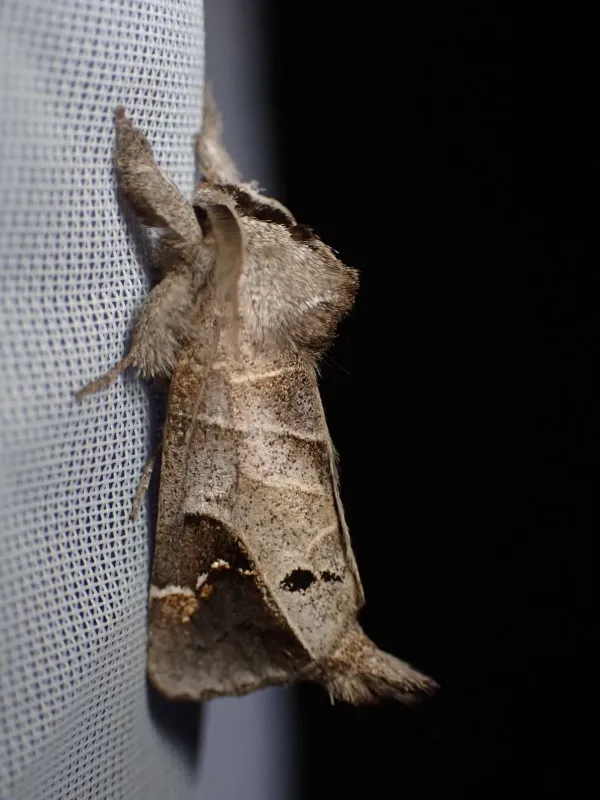
Description
How to identify
Clostera anachoreta, commonly known as the pale prominent, is a moth species belonging to the family Notodontidae. The adult moth features a distinct silvery-white patch at the apex of its forewings, making it relatively easy to identify in the field.
The larvae, or caterpillars, are typically 40-45 mm in length. They are characterized by a set of dorsal tubercles and sparse hairs, which serve as a camouflage against the foliage they consume during their development.
Pupation occurs within a silken cocoon reinforced with fragments of leaves and debris. These cocoons are often found hidden in bark crevices or attached to the undersides of leaves.
The life cycle encompasses four stages: egg, larva, pupa, and adult. This biological progression is tightly synchronized with the leaf phenology of its host plants.
Overwintering usually takes place in the pupal stage, buried within leaf litter or sheltered under the bark of host trees, ensuring protection from low temperatures.
What it damages
This pest primarily targets trees within the Salicaceae family, showing a strong preference for species such as Populus (poplar), Salix (willow), and occasionally aspen.
Larval feeding causes significant defoliation, which can drastically reduce the photosynthetic capacity of the tree, leading to stunted growth and weakened structure.
In nurseries, young saplings are particularly vulnerable; repeated attacks by the larvae can cause total crown thinning and increase susceptibility to secondary infections and pests.
The aesthetic degradation of trees in urban parks and landscape settings is a major concern, as widespread defoliation ruins the visual appeal of these areas.
In cases of high population density, the larvae can consume almost all green tissue, resulting in premature shedding and potentially permanent damage to the host tree's vitality.
When it appears
The adult flight period typically begins in late spring, generally from May to June, depending on local weather patterns and geographical latitude.
The species may complete multiple generations per year, with larval activity peaking during the warm summer months when host foliage is abundant.
Female moths deposit their eggs in clusters on the undersides of leaves, ensuring that hatching larvae have immediate access to a food source.
Developmental time varies based on environmental temperature, with faster maturation occurring during warmer, drier seasons conducive to insect proliferation.
As autumn approaches, the final generation enters the pupal stage, which remains dormant until the return of favorable spring conditions.
Signs of infestation
The earliest signs of infestation are small, light-colored egg clusters found on the undersides of leaves, which serve as an early warning for potential damage.
Initially, larvae feed on small patches of the leaf, creating a translucent, window-like pattern while leaving the larger veins of the leaf intact.
As the larvae mature, they consume larger sections of the leaf blade, eventually leaving only the main veins, which is a classic symptom of significant defoliation.
The presence of silken cocoons nestled in leaf clusters or bark crevices confirms the ongoing presence and breeding of the pest within the site.
High levels of frass (larval waste) accumulating at the base of the tree are a clear indicator of a heavy infestation occurring in the canopy above.
Control measures
Monitoring the population using pheromone traps and light traps is essential for timing intervention strategies before widespread damage occurs.
Biological control agents, such as microbial insecticides containing Bacillus thuringiensis, are highly effective in managing larval populations while minimizing environmental impact.
Chemical control involving systemic or contact insecticides should be applied during the early larval stages when the caterpillars are most sensitive to treatment.
Good silvicultural practices, such as clearing leaf litter and pruning infested branches, can significantly reduce the number of overwintering pupae.
- Use of pheromone traps for accurate monitoring.
- Application of biological insecticides for targeted control.
- Maintaining tree health through proper hydration and nutrition.
Taxonomy
- Latin name
- Clostera anachoreta
- Order
- Lepidoptera (butterflies)
- Family
- Notodontidae
- EPPO code
- CLOSAC
Discussion
No discussions yet — be the first.