
Yellow-headed spittlebug
Clastoptera xanthocephala
Description
How to identify
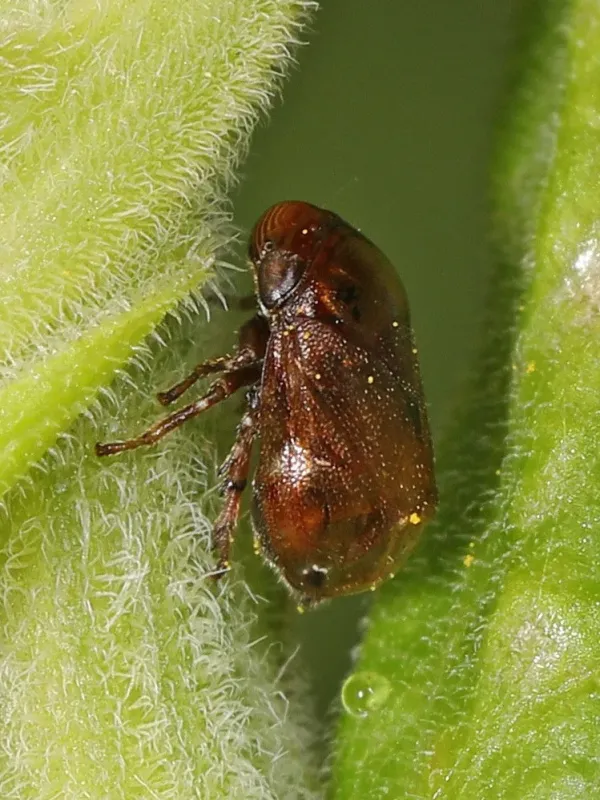
The yellow-headed spittlebug (lat. Clastoptera xanthocephala) belongs to the order Hemiptera and the family Clastopteridae. This small insect is easily distinguished by the characteristic yellow or brownish-yellow color of its head and pronotum in the adult stage.
Adults typically measure between 3 and 5 mm in length. They possess a compact, robust body and exhibit strong jumping capabilities, which makes them highly elusive when you attempt to locate them on host plants.
The nymphs of this species develop in a hidden manner, often remaining unnoticed until specific secondary signs of infestation emerge. They go through several developmental stages, gradually increasing in size and changing color.
A crucial morphological feature is the presence of specialized piercing-sucking mouthparts. These allow the insect to feed efficiently on plant sap by penetrating the vascular tissues of stems and leaves.
The species is primarily native to North and Central America. In other regions, it is considered a potential threat and a quarantine object due to the risk of introducing it to new agricultural environments.
What it damages
This pest exhibits a strong polyphagous nature, attacking a wide range of cultivated and wild plants. It poses a significant threat to agricultural crops, ornamental flowers, and shrubs.
Primary hosts include plants from the Asteraceae and Chenopodiaceae families, as well as various vegetable crops. In gardens, the spittlebug is frequently found on chrysanthemums, dahlias, and various weeds that act as reservoirs.
During mass outbreaks, the pest can cause significant damage by sucking nutrients from young shoots and leaves. This leads to a substantial weakening of the plant's overall immune system.
Tissue damage leads to impaired photosynthesis and stunted growth. The plant becomes more susceptible to secondary infections transmitted through the micro-wounds inflicted by the pest.
Economic impact includes the loss of aesthetic value in ornamental plants and reduced yields in vegetable crops. In severe cases, extreme exhaustion can lead to the death of young seedlings.
When it appears
The life cycle of the yellow-headed spittlebug is closely linked to seasonal temperatures. Insect activity begins in spring as stable warm daytime temperatures promote the hatching of nymphs from eggs.
Adults are most active during the summer when rapid reproduction and dispersal across the garden occur. Population peaks often coincide with the second half of summer, aligning with the peak growth phase of most plants.
The pest can complete multiple generations within a single season if climatic conditions remain favorable. This allows the population to recover quickly even after partial treatment.
Overwintering typically occurs at the egg stage, with eggs deposited within plant tissues or under bark. This strategy ensures high survival rates even during harsh winter periods.
By autumn, insect activity gradually declines; however, this period is critical for their preparation for winter, which must be considered when planning end-of-season preventive measures.
Signs of infestation
The most recognizable sign of the spittlebug's presence is the formation of characteristic "spittle" or foam on stems and in leaf axils. Nymphs produce this substance to protect themselves from predators and desiccation.
Infested plants show signs of chlorosis or leaf curling. The tips of shoots often become distorted and lag in development compared to nearby healthy specimens.
When inspecting the underside of leaves or stems, one may notice small individuals or the remnants of their activity. General plant distress is often visible, which does not improve despite adequate watering.
The presence of numerous "spittle nests" on the site is a critical warning signal that requires immediate intervention. Ignoring this stage leads to the rapid spread of the colony.
A secondary indicator is the appearance of sooty mold on leaves, which develops on the honeydew left behind by the insects during their active feeding process.
Control measures
The primary control measure is strict adherence to agronomic practices, including the removal of weeds that serve as intermediate hosts for the pest throughout the season.
Upon detecting the first signs of infestation, mechanical removal of the foam nests, followed by rinsing the plants with a soapy solution or a jet of water, is highly recommended.
The use of biological insecticides based on fungi or bacteria is effective during the early stages of infestation. These products are safe for beneficial insects and the environment while targeting sap-sucking pests.
In cases of high population density, the use of systemic chemical insecticides is justified. The choice of product should be based on local regulations approved for specific crops in your region.
Systematic monitoring of the planting is the key to success. Regular inspection of the lower parts of plants and crop rotation help minimize the risk of massive spittlebug outbreaks in the next season.
Taxonomy
- Latin name
- Clastoptera xanthocephala
- Order
- Hemiptera (bugs, aphids, leafhoppers)
- Family
- Cercopidae
- EPPO code
- CLASXA
Discussion
No discussions yet — be the first.