
Alder spittlebug
Clastoptera saintcyri
Description
How to identify
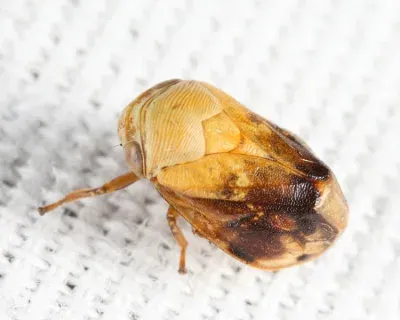
The alder spittlebug (Clastoptera saintcyri) belongs to the family Clastopteridae within the order Hemiptera. These insects are small, typically measuring 3 to 4 millimeters in length, and have a distinct, somewhat humpbacked, drop-like body shape.
Their coloration is variable, ranging from yellowish-brown to dark brown, often featuring subtle mottled patterns on their wings that provide excellent camouflage against plant stems.
The immature stage, or nymph, is famous for its unique defense mechanism: it creates a protective frothy mass often referred to as "cuckoo spit." This foam is produced by the nymph using fluid secretions and air.
This frothy nest is crucial for the nymph's survival, protecting it from both desiccation in warm weather and potential predators. Observing these white bubbly clusters is the primary way to confirm the presence of this pest.
The life cycle follows a hemimetabolous pattern, progressing through egg, nymph (multiple instars), and adult stages. Most populations produce a single generation per year, making their life cycle quite stable.
What it damages
The alder spittlebug is a sap-sucking insect. As the name suggests, it is frequently found on alder trees, but it also readily infests various fruit bushes and ornamental shrubs in garden settings.
Both adults and nymphs feed by inserting their stylets into the plant's vascular tissue to extract phloem sap. This feeding process drains the plant's energy resources and disrupts normal physiological functions.
Severe infestations can lead to stunted growth, leaf chlorosis, and general loss of vigor. The plant may exhibit curled leaves and deformed shoot tips as a reaction to the persistent feeding pressure.
Beyond the direct removal of nutrients, the feeding punctures provide entry points for secondary pathogens, such as fungal spores or bacteria, which can cause further localized or systemic damage.
In highly sensitive cultivars, significant feeding can lead to reduced fruit set or diminished berry size, causing economic loss for gardeners and commercial growers alike.
When it appears
Nymphal activity is most prominent during the spring and early summer, coinciding with the period of active vegetative growth and bud break when sap flow is highest.
Adults typically emerge by mid-summer. Once they reach the adult stage, they become more mobile, capable of jumping and flying between host plants to find suitable mates and feeding sites.
The species overwinters in the egg stage. Eggs are usually laid in protected crevices within the bark or near the base of buds, allowing them to withstand the harsh conditions of winter.
Monitoring should be most intensive from late spring through early summer. Detecting the foam nests early allows for intervention before the insect reaches the more mobile adult stage.
The timing of each life stage is heavily influenced by regional climate conditions, with warmer springs often leading to earlier emergence and potentially higher population levels.
Signs of infestation
The most obvious sign of infestation is the appearance of white, frothy spittle masses on the stems, leaf axils, or flower buds of the host plant during the spring months.
Affected plants often show visual signs of stress, such as yellowing leaves (chlorosis), twisted or stunted shoots, and a generally sickly, wilted appearance during the heat of the day.
Large amounts of "honeydew," a sugary substance excreted by the insects, may accumulate on lower leaves, often leading to the growth of unsightly black sooty mold fungus.
Adults are rarely seen until they are disturbed, at which point they demonstrate their characteristic jumping behavior. They are quick to escape, which often results in the pest being overlooked until damage becomes widespread.
Significant decline in overall plant health, including premature foliage drop and reduced flowering, serves as a late-stage indicator that the infestation has reached a critical level.
Control measures
Managing the alder spittlebug requires a combination of vigilance and timely intervention to maintain the health of your trees and shrubs.
- Manually remove and crush the foam nests found on reachable branches to reduce the nymph population.
- Use a strong stream of water from a garden hose to blast the spittle masses off the plants, which often leads to the death of the nymphs.
- Keep the area clean by pruning away severely infested or damaged shoots to encourage new, healthy growth.
- Maintain plant vigor through proper watering and fertilization, as stressed plants are more susceptible to pest pressure.
- In severe cases, apply insecticidal soaps or horticultural oils to target nymphs, ensuring thorough coverage of the foliage and stem junctions.
Taxonomy
- Latin name
- Clastoptera saintcyri
- Order
- Hemiptera (bugs, aphids, leafhoppers)
- Family
- Cercopidae
- EPPO code
- CLASSA
Discussion
No discussions yet — be the first.