
Willow spittlebug
Clastoptera proteus
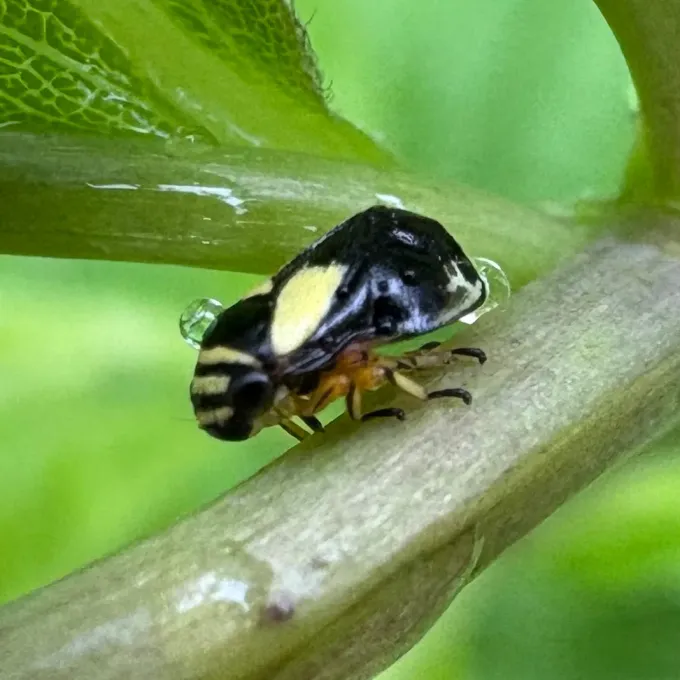
Description
How to identify
The willow spittlebug (Clastoptera proteus) belongs to the order Hemiptera and the family Cercopidae. Adults are small insects, usually 3–5 mm long, known for their ability to jump and their distinct, robust body shape.
These insects are easily recognized by the frothy, saliva-like mass that nymphs produce around their bodies. This foam serves as a protective barrier against predators and desiccation throughout their juvenile development.
Adults exhibit varied coloration, often blending in perfectly with the bark or leaves of their host plants, which makes them quite difficult to spot during the mid-summer season.
The life history of this species is tied to woody plants, where they complete their entire development cycle, from egg to adult, within the canopy of the host trees.
Biologically, Clastoptera proteus is adapted to temperate climates, utilizing the high sap flow of willow and poplar trees to sustain its development during the growing season.
What it damages
The pest primarily targets willow species (Salix), although it can frequently be found on poplar and various ornamental shrub species common in garden landscaping.
Nymphs cause damage by piercing the plant tissues and extracting nutrient-rich xylem and phloem sap, which deprives the plant of energy necessary for normal growth.
Continuous feeding by colonies of nymphs often leads to the stunted development of shoots, causing them to twist or wither, which disrupts the aesthetic appearance of the plant.
The injection of toxic saliva by the nymphs into the plant tissues often results in localized necrosis and increased susceptibility to secondary infections, such as cankers or fungal spots.
In cases of heavy infestation, the cumulative stress on the plant can lead to significant leaf drop and a noticeable decline in the overall vigor of the host tree.
When it appears
The seasonal cycle begins in early spring when nymphs hatch from overwintered eggs deposited in the cracks of the tree bark or near the base of the buds.
As the weather warms and the sap begins to flow vigorously, nymphs emerge and start creating their signature foam nests, usually near the tips of succulent new shoots.
They remain protected within these foam masses through their nymphal stages during the late spring and early summer months, growing steadily as they feed.
The adult phase typically begins in mid-to-late summer, when the insects leave their foam nests and move actively through the tree canopy to seek mates and disperse.
The cycle concludes in autumn, when mated females lay their eggs on the stems of host plants, where they remain in dormancy throughout the winter months.
Signs of infestation
The most prominent sign of infestation is the appearance of white, frothy clumps, often called "cuckoo spit," located on the tips of branches or in leaf axils.
Heavily infested branches often appear stunted or misshapen, with some leaves showing signs of yellowing or curling due to the interruption of nutrient transport.
The presence of adult insects can sometimes be detected by sudden movement or jumping when the foliage is disturbed or brushed against by garden tools.
During the dormant season, careful inspection of the bark may reveal small, clustered egg masses, which are a strong indicator of potential activity for the following spring.
Secondary signs include an accumulation of honeydew or the presence of opportunistic fungi that colonize the plant parts weakened by the spittlebug's feeding.
Control measures
Effective management of the willow spittlebug relies on early detection and a combination of physical, cultural, and chemical intervention strategies.
- Pruning and destroying heavily infested branches during the early spring to physically remove egg clusters and reduce the initial population.
- Applying insecticidal soaps or systemic insecticides when nymphs are small and before they create thick, protective foam masses.
- Maintaining healthy plant growth through adequate watering and fertilization to help the trees withstand the stress caused by sap-sucking insects.
- Encouraging natural predators, such as lady beetles, lacewings, and various spider species, which help keep the spittlebug population under control.
Monitoring is crucial, as identifying the early stages of foam production allows for targeted treatments, minimizing the need for broad-spectrum chemical applications.
Taxonomy
- Latin name
- Clastoptera proteus
- Order
- Hemiptera (bugs, aphids, leafhoppers)
- Family
- Cercopidae
- EPPO code
- CLASPR
Discussion
No discussions yet — be the first.