
Clastoptera compta
Clastoptera compta
Description
How to identify
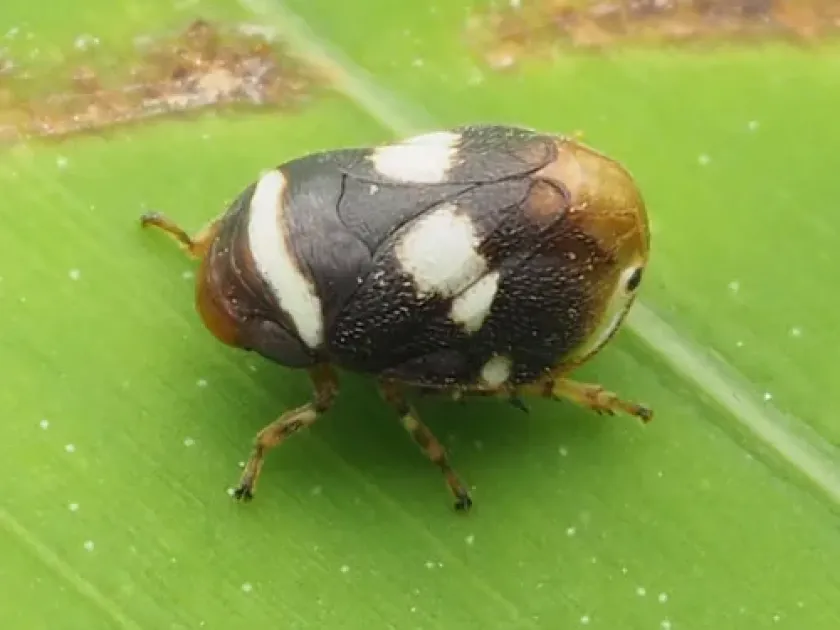
Clastoptera compta is a species of spittlebug belonging to the family Clastopteridae within the order Hemiptera. These insects are well-known for their unique defensive behavior during their nymphal stages.
Adult specimens are small, typically ranging from 4 to 6 mm in length, and are easily recognized by their rounded bodies and a distinct golden-brown color pattern on their wings.
The nymphs produce a frothy, white substance that covers their bodies. This "spittle" acts as a protective shield against predators and prevents desiccation during the heat of the day.
Because the nymphs remain hidden within this foam for most of their development, they are often overlooked until the foam mass becomes large and visible.
Adults are highly mobile and possess strong hind legs, allowing them to jump rapidly away when disturbed, which is a common diagnostic behavior.
What it damages
This species primarily feeds on plants within the Asteraceae family, with goldenrods (Solidago spp.) being a preferred host for the larvae.
The feeding mechanism involves piercing plant tissues with a specialized mouthpart to suck out the nutrient-rich xylem and phloem sap.
Constant feeding by colonies of nymphs can cause the tips of stems to wilt, become distorted, or stop growing entirely, which significantly impacts the plant's architecture.
In ornamental nurseries, the damage caused by Clastoptera compta leads to unsightly plants that may be rejected for sale or have reduced vigor.
By draining the plant of essential nutrients and potentially introducing stressors, the pest renders the host more susceptible to secondary infections or environmental damage.
When it appears
The life cycle of Clastoptera compta is closely aligned with the seasonal growth cycle of its host plants in temperate climates.
Overwintering typically occurs in the egg stage, with eggs tucked into crevices of the host plant’s bark or stems to survive the winter cold.
Nymphs emerge in the spring, coinciding with the rapid growth of new shoots and the availability of tender tissues, which are easier to pierce.
The development from nymph to adult occurs throughout the late spring and early summer months, depending on local temperatures and rainfall.
Adults are most active during the summer and are responsible for mating and laying eggs for the following year's generation.
Signs of infestation
The presence of white, bubbly foam on the stems and leaf axils of plants is the most reliable indicator of an active infestation.
Close inspection often reveals the nymph hidden inside the foam, which will often wiggle or relocate if the foam is disturbed.
Leaves near the feeding sites may show signs of stunting, curling, or yellowing, which are direct responses to the removal of sap.
In some cases, the presence of sooty mold on the foliage indicates that the insects have been present long enough to produce honeydew, supporting fungal growth.
Severe infestations will result in a stunted, unkempt appearance of the plant, as the terminal buds fail to develop into healthy leaves or flowers.
Control measures
The most effective non-chemical control for small infestations is to physically remove the spittle masses by spraying the plant with a strong jet of water.
Regular monitoring of plants in the early spring allows for early detection before the nymphal population causes significant damage to the plant tips.
In larger-scale operations, systemic insecticides may be applied to target the sap-sucking stages, ensuring the chemical reaches the tissues where the nymphs feed.
Maintaining a clean garden by removing known weed hosts of the spittlebug reduces the overall pressure and potential for re-infestation each year.
In organic systems, insecticidal soaps can be used to treat infested plants, provided the spray reaches the nymphs after the protective foam has been manually cleared.
Taxonomy
- Latin name
- Clastoptera compta
- Order
- Hemiptera (bugs, aphids, leafhoppers)
- Family
- Cercopidae
- EPPO code
- CLASCO
Discussion
No discussions yet — be the first.