
Brown spittlebug
Clastoptera brunnea
Description
How to identify
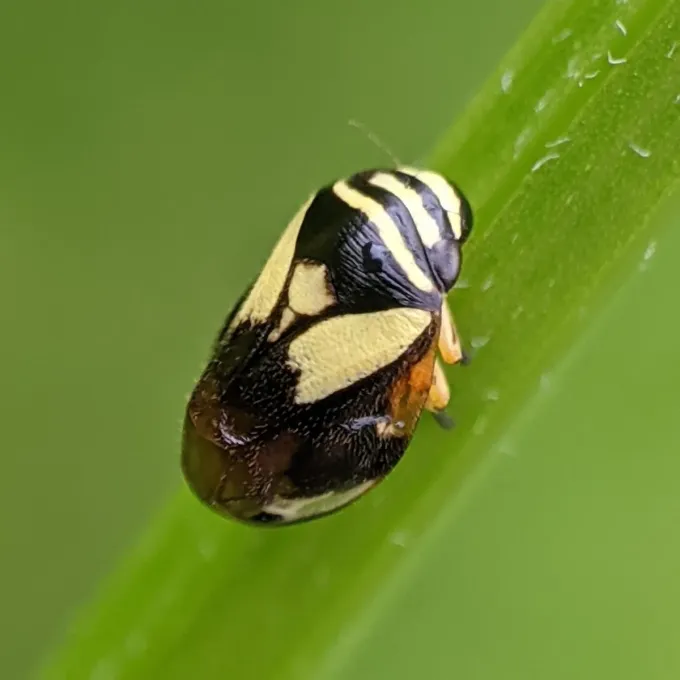
The brown spittlebug (Clastoptera brunnea) is a member of the insect order Hemiptera and the family Clastopteridae. Adult insects are typically small, rounded, and brownish, allowing them to blend seamlessly into the bark and twigs of host plants.
The larvae are most easily recognized by the frothy, spit-like mass they produce. This foam serves as a protective layer, shielding the nymphs from dehydration, intense heat, and natural predators while they feed.
Adults are excellent jumpers, often leaping away when disturbed, which makes them difficult to monitor. They tend to hide in concealed areas such as leaf axils or near bud scales.
The lifecycle consists of egg, five nymphal stages, and the adult stage. Eggs are usually the overwintering stage, often hidden under bark or inside plant crevices to survive cold conditions.
As a specialized sap-sucker, the brown spittlebug is a significant concern for ornamental and woody plants, requiring gardeners to maintain constant vigilance during the growing season.
What it damages
Brown spittlebugs feed on a wide variety of deciduous trees, shrubs, and woody ornamentals. They primarily target the soft, succulent tissues of new growth and developing leaves.
By inserting their piercing-sucking mouthparts into the plant tissue, they extract vital phloem sap. This feeding process deprives the plant of nutrients and can result in significant stunting of growth.
Heavy infestations are characterized by curled, distorted, or yellowing leaves. The aesthetic value of ornamental plants is often severely compromised, as the damage results in unsightly foliage.
Beyond direct feeding damage, these insects can weaken the plant's structural integrity, making it more susceptible to environmental stressors and secondary pest attacks.
Feeding wounds can also serve as entry points for various pathogens, potentially leading to branch dieback or secondary infections if the infestation remains unchecked for long periods.
Signs of infestation
The most telltale sign of a brown spittlebug infestation is the presence of frothy, white spittle masses on stems and branches. These clumps of foam are highly visible during the spring and early summer.
Plant distortion, such as leaf curling and the cessation of new shoot growth, serves as a major indicator of larval activity. Infected plants may appear generally unhealthy or stunted.
When disturbing branches, one might see adults jumping away from the site. Additionally, the presence of a sticky substance known as honeydew on the leaves may indicate sap-sucking insects in the area.
Leaf yellowing or chlorosis, particularly near the feeding sites, often accompanies the presence of spittlebugs, as the plant struggles to transport water and nutrients effectively.
Regular monitoring of the lower leaf surfaces and branch crotches during the active growth period is essential for detecting the presence of nymphs before they reach maturity.
Control measures
Cultural control is a primary defense against the brown spittlebug. Maintaining plant health through proper pruning and irrigation reduces the susceptibility of host plants to heavy pest attacks.
Physical removal is effective for small-scale infestations. Spraying plants with a strong stream of water can dislodge the foam masses and wash away the nymphs, significantly reducing the population.
If infestations are severe, systemic insecticides can be used to protect the plants. It is crucial to apply these treatments early in the season when nymphs are actively feeding and are most vulnerable.
Always follow label instructions when using chemicals to minimize harm to beneficial insects, such as pollinators and natural predators that help regulate pest populations.
Integrated Pest Management (IPM) practices should be employed to balance chemical usage with biological controls, ensuring long-term protection of the landscape and garden health.
Taxonomy
- Latin name
- Clastoptera brunnea
- Order
- Hemiptera (bugs, aphids, leafhoppers)
- Family
- Cercopidae
- EPPO code
- CLASBR
Discussion
No discussions yet — be the first.