
Clanis bilineata
Clanis bilineata
Description
How to identify
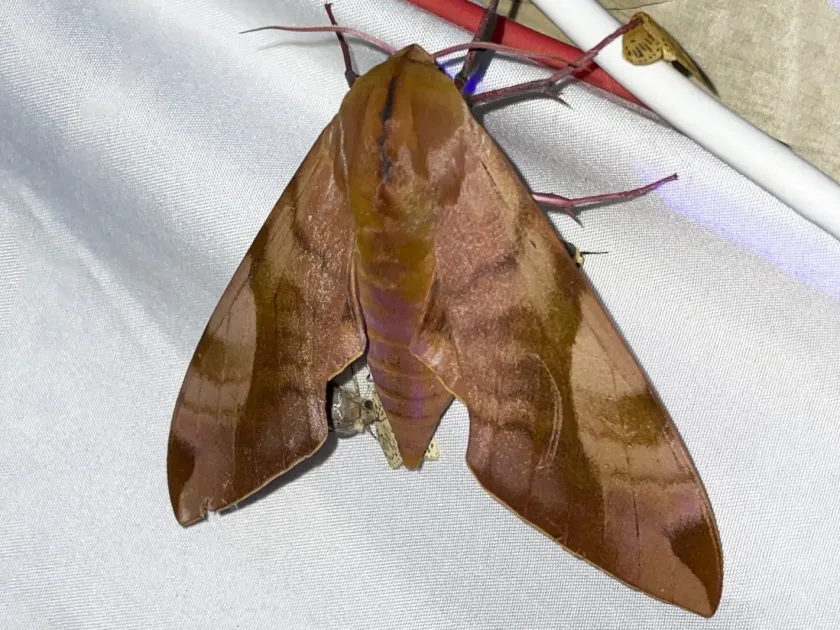
Clanis bilineata, commonly known as the soybean hawkmoth, belongs to the Sphingidae family. The adult moth is a large insect with a wingspan of approximately 80–120 mm, characterized by its subtle brown coloration and two distinct dark lines on the forewings.
The larval stage consists of a large, cylindrical caterpillar that can grow up to 100 mm in length. These larvae often exhibit a greenish or brownish hue, matching the vegetation they feed on, and feature a small, characteristic horn on the posterior end of their body.
The lifecycle follows a complete metamorphosis, including egg, larval, pupal, and adult stages. Moths are primarily nocturnal, making them difficult to observe during daylight hours unless they are disturbed from their resting places.
Pupation occurs in the soil, where the insect overwinters. The emergence of the adult moths in the spring is highly dependent on soil temperature and humidity, which dictates the start of the next generation's growth cycle.
Accurate identification of the species relies on examining the specific wing patterns of adults and the body morphology of the larvae. Field entomologists use these visual keys to distinguish Clanis bilineata from other related hawkmoth species.
What it damages
The primary host for Clanis bilineata is soybean (Glycine max). The larvae are voracious feeders that consume large quantities of leaf tissue, significantly impacting the plant's growth and overall development.
Damage is most severe when larvae reach their later instars, as their feeding requirements increase dramatically. They are capable of stripping entire leaves, leaving only the midribs and main veins intact, which results in severe defoliation.
By consuming leaf tissue, the caterpillars reduce the plant's photosynthetic surface area. This depletion hinders the accumulation of energy needed for pod filling, directly leading to yield reductions and potential economic losses for farmers.
In addition to soybean, this pest may occasionally feed on other leguminous plants. Its polyphagous nature makes it a persistent threat in regions where large-scale cultivation of legumes is common, especially in Asia.
If left unmanaged, heavy infestations can cause extensive damage to entire fields within a very short period. This rapid defoliation can weaken plants to the point where they become vulnerable to secondary infections or environmental stress.
When it appears
The seasonal appearance of Clanis bilineata typically peaks during the mid-summer months. This coincides with the vegetative stage of soybean crops, which provides an abundant food source for the growing larvae.
Depending on the climatic zone, the pest may produce one or two generations per season. The presence of overlapping generations in warmer climates often leads to a prolonged period of pest activity throughout the growing season.
Larval activity is most intense in July and August. Monitoring for eggs and young larvae during this time is critical for preventing population explosions that could cause widespread economic damage to the soybean crop.
As summer draws to a close, mature larvae descend into the soil to pupate. The duration of this pupal stage can vary depending on temperature, determining whether the pest remains dormant until the following spring or emerges for another round.
Weather patterns, particularly rainfall and temperature fluctuations, play a significant role in determining the population density for the current season. Monitoring these factors is essential for predicting outbreak risks.
Signs of infestation
The earliest signs of an infestation include the presence of large larval frass pellets on the soil surface or stuck to the underside of the leaves. This is often the first indicator that larvae are present in the canopy.
Leaf skeletonization is a hallmark sign of feeding by Clanis bilineata. Initially, small holes appear, but as the larvae grow, these holes coalesce into larger areas, eventually leading to a tattered and ragged leaf appearance.
Direct sighting of the larvae is a definitive sign of infestation. Due to their size and cryptic coloration, they are often located near the veins of the leaves or along the main stems of the soybean plants during the day.
In cases of heavy defoliation, the entire field may appear scorched or severely withered. This visible reduction in leaf cover is a major red flag that requires immediate intervention to save the remaining crop.
Light traps are highly effective in detecting the presence of adult moths. Regular inspection of these traps allows farmers to track the timing of the flights and estimate the potential pressure of the next larval generation.
Control measures
Cultural control measures include deep plowing or tillage after harvest. This process helps to destroy the pupae overwintering in the soil, effectively reducing the baseline population for the next growing season.
Biological control, using microbial insecticides such as Bacillus thuringiensis (Bt), is an effective and environmentally friendly approach. It specifically targets the larvae while sparing the beneficial insect populations.
Chemical control should be implemented when the larval population reaches the economic threshold. Applying approved insecticides, while rotating chemical groups to prevent resistance, is a standard practice in integrated pest management.
Effective weed management is also crucial, as non-crop plants in or near fields can serve as alternative hosts or refuges for the pest. Maintaining clean field margins can reduce the attractiveness of the area to egg-laying moths.
An integrated pest management (IPM) approach, combining regular field scouting, the use of light or pheromone traps, and targeted insecticide applications, provides the most sustainable and efficient strategy for controlling this pest.
Taxonomy
- Latin name
- Clanis bilineata
- Order
- Lepidoptera (butterflies)
- Family
- Sphingidae
- EPPO code
- CLNIBI
Discussion
No discussions yet — be the first.