
Regal moth
Citheronia regalis
Description
How to identify
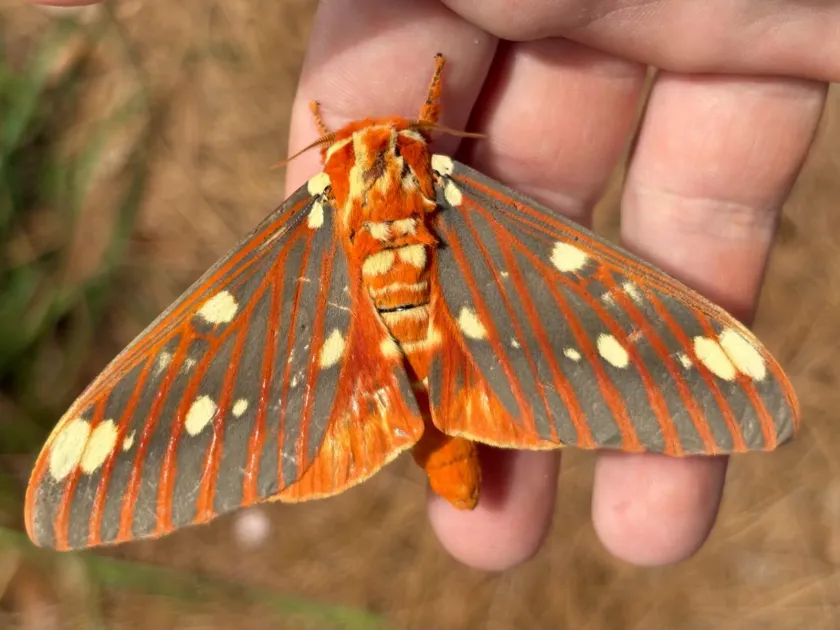
The regal moth (Citheronia regalis) is a member of the Saturniidae family and is widely regarded as one of the most impressive insects in North America due to its size and coloration.
Adult moths feature a large wingspan of up to 15 cm, characterized by vivid orange and grey patterns that provide excellent camouflage against tree bark.
The larval stage, famously known as the hickory horned devil, is a large caterpillar reaching up to 12 cm, identifiable by its menacing-looking fleshy horns.
These caterpillars undergo several instars during their development, changing in color from black to shades of green or brown as they grow towards maturity.
Despite their intimidating appearance, they do not possess stingers or venom, though their size makes them significant consumers of plant foliage.
What it damages
Regal moth larvae feed primarily on trees within the walnut family (Juglandaceae), particularly hickory (Carya) and walnut (Juglans) species.
In addition to these favorites, they are known to damage a variety of deciduous trees including persimmon, sweetgum, and sumac when preferred hosts are scarce.
The primary damage is caused by extensive defoliation, where the larvae consume leaf blades, significantly reducing the tree's photosynthetic capacity.
Young trees are particularly susceptible; severe infestations can lead to substantial stress, weakened growth, and reduced yield in commercial orchards.
While mature trees can often withstand some level of feeding, concentrated damage to specific branches can affect the overall health and vigor of the specimen.
When it appears
This species typically completes one generation per year, with activity peaking during the summer months in synchronization with host tree growth.
Adult moths emerge in early summer, usually around June and July, for mating and the subsequent deposition of eggs on the foliage of host trees.
The larval feeding stage occurs throughout the mid-to-late summer, reaching its peak intensity in late July and August when the caterpillars are at their largest.
As autumn approaches, the larvae descend from the trees to burrow into the soil, where they form a pupa to overwinter until the next season.
This distinct seasonal pattern allows growers to conduct inspections during the summer when caterpillars are most visible and easier to manage.
Signs of infestation
The most obvious indicator of a regal moth infestation is the rapid defoliation of branches, which can be spotted during routine orchard walkthroughs.
The presence of large, distinctive caterpillars clinging to leaves or branches is the most direct sign, especially given their size and unique horn-like appendages.
Large quantities of frass (caterpillar droppings) accumulating on the ground beneath the canopy are a clear indicator of a feeding colony above.
Infected trees often display noticeable patterns of leaf loss, where foliage is consumed systematically starting from the edges of the leaf blades.
Gardeners may also notice that the tree crown appears thinner and more transparent than usual, which is a symptom of significant larval consumption over time.
Control measures
For home gardens and small plantings, manual removal of the caterpillars is highly effective due to their large size and lack of defensive toxins.
In commercial orchards, the use of biological control agents such as Bacillus thuringiensis (Bt) is recommended to target larvae without harming beneficial insects.
Maintaining clear ground under the host trees can help monitor and potentially disrupt the overwintering pupae through mechanical soil cultivation.
Light traps can be utilized during the adult flight period to reduce the number of breeding moths, thereby limiting the number of eggs laid in the orchard.
Chemical insecticides should be considered as a last resort and used in accordance with local agricultural guidelines to minimize impact on non-target species.
Taxonomy
- Latin name
- Citheronia regalis
- Order
- Lepidoptera (butterflies)
- Family
- Saturniidae
- EPPO code
- CITHRE
Discussion
No discussions yet — be the first.