
Citheronia laocoon
Citheronia laocoon
Description
How to identify
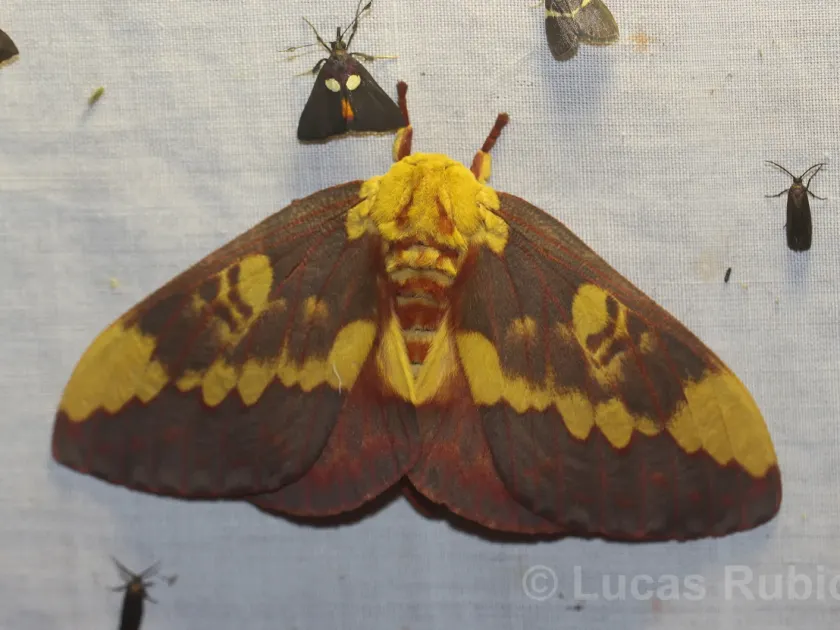
Citheronia laocoon is a species of moth belonging to the family Saturniidae, commonly known as giant silkmoths. These insects are native to South America and are recognized by their substantial size and robust body structure.
Adult moths feature a unique wing pattern with earth-tone coloration. The larvae, or caterpillars, are the stage responsible for agricultural damage and are characterized by prominent spines or tubercles used as a defensive mechanism.
The life cycle of this species includes eggs, several larval stages, a pupal stage that typically occurs in the soil, and the adult moth stage. Understanding these phases is crucial for effective pest management strategies.
Taxonomically, they are categorized within the order Lepidoptera. Their development is highly influenced by ambient temperature and host plant availability, leading to distinct periods of activity during the growing season.
Professional identification relies on the morphology of the larval instars, which exhibit specific patterns and body appendages that differentiate them from other related lepidopteran species.
What it damages
This species primarily affects a variety of woody plants and trees. In agricultural settings, it can cause severe defoliation, which negatively impacts the tree's health and photosynthetic capacity.
The caterpillars are voracious feeders. By consuming large amounts of foliage, they significantly reduce the vigor of host plants, which can eventually lead to reduced yields in orchard crops.
Significant damage is typically inflicted by later larval instars. They are capable of stripping entire branches of their leaves, leaving behind only the vascular structures, which is detrimental to the plant's seasonal energy accumulation.
Plants weakened by repeated defoliation become more susceptible to secondary pathogens and abiotic stresses. This often results in stunted growth and increased branch dieback.
While often found on wild host plants, the transition to cultivated fruit or ornamental trees makes monitoring in proximity to commercial orchards an essential agronomical practice.
Signs of infestation
The presence of Citheronia laocoon is often indicated by the accumulation of frass, or larval excrement, on the ground beneath infested trees. These pellets are a clear sign of active feeding in the canopy.
Visible defoliation is a key indicator. You may notice leaves that have been chewed along the edges or completely consumed, with only the midrib remaining in extreme cases of infestation.
Direct sighting of the larvae is a primary method of identification. Due to their size and distinct appearance, they are relatively easy to detect during a visual inspection of the foliage.
Some larvae use silk to hold leaves together, creating shelters. These structures or leaves tied together are diagnostic signs of larval presence in the tree crown.
Increased activity of large, nocturnal moths in the area signals the start of the mating cycle and the impending arrival of a new generation of larvae, requiring immediate preventative inspection.
Control measures
Hand-picking and mechanical removal of larvae are highly effective for small-scale operations or when dealing with individual high-value trees in the early stages of an infestation.
Biological control using microbial insecticides, such as formulations of Bacillus thuringiensis, offers an effective and environmentally friendly way to target larvae while preserving beneficial insect populations.
Chemical intervention should be reserved for periods of high larval density. Systemic or contact-acting insecticides can be applied, following strict guidelines to minimize impact on non-target organisms.
Cultural practices, such as tilling the soil around the base of the trees in the fall, can destroy pupae overwintering in the ground, significantly reducing the population for the following year.
Monitoring using pheromone traps or light traps helps in timing insecticide applications, ensuring that treatments are applied when they are most effective against young, vulnerable larvae.
Taxonomy
- Latin name
- Citheronia laocoon
- Order
- Lepidoptera (butterflies)
- Family
- Saturniidae
- EPPO code
- CITHLA
Discussion
No discussions yet — be the first.