
Citheronia
Citheronia
Description
How to identify
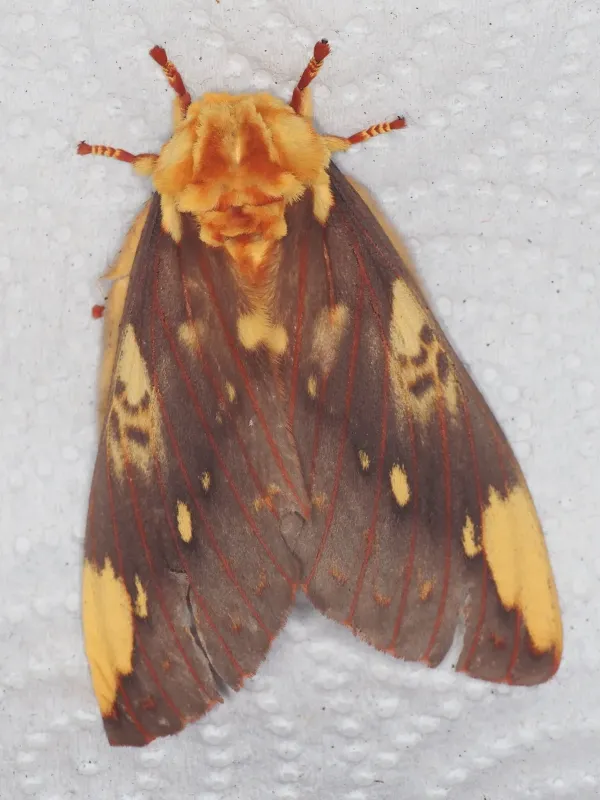
Citheronia is a genus belonging to the Saturniidae family (giant silkworm moths), order Lepidoptera. These are large nocturnal moths with wingspans reaching up to 10–12 cm, characterized by massive bodies.
The larvae of this genus are easily identified by the specific horn-like protrusions on their thoracic segments. They undergo several developmental stages, changing color from yellow to bright green or brown as they mature.
Adult moths (imagos) have a reduced mouthpart, meaning they do not feed and live only for a short time, specifically to reproduce.
Pupation typically occurs in the soil or leaf litter, where the pupa is protected by a tough cocoon that ensures survival under adverse conditions.
The biology of the species is closely linked to forest ecosystems, where the developmental cycle is usually limited to one generation per year in temperate regions.
What it damages
Citheronia larvae are polyphagous, primarily damaging broad-leaved trees and shrubs. Their host plants include oak, walnut, maple, and various fruit-bearing trees.
The greatest damage occurs during the summer months when actively feeding larvae can strip the foliage from tree branches in a short period of time.
In cases of mass infestation, the pest can significantly weaken young trees, making them susceptible to secondary infections and diseases.
In gardening, the primary danger is not just the loss of yield, but the damage to the leaf apparatus, which leads to reduced winter hardiness of the plant.
In nursery environments, Citheronia can stunt the growth of saplings, causing shoot deformation due to feeding on apical buds and young foliage.
Signs of infestation
The primary sign of infestation is the presence of large frass (excrement) under the tree canopy, which indicates the presence of actively feeding larvae.
Visual inspection of the canopy reveals eaten leaf edges and exposed veins, as larvae typically begin feeding from the margins of the leaf blade.
The presence of the larvae themselves is the main indicator, and they are most frequently spotted in the second half of the summer when they reach their full size.
Damaged branches often stand out against the background due to the lack of foliage development, which triggers premature leaf drop.
During heavy infestations, one may hear a characteristic rustling or clicking sound produced by the larvae as they consume tough leaves.
Control measures
For controlling larvae on small plots, manual collection of the pests during the early morning or evening hours, when they are less mobile, is highly effective.
The use of biological insecticides based on bacteria is an effective method that targets lepidopterans selectively without harming beneficial insects.
In cases of high pest density, the application of systemic insecticides approved for use in orchards and park areas is recommended.
An important preventive element is the tilling of soil under the trees during autumn to destroy pupae overwintering in the soil layer.
Encouraging entomophages and insectivorous birds (such as tits) into the garden helps naturally regulate the pest population throughout the season.
Taxonomy
- Latin name
- Citheronia
- Order
- Lepidoptera (butterflies)
- Family
- Saturniidae
- EPPO code
- CITHSP
Discussion
No discussions yet — be the first.