
Chrysophana beetle
Chrysophana
Description
How to identify
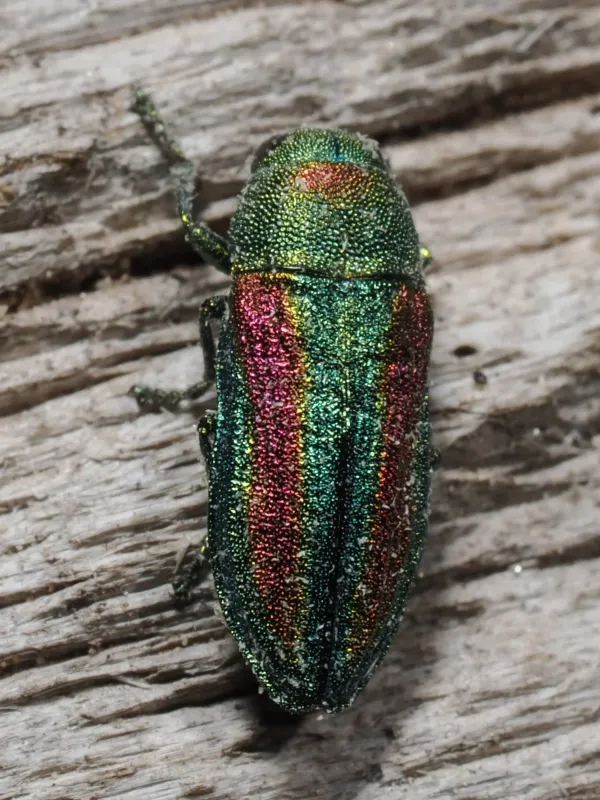
The Chrysophana beetle, scientifically known as Chrysophana placida, is a member of the Buprestidae family, commonly referred to as flathead borers. These beetles feature an elongated body with a distinct metallic luster, ranging from gold-green to copper or purplish hues.
Adult beetles typically measure between 7 and 12 millimeters in length. Their body is flattened, which allows them to easily navigate through narrow fissures in the bark of conifer trees, where they spend a significant portion of their life cycle.
The larvae are legless and white, characterized by a broadened thoracic segment. This specific morphology is a key diagnostic feature used by entomologists to distinguish this species from other wood-boring beetles.
The species is primarily native to North America, favoring temperate regions with various conifer species. While less common in European landscapes, it remains a significant threat if introduced into favorable environmental conditions.
Identifying the pest is often challenging as the majority of the developmental stages occur hidden deep within the tree tissues, making external visual detection difficult for non-experts.
What it damages
The Chrysophana beetle is classified as a technical pest, primarily infesting various coniferous tree species. It frequently attacks pine, fir, spruce, and some species of juniper, causing significant physiological stress.
The beetle typically targets weakened, injured, or drought-stressed trees. Infestations often follow natural disasters like forest fires, extreme weather events, or physical injuries sustained during landscaping activities.
Secondary forest stands and ornamental garden plantings are at the highest risk. In young trees, the infestation can lead to rapid decline and mortality due to the disruption of vascular tissues that transport nutrients.
In mature trees, the larvae damage the cambium layer, leading to crown dieback, reduced growth rates, and degradation of wood quality, rendering the timber unsuitable for high-value applications.
Furthermore, larval activity creates open entry points for secondary pathogens, including fungi and bacteria, which can exacerbate the tree's poor health and accelerate the overall death process.
When it appears
The adult flight period typically begins in late spring and continues throughout the summer, peaking in June and July. Adults feed on conifer needles and shoots, though this damage is usually minor compared to larval activity.
Females lay eggs directly into cracks in the bark, specifically selecting areas of damaged tissue or natural fissures. Once hatched, the larvae immediately begin boring into the inner bark and sapwood.
Most damage occurs during the summer and autumn months as larvae create winding galleries packed with frass. The larvae overwinter within the tree, continuing their destructive activity when temperatures rise.
The life cycle is generally completed in one year; however, in colder northern climates or adverse conditions, the development may extend to two years, complicating population control efforts.
In the spring, larvae pupate in specialized chambers within the wood. After metamorphosis, the adult beetle emerges by chewing through the bark, leaving a characteristic exit hole.
Signs of infestation
The primary indicator of infestation is the presence of distinct elliptical or D-shaped exit holes on the bark surface. These holes confirm that the new generation of adults has emerged from the tree.
Upon peeling back the bark in affected areas, one can observe intricate galleries packed tightly with wood dust and excrement, which severely disrupt the flow of nutrients within the tree.
Gradual dieback of specific branches or the entire crown is a strong warning sign. Needles often turn yellow and eventually brown in the most heavily infested sections as the tree struggles for survival.
Frass (boring dust) accumulating at the base of the tree is a clear indicator of active larval feeding. This fine powder is a byproduct of the larvae tunneling through the wood.
Ornamental conifers may exhibit distorted stems and premature needle drop, ultimately leading to the tree's death if the cambium layer is extensively girdled by larval galleries.
Control measures
The most effective strategy for protection is maintaining optimal tree vigor. Regular sanitation, including the pruning and removal of infested or severely weakened wood, helps reduce the local population.
Physical injuries to the bark must be avoided, as these create ideal entry sites for egg-laying females. Any wounds should be treated promptly with wound dressings to seal the exposed tissue.
Systemic insecticides can be applied during the adult flight period. These treatments serve to create a chemical barrier on the bark, preventing females from successfully laying eggs.
Monitoring population levels using pheromone traps allows for the early detection of beetle activity, ensuring that protective measures can be implemented before the infestation becomes widespread.
- Sanitary pruning of infested trees;
- Application of systemic insecticides;
- Maintenance of proper tree health (water/fertilizer);
- Protection of bark from physical damage;
- Encouraging natural predatory bird populations.
Taxonomy
- Latin name
- Chrysophana
- Order
- Coleoptera (beetles)
- Family
- Buprestidae
- EPPO code
- CHRPSP
Discussion
No discussions yet — be the first.